Regini & Atrebates Commios c. 50-25 BC Commios Muzzles Gold Stater *Rare*
£3,950.00
Regini & Atrebates
Commios c. 50-25 BC Commios Muzzles Gold Stater
Rare
ABC 1022, 17mm, 5.41g
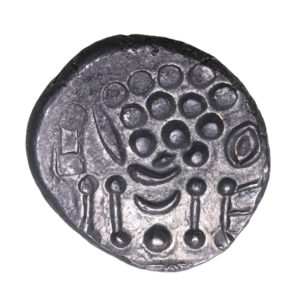
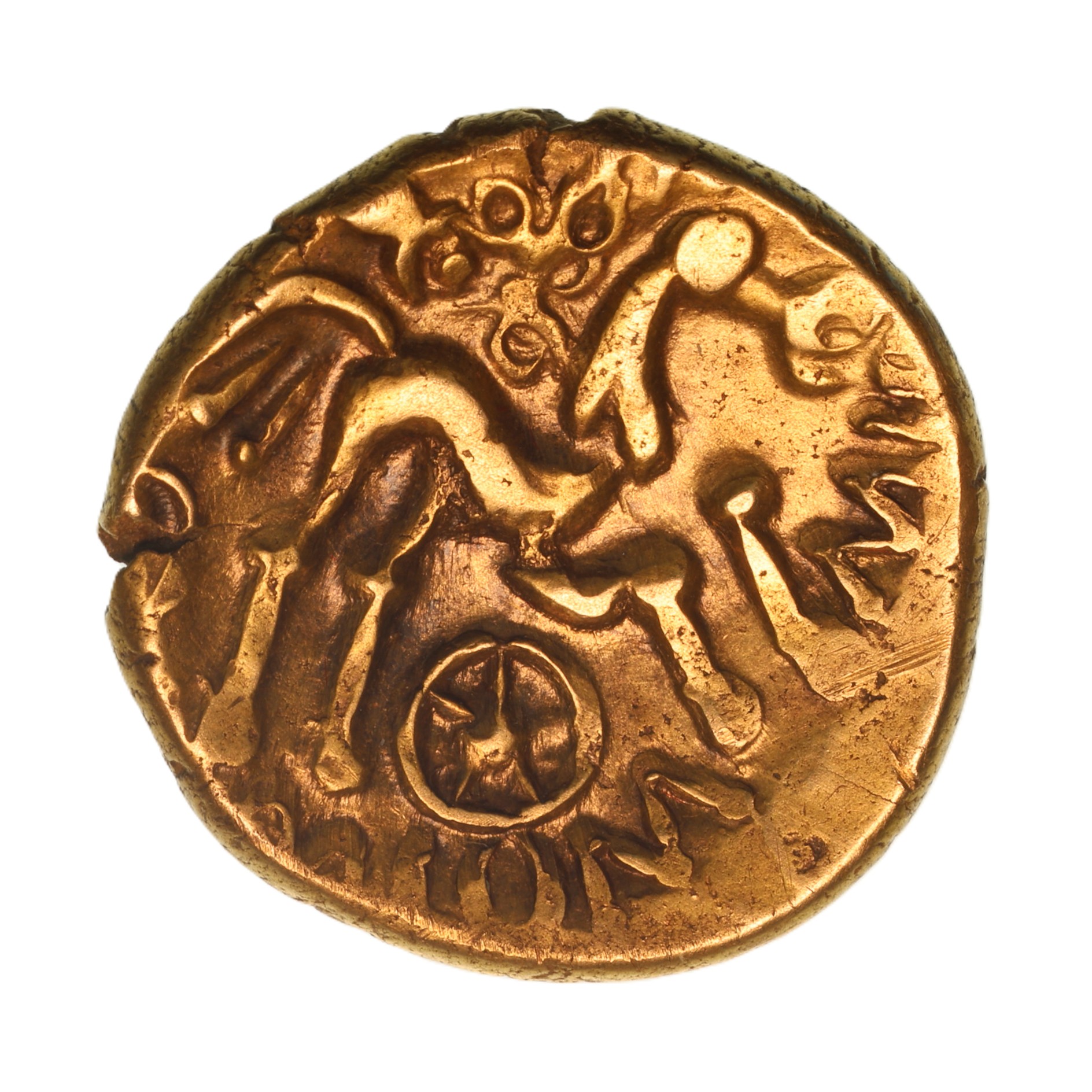
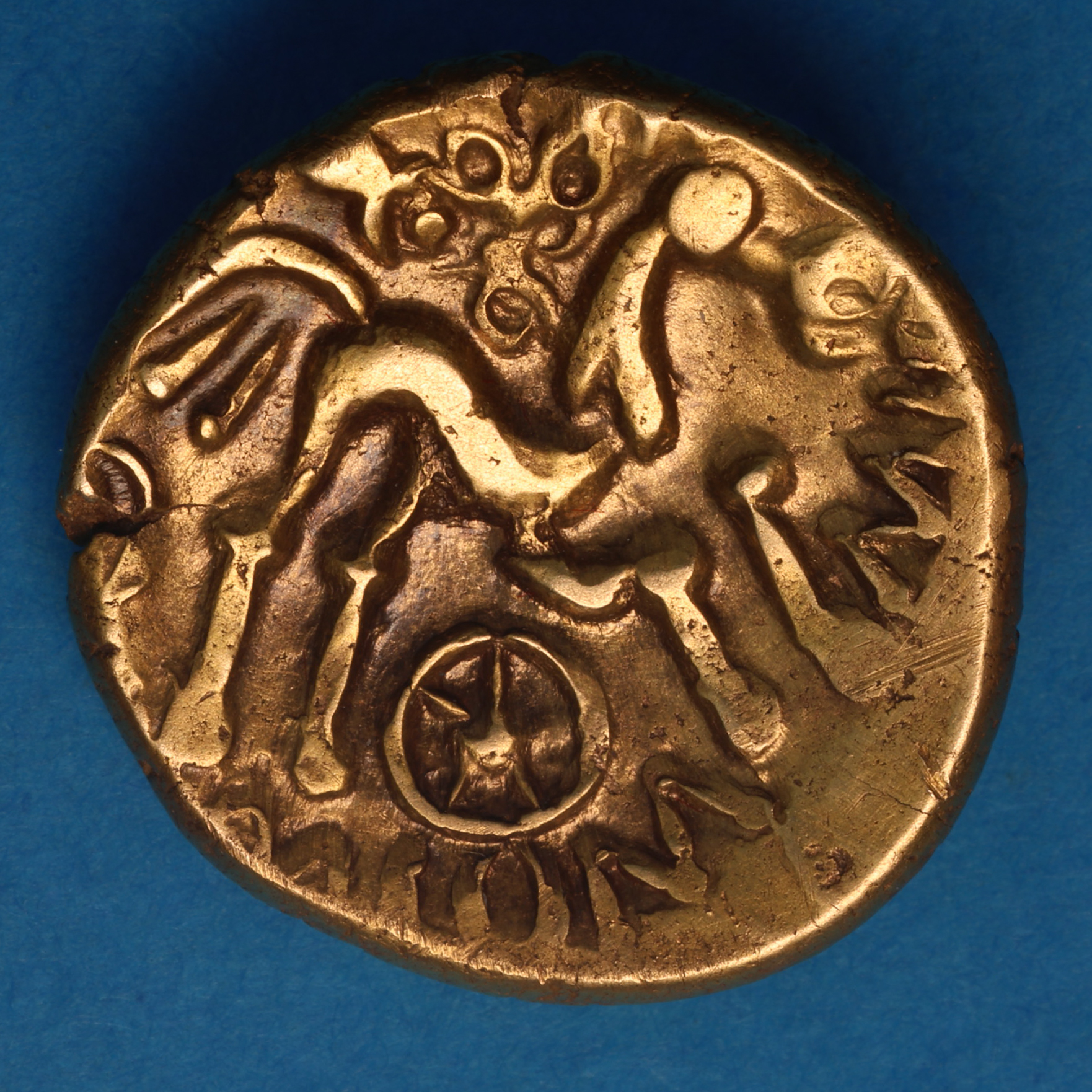
A premium coin with full horse and much of the inscription shown.
Obverse
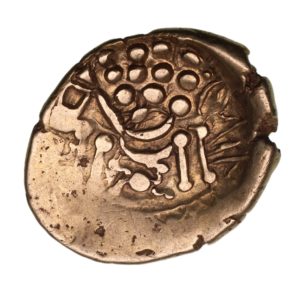
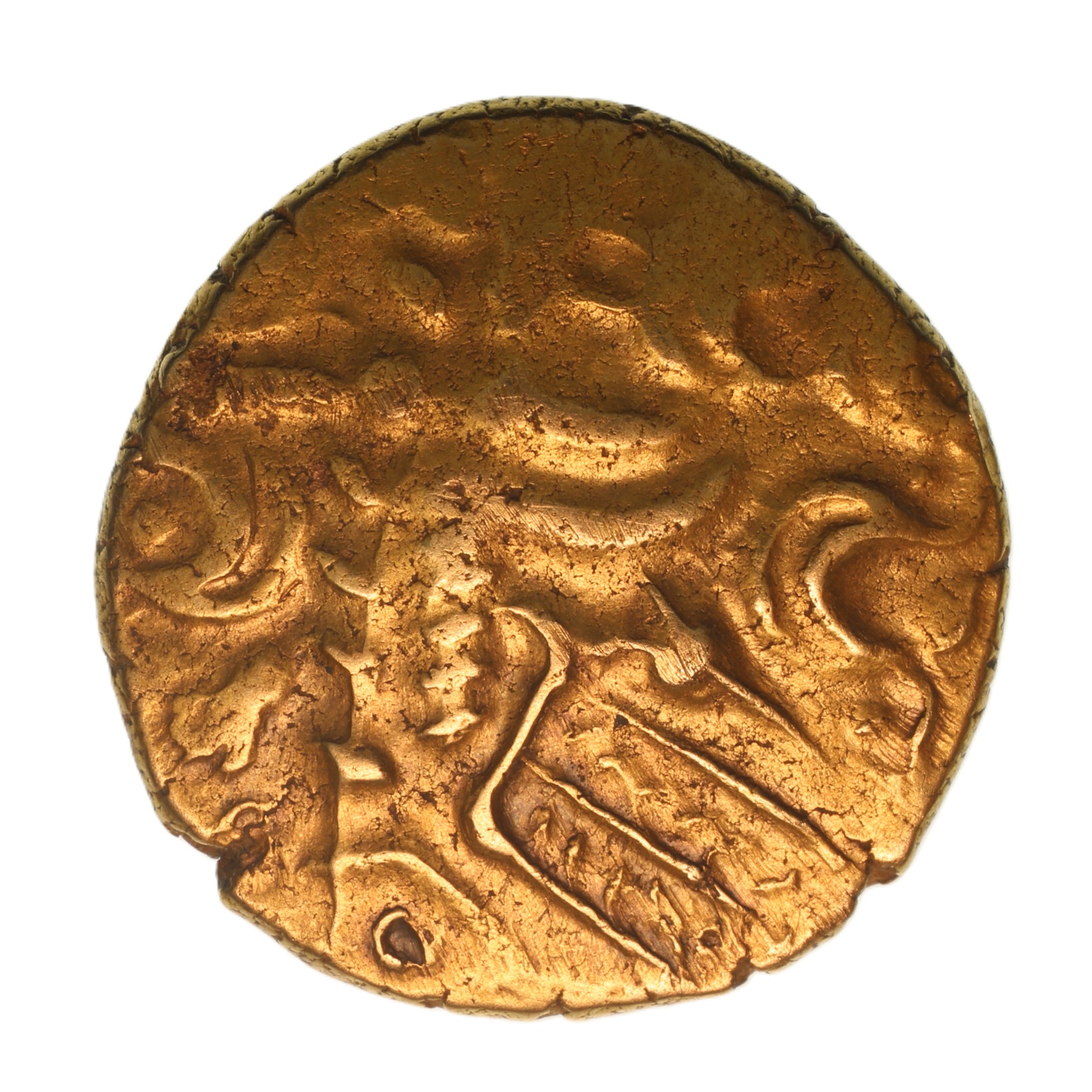
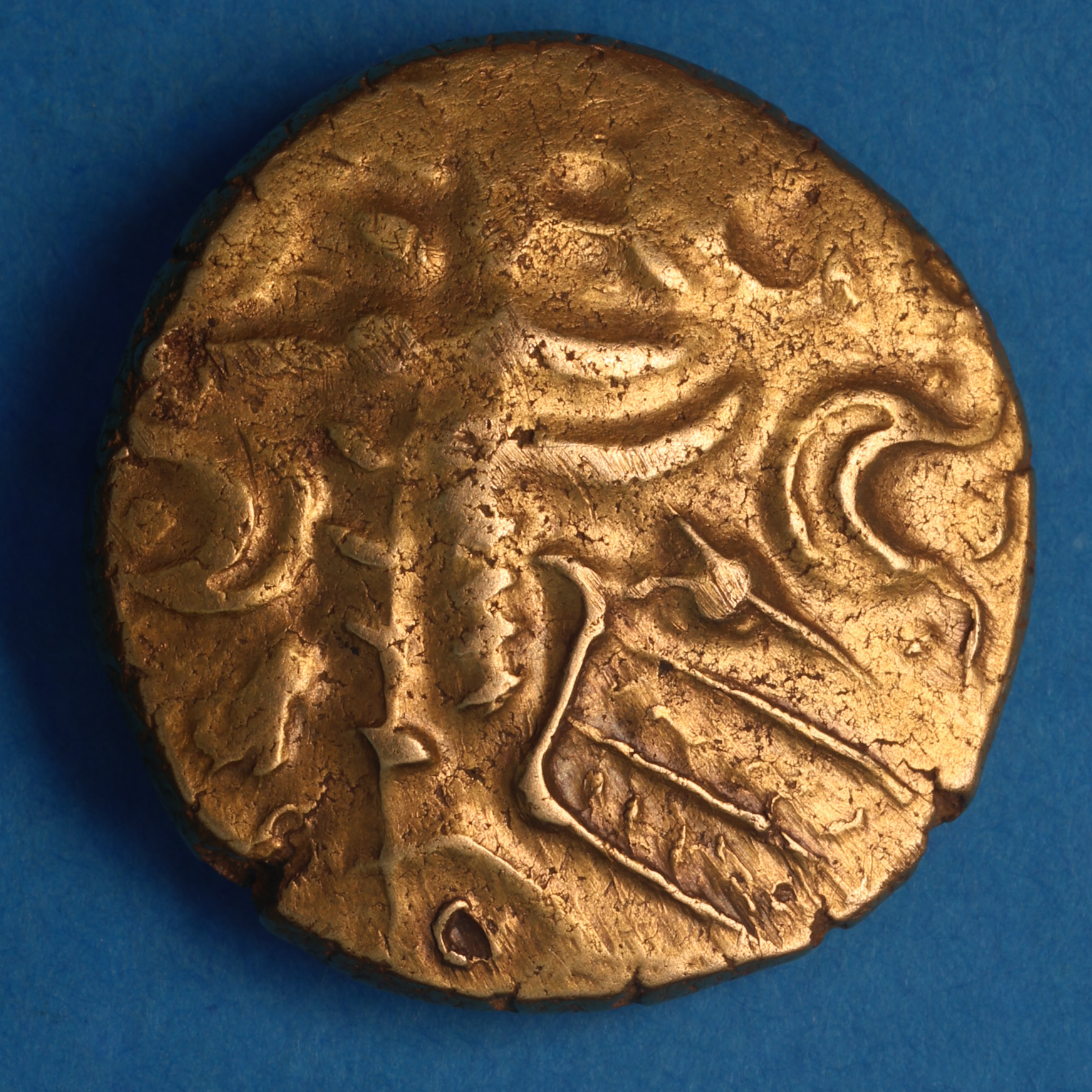
Celticised Apollo right. Wreath with inside end of leaves pointing downwards. Hairbar (spike) with pellets at the start and middle and ending in an arc (hook) with a further arc below. Two linear crescents to the left (above and below the hairbar) joined by reversed crescent behind the bar, muzzle above and below. Three linear crescents (curls) to the right, with the rear crescent attached to the wreath by two bars. Ring or pellet near hook. Pellet between crescents.
Reverse
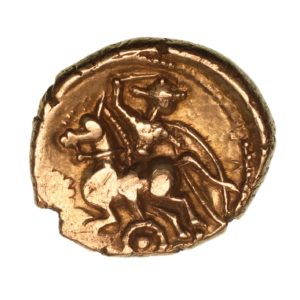
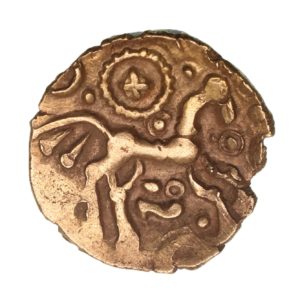
Horse with triple tail right. Five-spoked wheel with axle below. Charioteer’s arm (a thick line with a curve and pellet at the end) and pellet border above. Three horse muzzles above horse’s neck. COMMIOS inscription below wheel and in front.
Comments
Evans: D5 (1864, p. 83, pl. D).
Evans: I.10 (1864, p. 157, pl. I).
Van Arsdell Classification: Atrebatic C, Gold Coinage of Commius.
Sills DK 321 (15 obverse, 22 reverse dies): Southern Coinage; Commios; Staters: Class 1b – Muzzles. Starts with a recut obverse die of Split Name (ABC 1019) and the design hardly changes. The name is now all below the wheel and more or less continuous, not split. The muzzles above the horse resemble Cantian Ribbon Muzzles (ABC 183).
Sills believes the relatively small coinage of Commios, together with having enough prestige for three successors to claim descent from him, could point to him being the elderly Gallic War leader.
Sills chronology: Gallo-Belgic Ca – Insular Cf / Aa Westerham – British Ad – British Q and L – British Qa-b Derivatives – Commios.
Provenance
This coin is from The London Collection of Ancient British Coins. For more information click here: The London Collection – Silbury Coins : Silbury Coins.
C Rudd FPL 109, no 21 VA350
This coin comes with a previous label.
Commios (c. 50/30 BC–?)
In his account of the Gallic War, Caesar describes how he had appointed a man called Commius to be king over the Atrebates in Gaul, before sending him to Britain as an envoy to treat with the British tribes. Other information from both Caesar and related sources paints a treacherous picture, with Commius supposedly turning rebel and throwing his lot in with Vercingetorix during the Gallic rebellion. Fleeing to Britain after Caesar’s victory at Alesia, he apparently ruled there for the rest of his life. Because the earliest inscribed British staters of the Atrebates name an individual named ‘Commios’, it has become accepted in popular history that these are the same individuals – though it is highly unlikely that this is the case. We can attribute this conflation to the archaeologist Sir Arthur Evans, who felt that a concentration of Commius staters in Atrebatic territory was sufficient evidence in this regard. Simon Bean has re-dated the British gold staters inscribed ‘Commios’ to around 30 BC, which seems rather late to be the same Commius whom Caesar first sent to Britain in the 50s BC.
1 in stock