
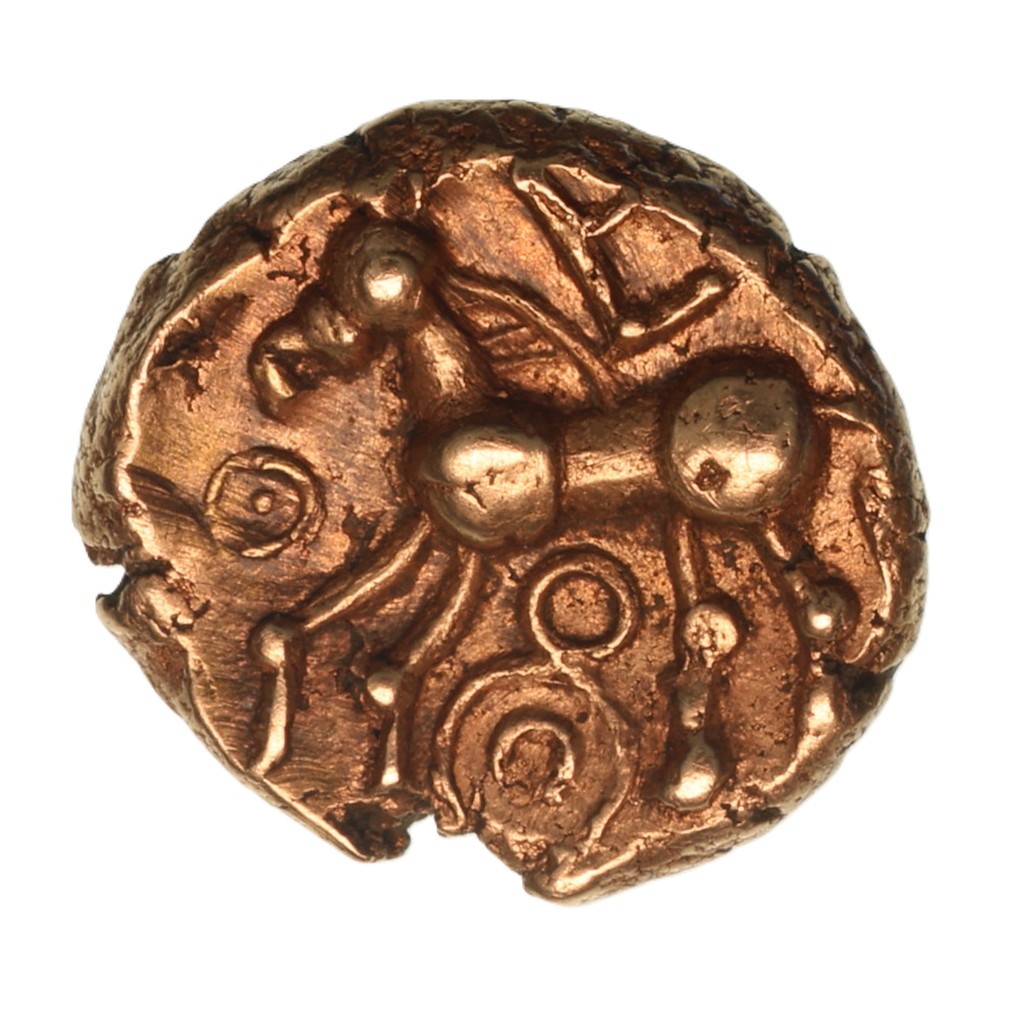
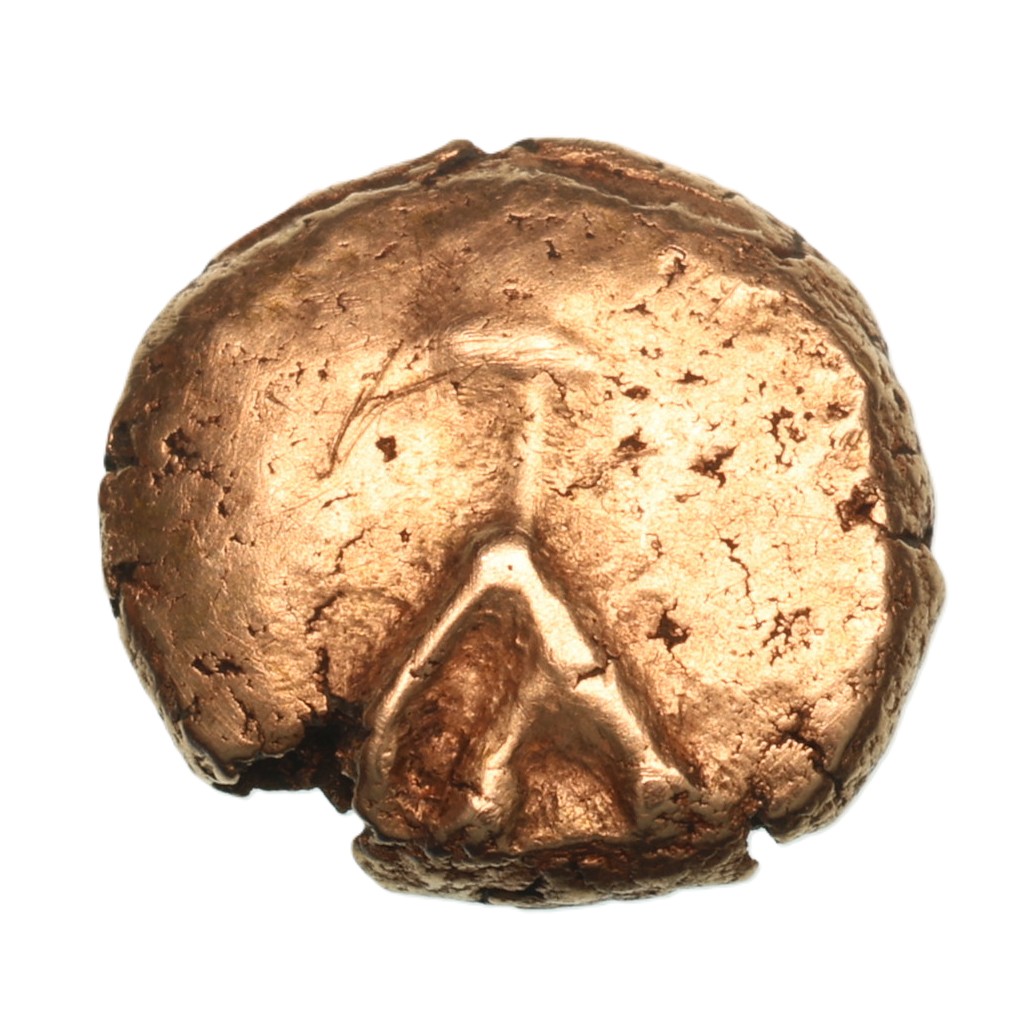
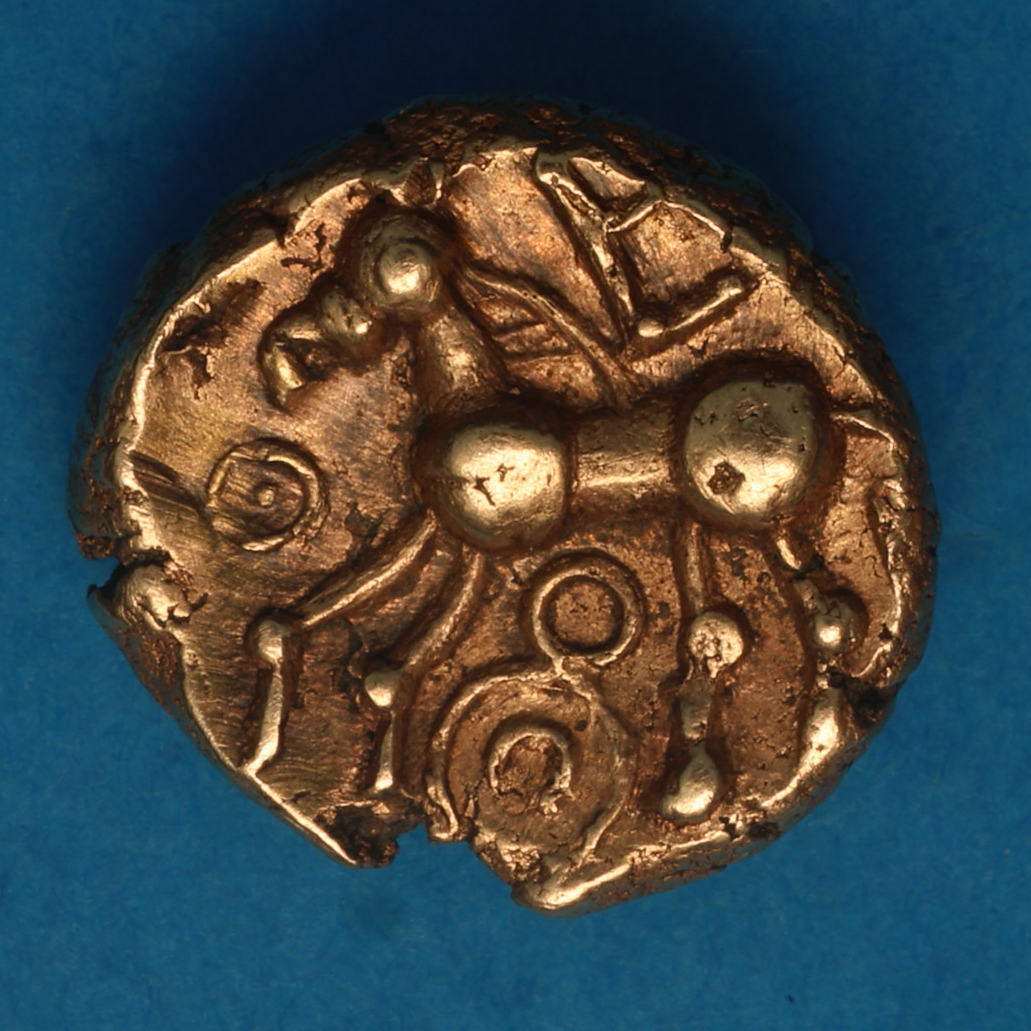
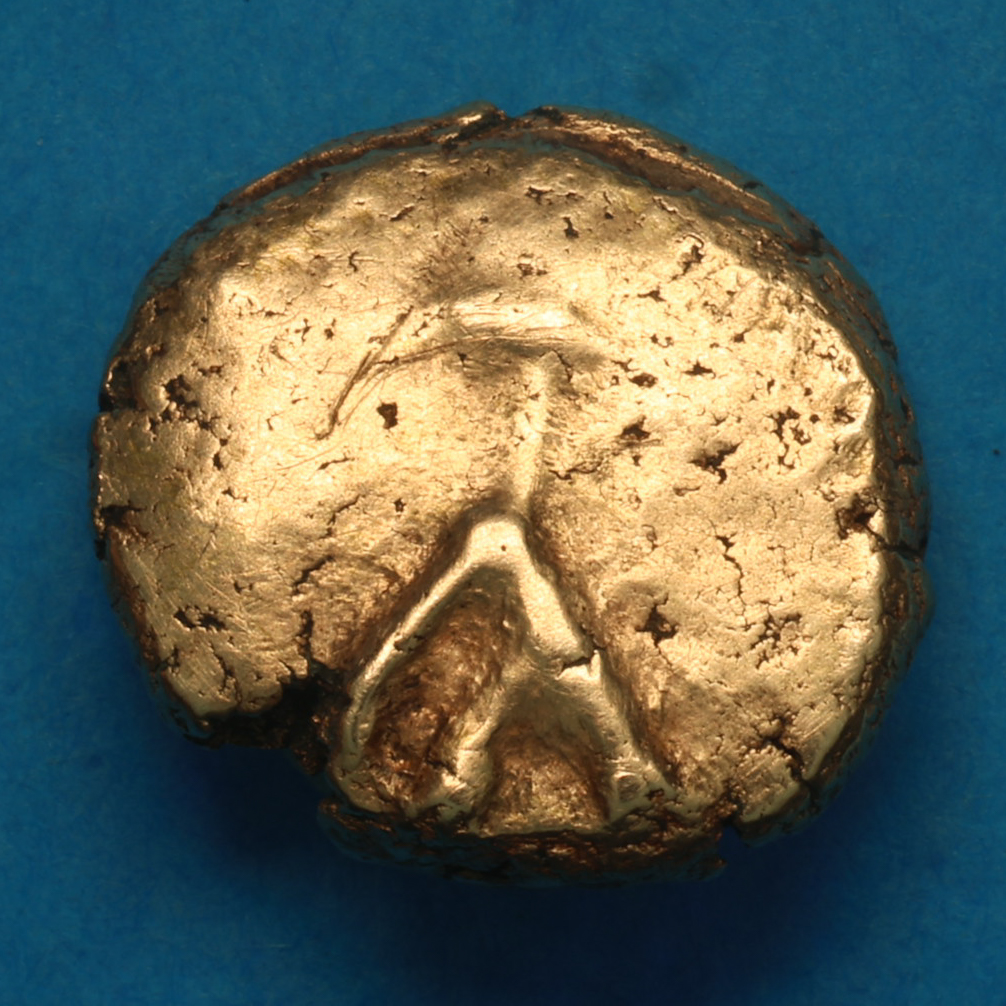
Regini & Atrebates Commios c. 50-25 BC Commios A-Type E-Type Gold Quarter Stater *Extremely Rare*
£1,650.00
Regini & Atrebates
Commios c. 50-25 BC Commios A-Type E-Type Gold Quarter Stater
Extremely Rare, 13 known.
ABC 1028, 10mm, 1.22g
Obverse
A (or digamma) on plain field. Vertical flaw above the A.
Reverse
Horse left, ladder mane of curved lines, double-stranded tail. E (arms pointing right, middle arm bent downwards) above. Figure-of-eight with ring in lower loop below.
View Video Here
Comments
Evans: XIX.13 (1890, p. 519, pl. XIX).
Van Arsdell ‘Upright E’. Van Arsdell Classification: Atrebatic C, Gold Coinage of Commius.
Sills DK 326 (1 obverse, 1 reverse die): Southern Coinage; Commios; Quarter Staters: Class 2 – E Type. The obverse die is from the A Type (ABC 1031) with the vertical flaw above the A. The reverse is similar to the A Type but the cog is replaced by an E or EI as on the stater (ABC 1025).
Sills believes the relatively small coinage of Commios, together with having enough prestige for three successors to claim descent from him, could point to him being the elderly Gallic War leader.
Sills chronology: Gallo-Belgic Ca – Insular Cf / Aa Westerham – British Ad – British Q and L – British Qa-b Derivatives – Commios.
Provenance
This coin is from The London Collection of Ancient British Coins. For more information click here: The London Collection – Silbury Coins : Silbury Coins.
Tony Carter coll. Sept 2008. Commios A, type E, type 1 VA353-1
This coin comes with a previous label.
Commios (c. 50/30 BC–?)
In his account of the Gallic War, Caesar describes how he had appointed a man called Commius to be king over the Atrebates in Gaul, before sending him to Britain as an envoy to treat with the British tribes. Other information from both Caesar and related sources paints a treacherous picture, with Commius supposedly turning rebel and throwing his lot in with Vercingetorix during the Gallic rebellion. Fleeing to Britain after Caesar’s victory at Alesia, he apparently ruled there for the rest of his life. Because the earliest inscribed British staters of the Atrebates name an individual named ‘Commios’, it has become accepted in popular history that these are the same individuals – though it is highly unlikely that this is the case. We can attribute this conflation to the archaeologist Sir Arthur Evans, who felt that a concentration of Commius staters in Atrebatic territory was sufficient evidence in this regard. Simon Bean has re-dated the British gold staters inscribed ‘Commios’ to around 30 BC, which seems rather late to be the same Commius whom Caesar first sent to Britain in the 50s BC.
1 in stock
You may also be interested in these…
Related products
-
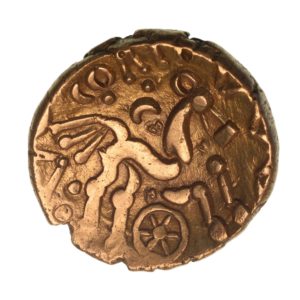
Dobunni Corio C.20 BC-AD 5 Gold Stater Corio Tree
£4,500.00Code: QC770
-
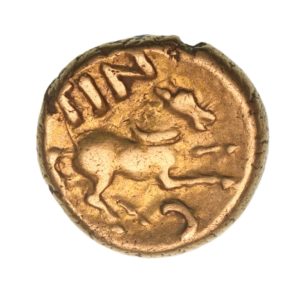
Regini & Atrebates Tincomarus c. 25 BC – AD 10 Tincomarus Tinc Horse Gold Quarter Stater *Rare*
£1,100.00Code: IAC77
-
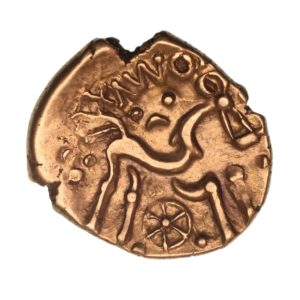
Dobunni Comux c. AD 1-15 Comux Tree Gold Stater *Extremely Rare*
£6,950.00Code: IAC130
-
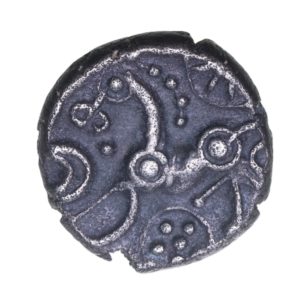
Belgae 1st Century BC Danebury Crescents Silver Unit *Excessively Rare*
£2,400.00Code: IAC68