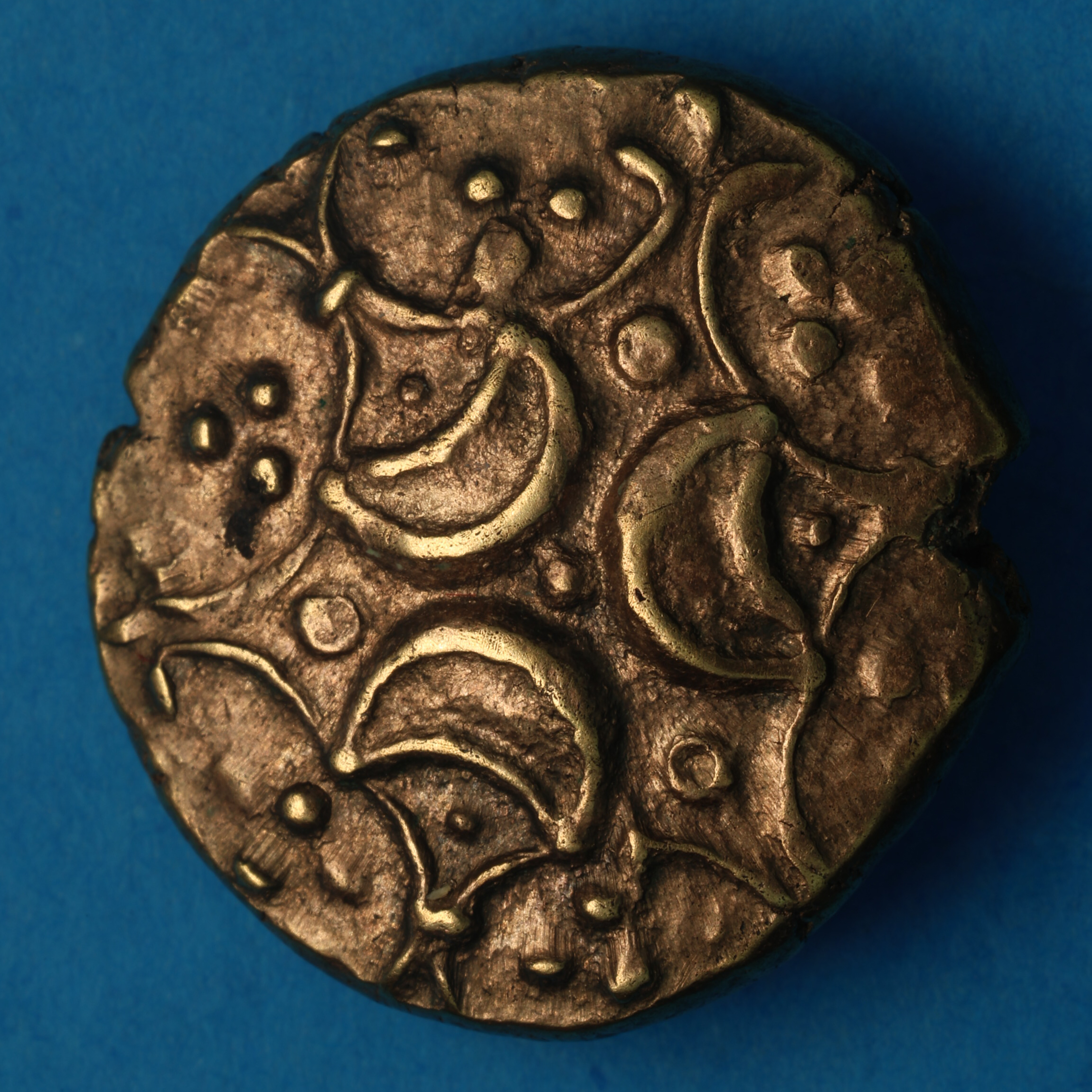
Iceni Ecen c. AD 10-43 Ecen Triple Moons Gold Stater *Excessively Rare*
£11,000.00
Iceni Ecen c. AD 10-43 Ecen Triple Moons Gold Stater
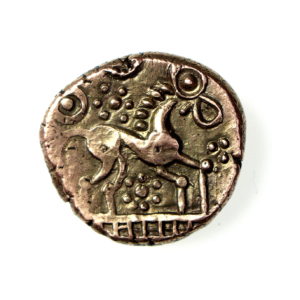
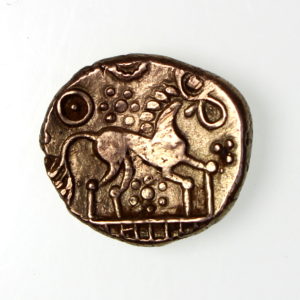
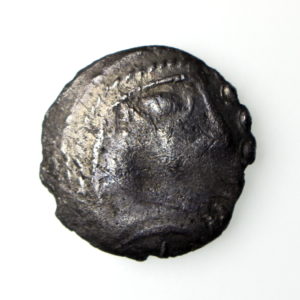
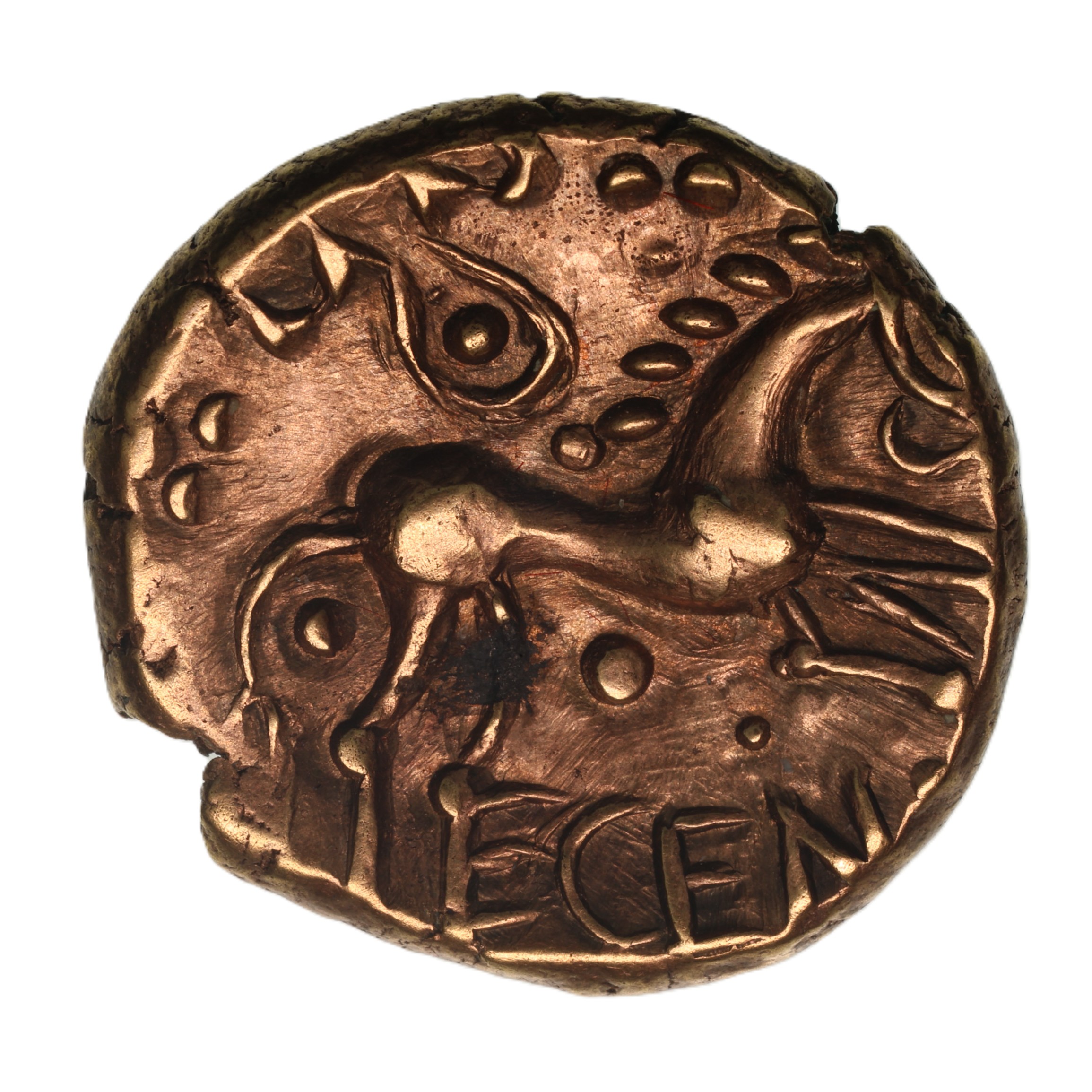
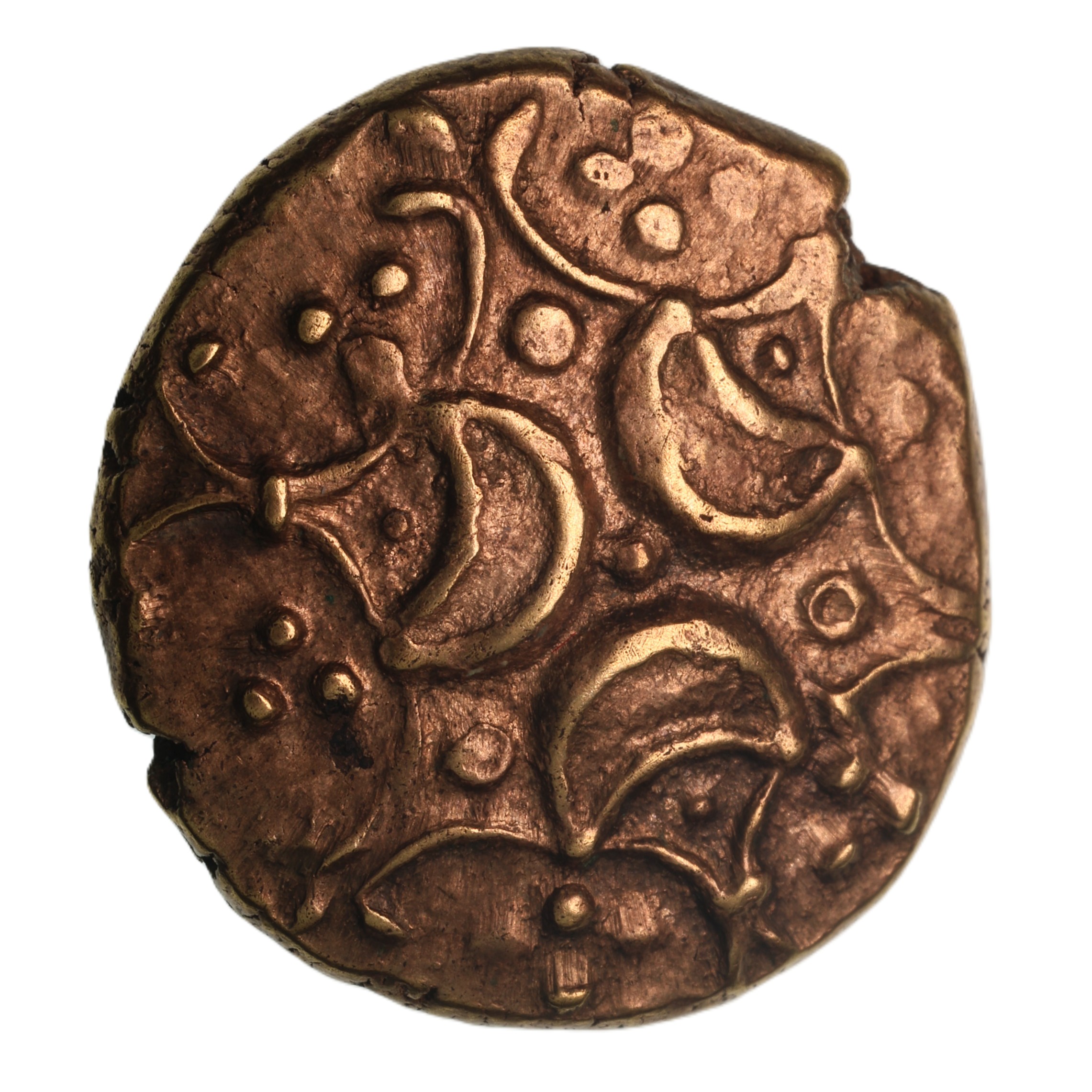
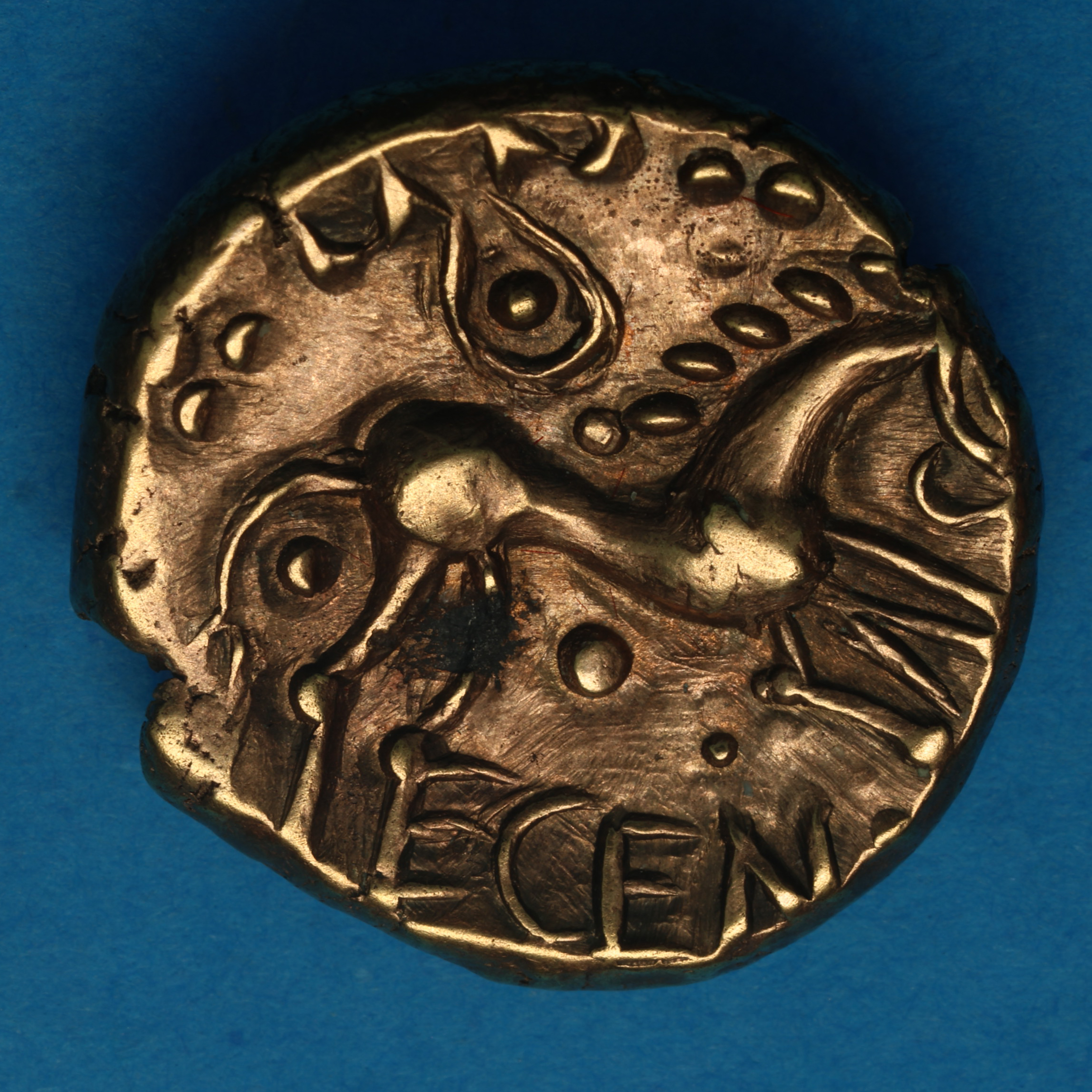
3 back to back crescents around pellet at centre, pellet in each cusp enclosed by 6 6 arcs each with triad of pellets in cusp /Horse right with dashes for mane, large oval head, S below head, double upper front legs, ECEN below
Excessively Rare
The finest example known, high grade and full inscription. A premium coin.
ABC 1651 (plate coin); 18mm, 5.40g
Van Arsdell Classification: Icenian H, Gold Coins Inscribed ECEN.
Talbot Ecen. The end of the denominational period saw the introduction of inscriptions. Anted and Ecen were produced in parallel (Anted starting first), using the same obverse die (staters of ECEN and ANTEDI (ABC 1639) are die linked), and followed Boar Horse C. They were struck at Mint A, which was responsible for most gold and used the most dies, characterised by a horse with an open head. The ECEN, EDN and ED variants (and ECE, ECEV and symbols for half units) are die linked with engraving becoming cruder. Finds are widely-dispersed but concentrated south of Snettisham.
The units were hoarded during the Boudican Revolt in 60 but the half units were important when struck, being highly counterfeited. Anted units are found around Breckland and the fen edge while half units and counterfeits are found more around Saham Toney and the south-west. The horse’s stylised corn ear is the heraldic symbol of Catuvellaunian king Cunobelinus and his capital, Camulodunon.
Talbot Chronology: Gallo-Belgic E/Ingoldisthorpe – Early Local Period I (55BC-35BC) – Early Local Period II (35BC-15BC) – Denominational Period I (15BC-5: Snettisham – Plouviez – Irstead – Early Boar Horse) – Denominational Period II (5-25: Boar Horse B – Boar Horse C) – Denominational Period III (25-45).
Provenance
This coin is from The London Collection of Ancient British Coins. For more information click here: The London Collection – Silbury Coins : Silbury Coins
G Cottam collection 2002. ABC plate coin. Spink COE 2026 plate coin (443) VA 725-1
This coin comes with a previous label.
The inscribed coins bearing the name ‘ECE’ or ‘ECEN’ are something of an enigma. While in some cases the name is abbreviated to ‘EC’, ‘ED’ or ‘EDN’, these are not considered to be different issuers. Although it has been suggested that ‘ECEN’ represents the name of the Iceni themselves, this is considered unlikely, as tribal names appear on no other coins of Iron Age Britain. Additionally, the same coin type bears other inscriptions which are clearly personal names.
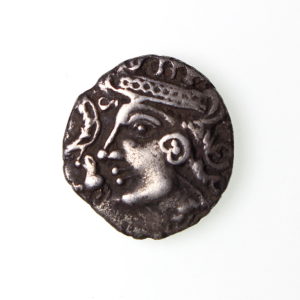
The silver coins of ‘ECEN’ are some of the most common in the entire Icenian silver series, occurring both in good metal and, more rarely, plated copper alloy. These display a wreath and opposed crescents on their obverses and a prancing horse on the reverse, classified by numismatist John Talbot as the ‘pattern-horse’ series. Die studies demonstrate its intense levels of production, set against iconography that is fairly conservative in outlook. Recovered by detectorists in large numbers, these coins are prevalent both as single finds and in hoards. For example, no fewer than four ‘ECEN’ units were found in a mixed hoard of Late Iron Age and early Roman coins from Old Buckenham, Norfolk, which was probably deposited by the AD 40s or slightly earlier.
Out of stock