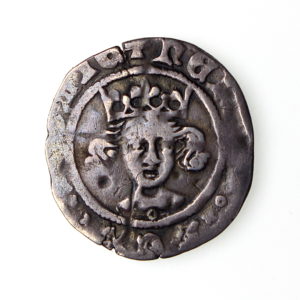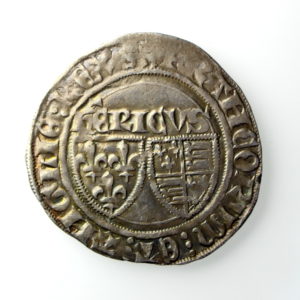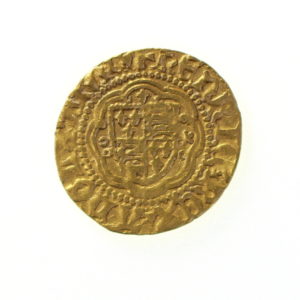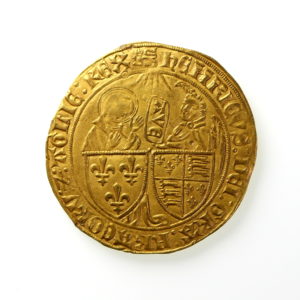
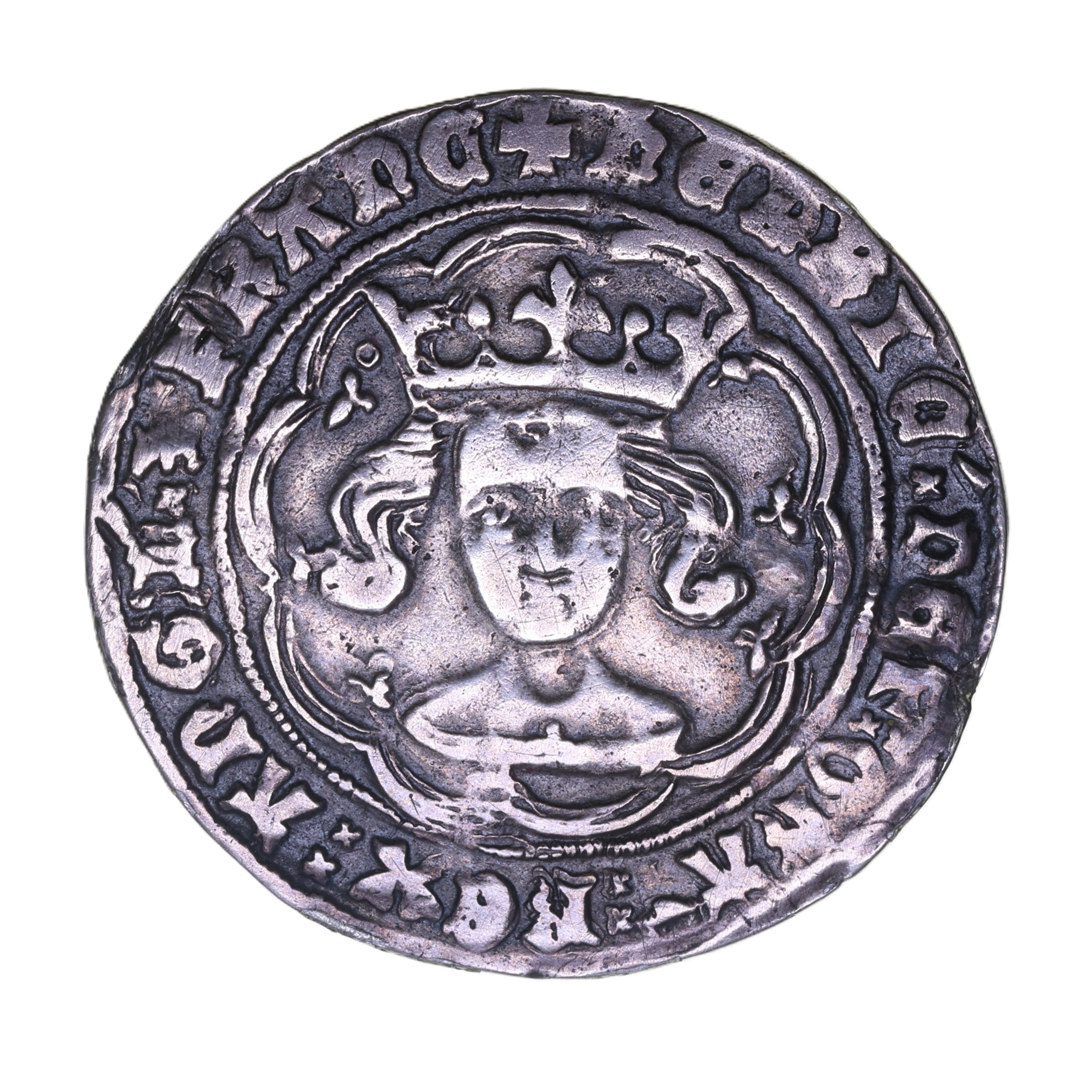
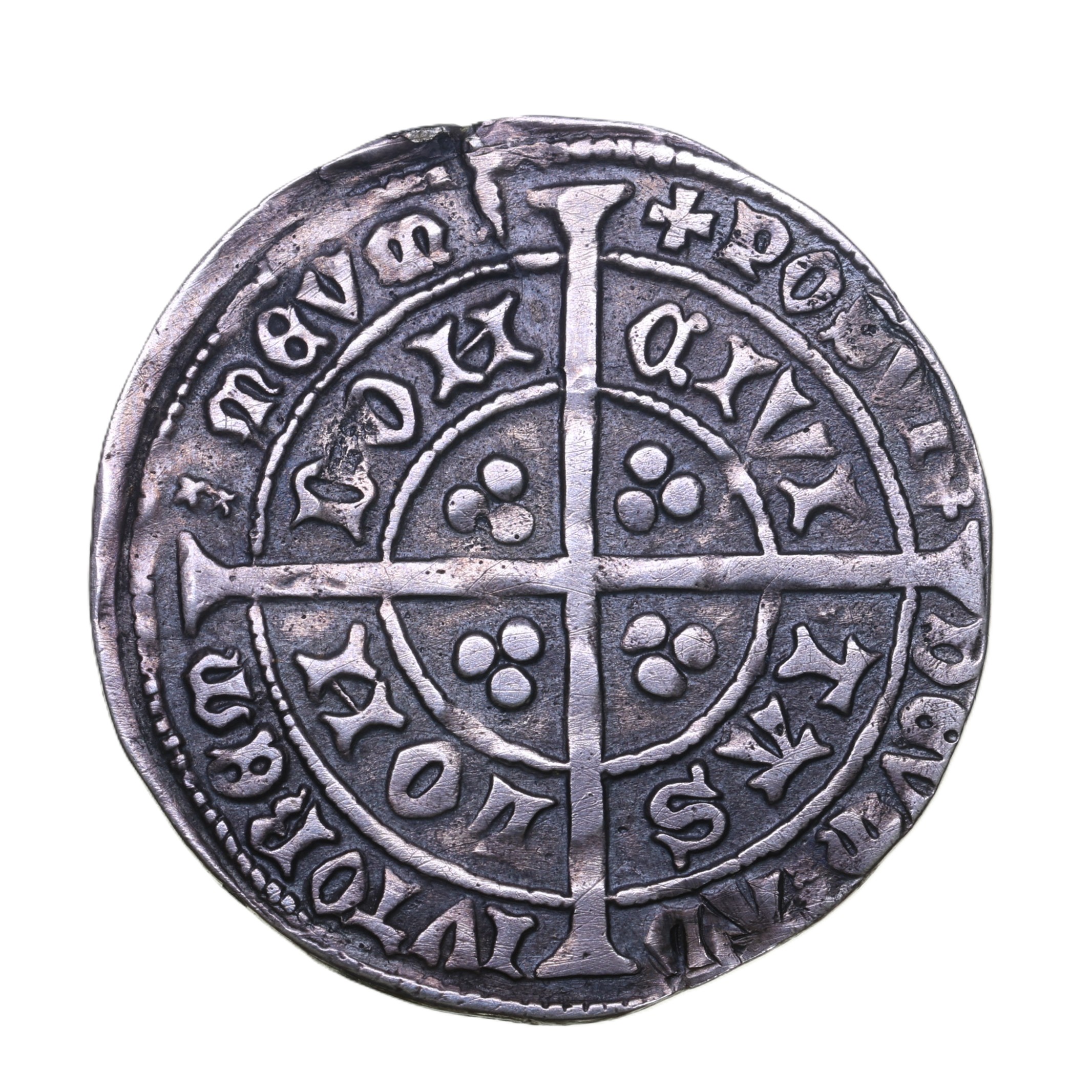
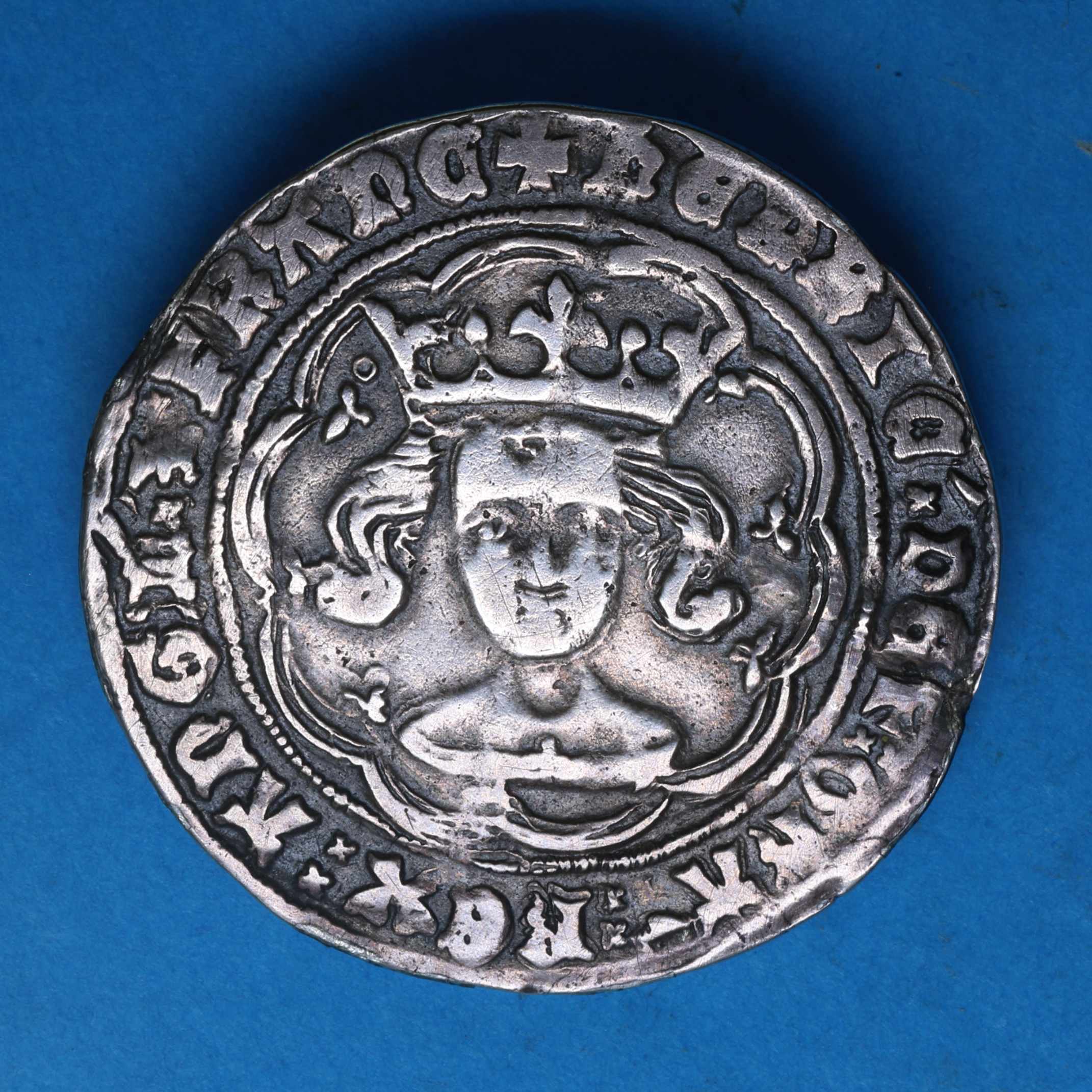
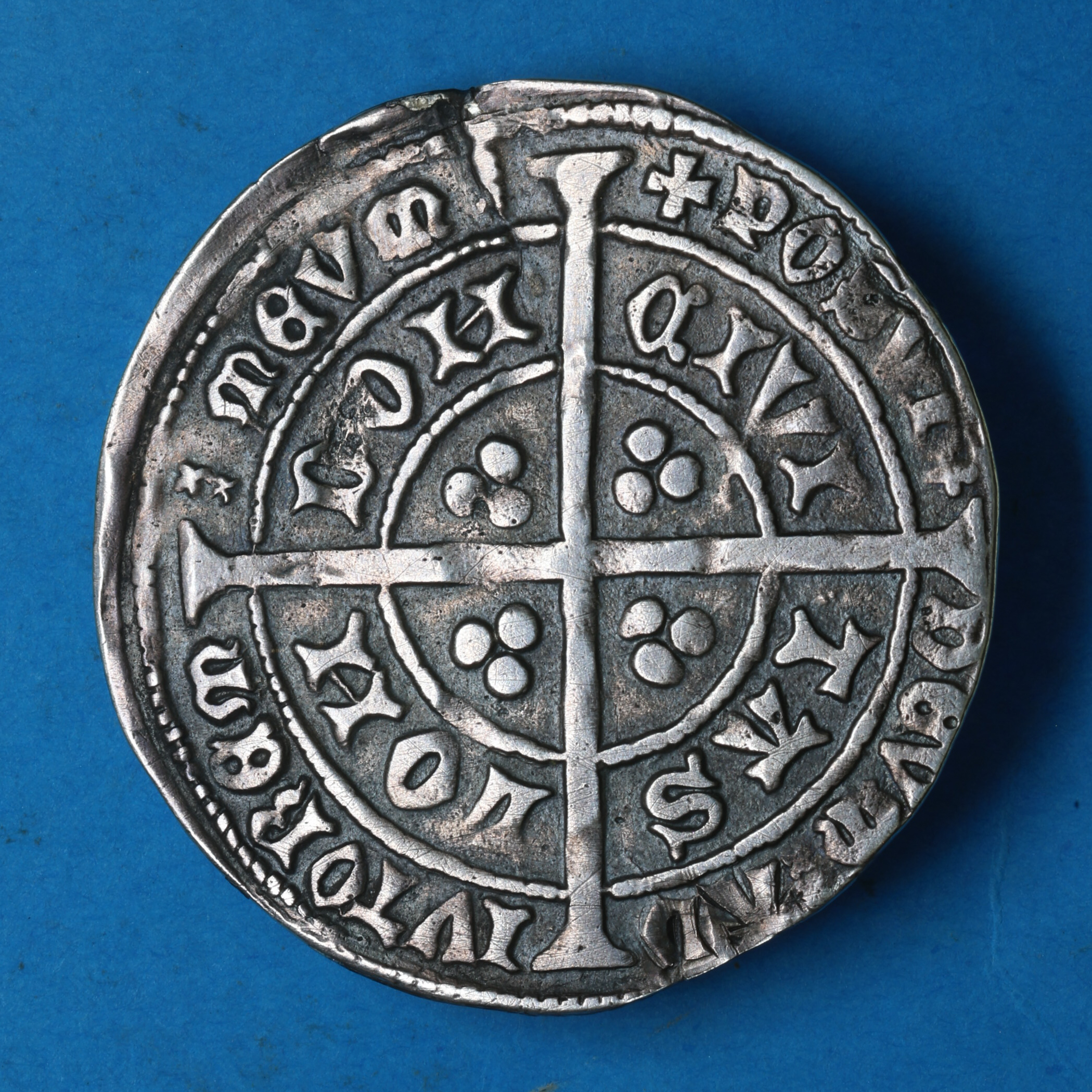
Henry IV 1399-1413AD Silver Groat Light Coinage 1412-1413AD London *Excessively rare* ex Eye Hoard
£13,500.00
Henry IV AD 1399-1413 Silver Groat Light coinage ex Eye Hoard (Suffolk)
Crowned bust facing/Cross
London mint
S1727; 28mm, 3.72g
One of the finest examples known. A rarity of the English medieval series, groats of Henry IV were struck only in the last year of the reign.
Officially recorded as part of the Eye hoard in Suffolk found 2010 with a total of 477 coins that were returned to the finders, here is the link (https://finds.org.uk/database/artefacts/record/id/390506)
Henry Bolingbroke was the eldest son of John of Gaunt who had acted as Regent during the early part of Richard II reign. Henry was the first monarch to speak English as his native tongue. Although a cousin to Richard Henry was one of the Lords Appellant who revolted against Richard. by opposing his decision to try five of his courtiers for treason. The Appellants asserted Parliament’s authority and thereby controlled government policy at least until a royal recovery saw them swept from power. Initially Richard did not punish Henry when the revolt was put down even creating him Duke of Hereford. However when John of Gaunt died in AD 1399 Richard had Henry exiled and also disinherited of John of Gaunt’s titles and land.
Henry then raised an army and invaded Wales in August AD 1399. Richard, rather than fight, agreed to abdicate and was then taken back as captive to London where Henry was crowned. Although Henry had initially agreed to spare Richard’s life but upon discovering a plot to re instate Richard he had Richard taken to Pontefract Castle where Richard was starved to death early in AD 1400.
Henry faced many rebellions during his reign. These included a revolt by Owain Glyndwr who claimed to be the last Prince of Wales. Although Glyndwr was never captured Henry eventually managed to take control of Wales. He also faced an invasion by the Scots and a revolt from the Percy’s, the Duke of Northumberland, and his son Harry Hotspur. These were effectively put down when Henry succeeded in defeating them at the Battle of Shrewsbury in AD 1403.
Although Henry consulted with Parliament he was in disagreement with them when faced with by the Lollard movement. The Lollards were demanding unification of Western Christianity. Henry considered this to be heresy and wanted their leaders burnt as heretics. Parliament wanted some of the land belonging to the Church confiscated. Neither happened.
From the middle of his reign Henry was beset with ill health and relied increasingly upon his son Henry, Duke of Monmouth for support. Henry eventually died in AD 1413.
Out of stock