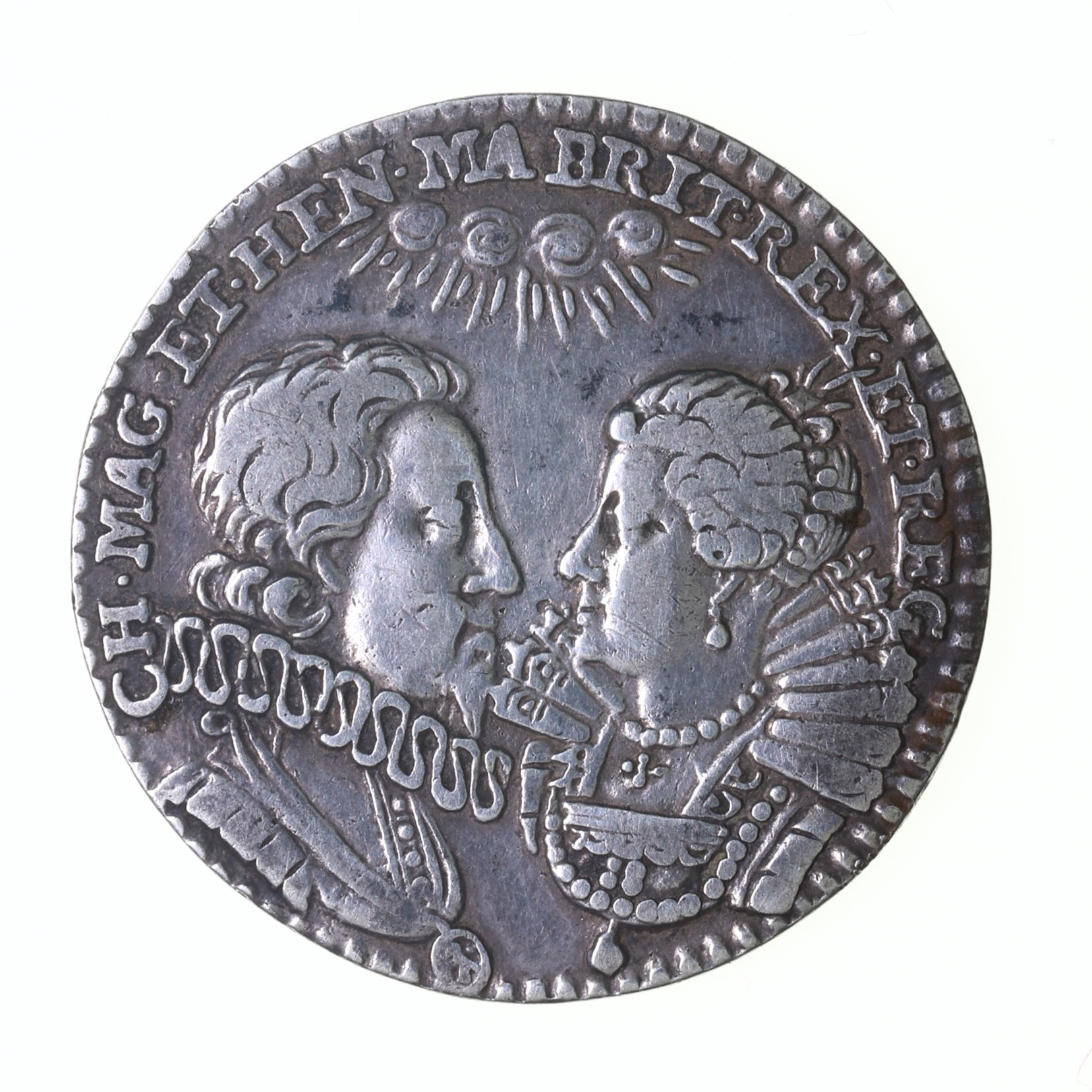
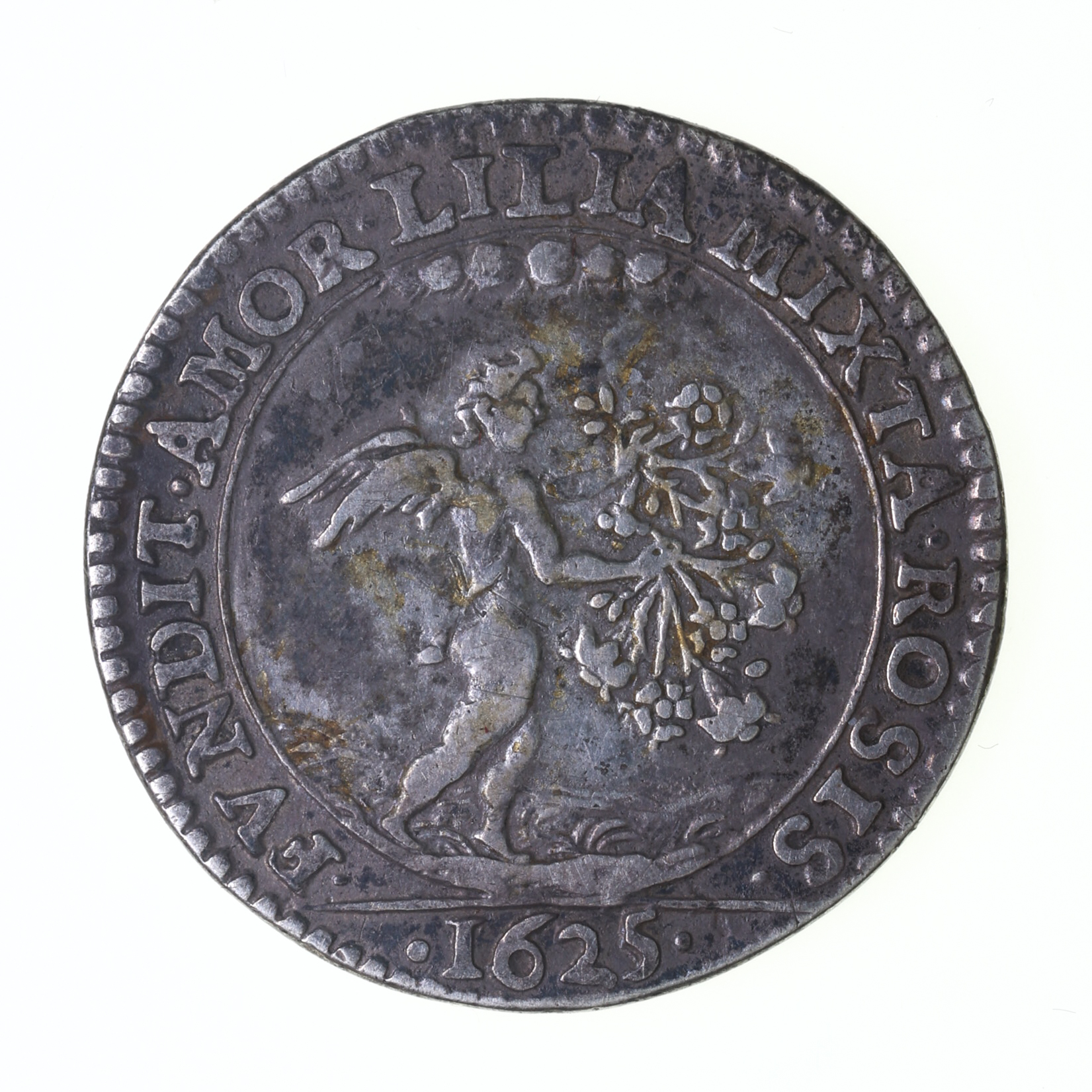
Charles I AD 1625-1649 Silver Wedding Medal
£325.00
Charles I AD 1625-1649 Silver Wedding Medal
Charles & Henrietta Maria
Married 13th June AD 1625. Charles I ascended the throne upon the death of James 1 in March AD 1625
22mm, 2.50g
With old labels
This medallion is one of two known designs made by the medallist P. Regnier. Both bear a similar double portrait to the obverse, the draped busts of the couple facing each other (vis-a-vis) under a celestial sunburst. The rim displaying “CH. MAG.ET.HEN.MA.BRITREX.ET.REG. The reverse of this type shows a winged cupid bearing a bouquet of roses and lillies. The rim displaying “FVNDIT.AMOR.LILIAMIXTA.ROSIS” 1625. The medallion is in pleasing condition and is a rare survivor from this period. An example is housed within the Royal Collection of King Charles III.
Charles & Henrietta – then aged 15 – were married by proxy on 1st May 1625 at Notre-Dame Cathedral in Paris. The groom had succeeded his father as King of England on 27th March. The married couple met in person on 13th June in Canterbury. The marriage would endure until Charles death on the scaffold in 1649. Her husband’s execution drove Queen Henrietta into exile on the Continent though she returned after the restoration of her son, Charles II, in 1660.
Born the second son of James I Charles became heir upon the death of his elder brother Henry in AD 1612. After an unsuccessful attempt to marry him to the Infanta of Spain Charles married the Catholic Henrietta Maria of France in AD 1625. Charles strongly believed in the divine right of kings and upon his accension to the throne in AD 1625 it was not long before he quarrelled with Parliament which tried to curb his powers. This caused increasing unrest at his attempts to raise taxes without Parliamentary consent. There was uneasiness with his religious policies in part due to his marriage to a Catholic queen. He also quarrelled with the Scottish bishops and eventually both the Scottish and English Parliaments rebelled starting the Civil War.
Having been defeated by armies raised by Parliament Charles eventually fled from Oxford to the north where he was captured by the Scots who handed him over to the Long Parliament in London. Refusing to accept a Constitutional monarchy Charles escaped to the Isle of Wight. Charles attempted to reassert his control but was defeated by the Parliamentarians under Cromwell who had him brought back to London and tried. This time Charles was sentenced to death and was executed in Whitehall in January AD 1649. This instigated the Commonwealth when the country was ruled as a Republic until Charles II was restored as king in AD 1660.
The reign of Charles I is one of the most interesting numismatically. Not only were many provincial mints set up, particularly during the Civil War period, some outstanding machine- made coins were produced both in England and Scotland under Nicholas Briot.
Out of stock