
Eastern 1st Century BC Essex Wheels Gold Quarter Stater *Very Rare*
£875.00
Eastern 1st Century BC Essex Wheels Gold Quarter Stater
Very Rare
ABC 2231, 12mm, 1.43g
Obverse
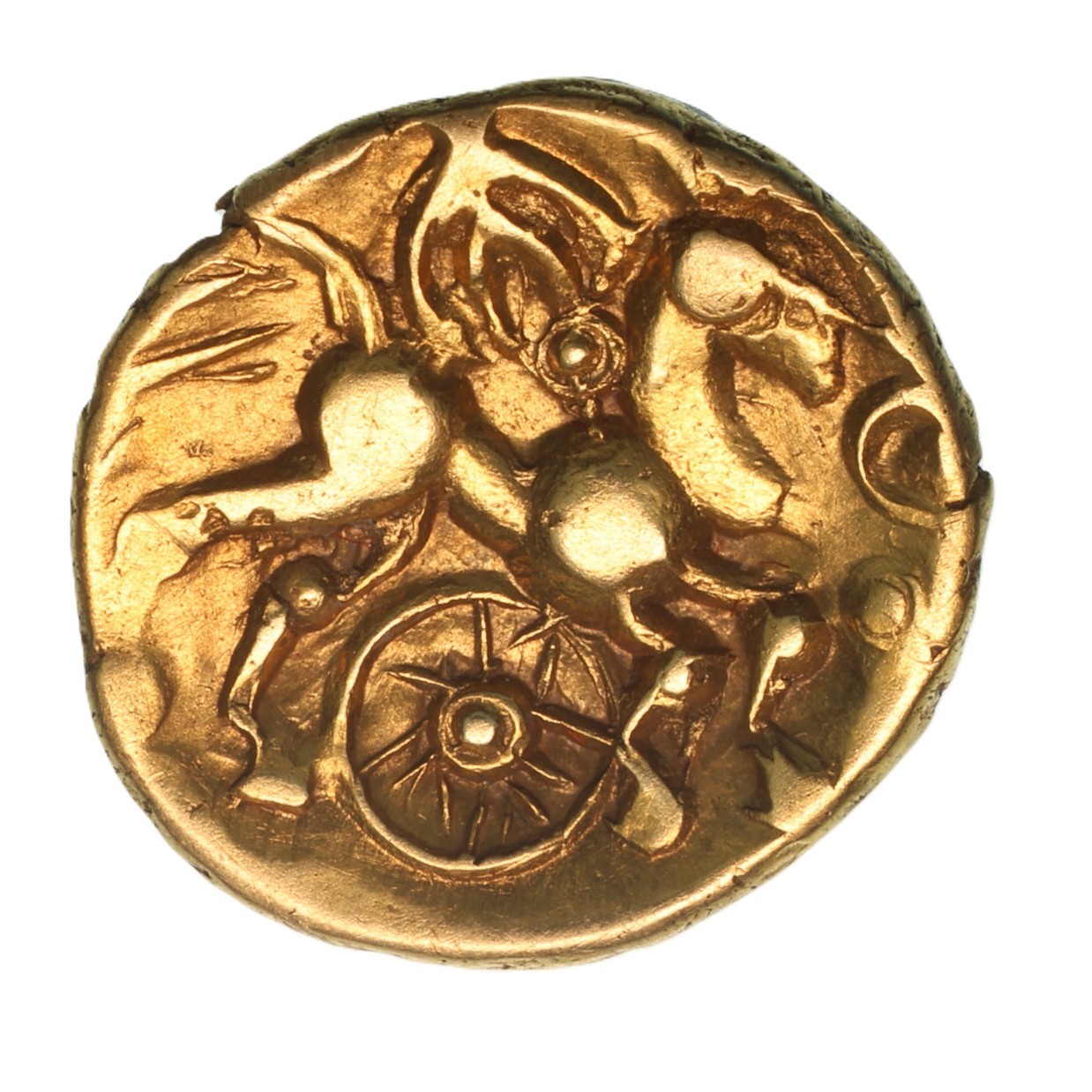
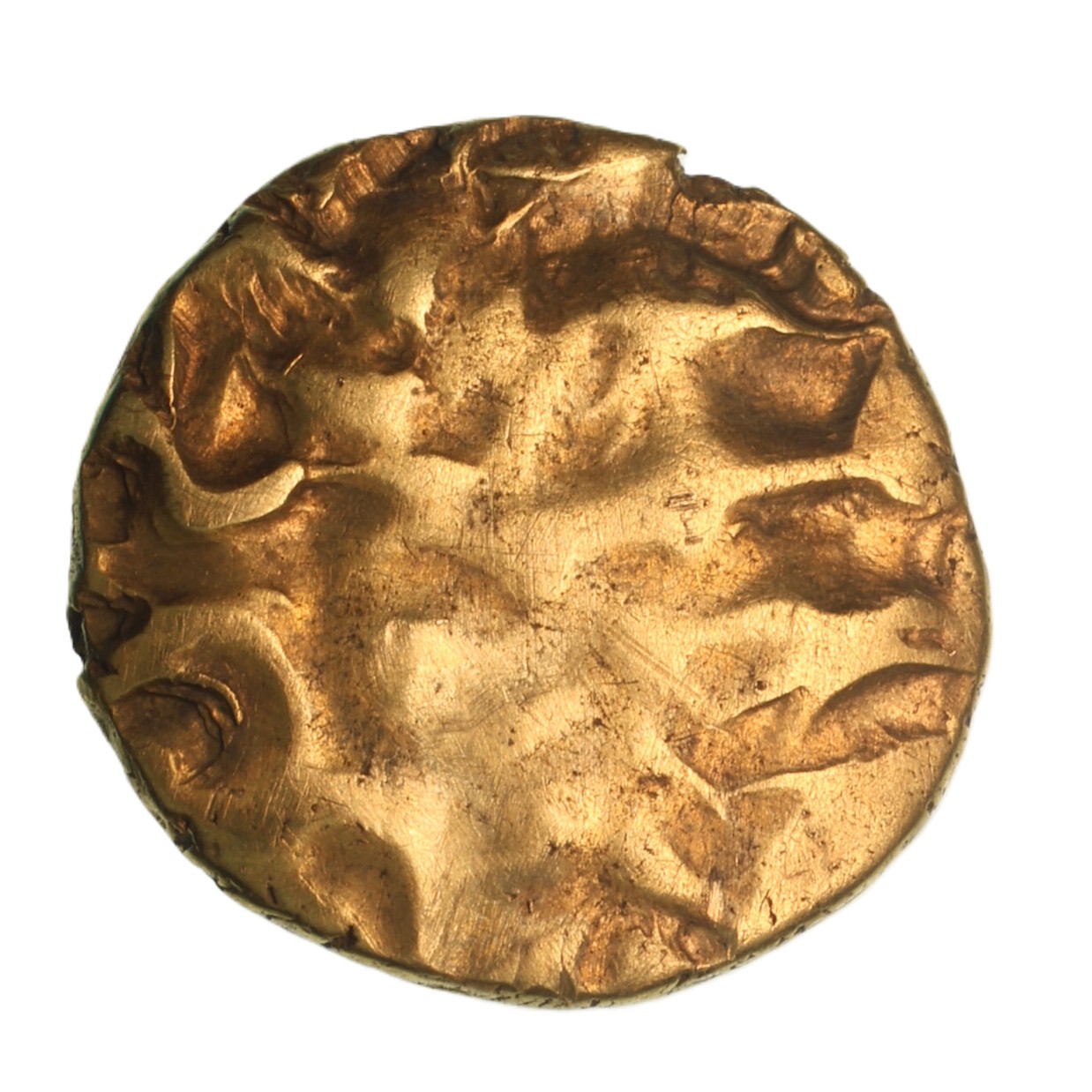
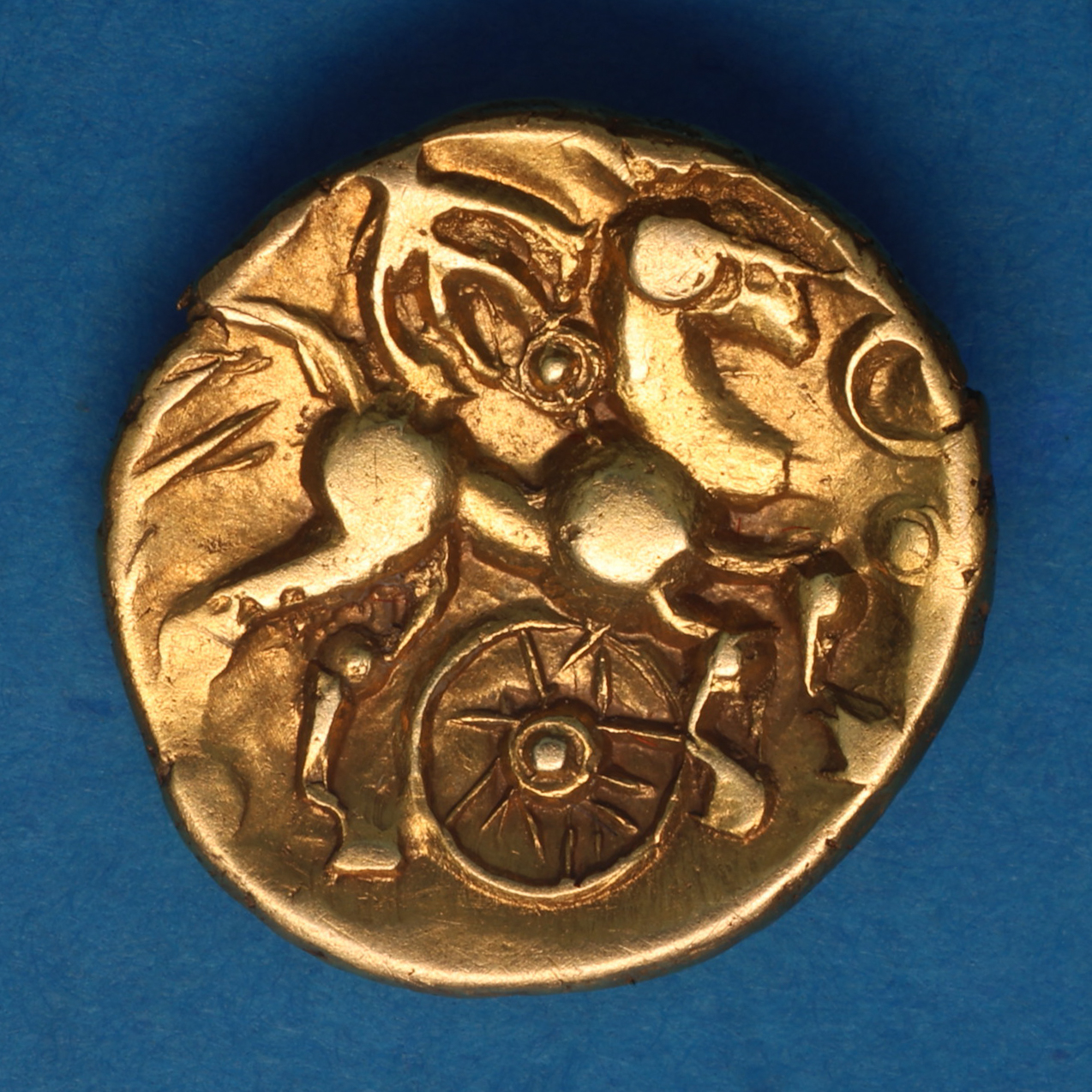
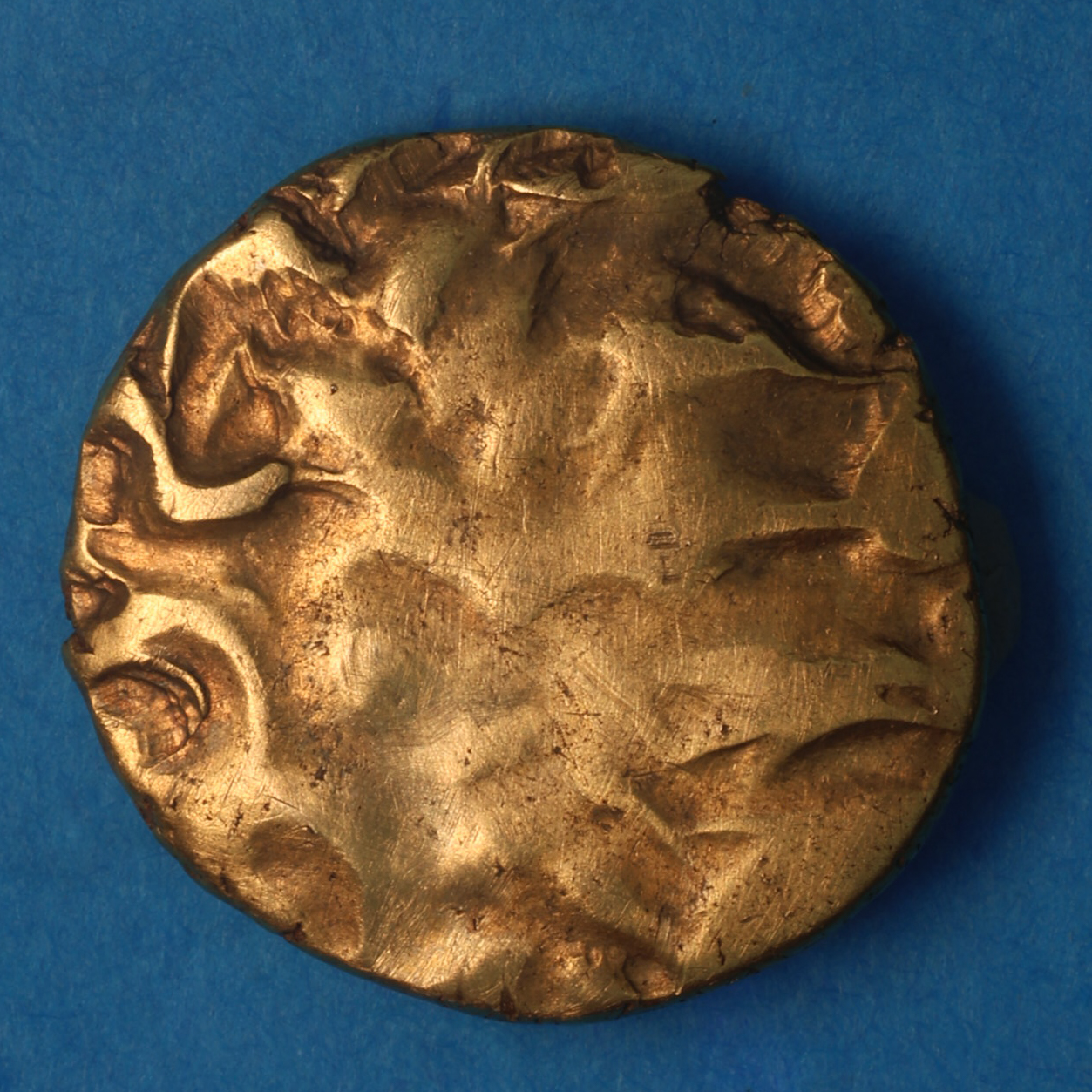
Abstracted head of Apollo right, wreath with inside edge of leaves pointing down above the hairbar and upwards below it, angled and offset above the hairbar. Cloak below, two linear crescents in front. Pellet-in-ring motifs in hair curls behind. Spike (hairbar) made up of lines and pellet-in-ring motifs (either arc with a ringed pellet separate above or three ringed pellets on the hairbar). Spoked wheel above hair curls at top of flan.
Reverse
Horse with triple tail right, pellet mane. Onion-like motif (crossed fronds of two interlocking, comb-like curls, sometimes simplified) above. Triskeles (three-legged symbol) in front of head. Ringed pellet in front. Spoked wheel below.
Comments
Mack notes under Mack 76 that ‘quarter staters are also known in silver. See Mack 76a’.
Van Arsdell Classification: Atrebatic B, Atrebatic Abstract Uninscribed Silver.
Rudd (ABC) puts this coin into an ‘Eastern’ group, which are found in Essex but not comfortably attributed to the Trinovantes or Catuvellauni. Within that, he puts it into a subgroup, ‘Southern-style Qc Gold Types’, which copy issues of the Atrebates and Regni but are found north of the Thames.
Sills DK 439 (5 obverse, 11 reverse dies): Early North-East Thames Coinage; Type: Local Issues; Quarter Staters: Essex Wheels. Copies British Qc Wheel (ABC 500) in a different style.
Sills chronology: Gallo-Belgic Ca – British G (Early Clacton) / Aa Westerham – British Ab (Great Waltham) – Shotley (British F) – British Lc/Ld – Local Issues.
Provenance
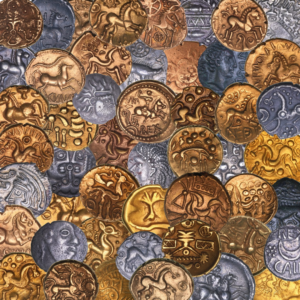
This coin is from The London Collection of Ancient British Coins. For more information click here: The London Collection – Silbury Coins : Silbury Coins.
C Rudd FPL 73, no 63 (2004). Found Chelmsford, Essex 1996. CCI 96.3163 VA260
This coin comes with a previous label.
Eastern
There are 33 early uninscribed types, found mainly in the eastern part of the North Thames region, especially Essex, which can’t comfortably be attributed either to the Trinovantes of the Catuvellauni. They are mostly extremely rare types – only seven were published by Van Arsdell, and they don’t seem to slot into any of the principle North Thames series. These may be variants struck by the Trinovantes or Catuvellauni or they could have been struck by smaller sub-tribes.
1 in stock
You may also be interested in these…
Related products
-
Belgae 1st Century BC Danebury Crescents Silver Unit *Excessively Rare*
£2,400.00Code: IAC68
-
Dobunni Comux c. AD 1-15 Comux Tree Gold Stater *Extremely Rare*
£6,950.00Code: IAC130
-
Regini & Atrebates Verica c. AD 10 – 40 Verica Little Horse Rearing Gold Quarter Stater *Scarce*
£1,100.00Code: IAC85
-
The London Collection
Code: TheLondonCollection