
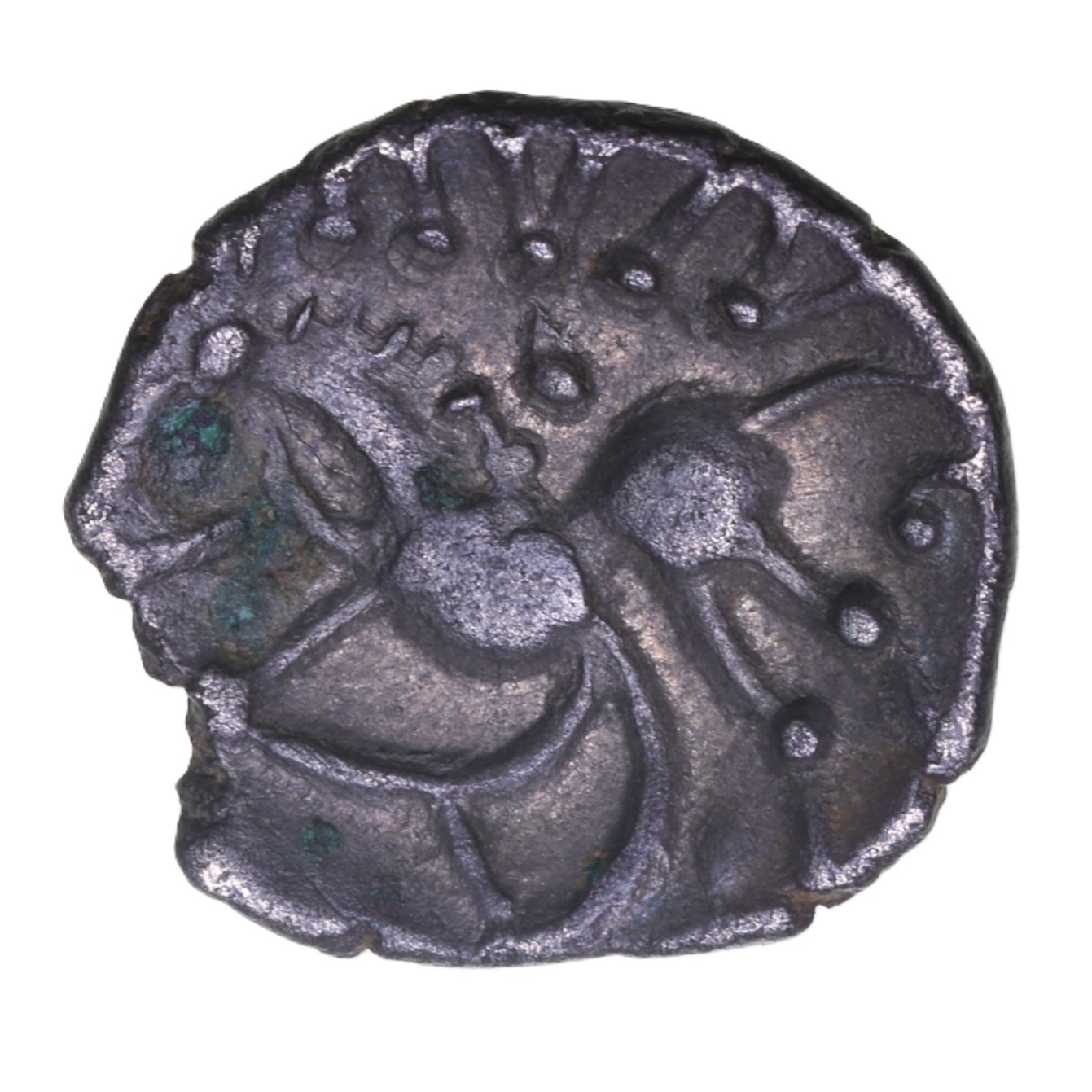
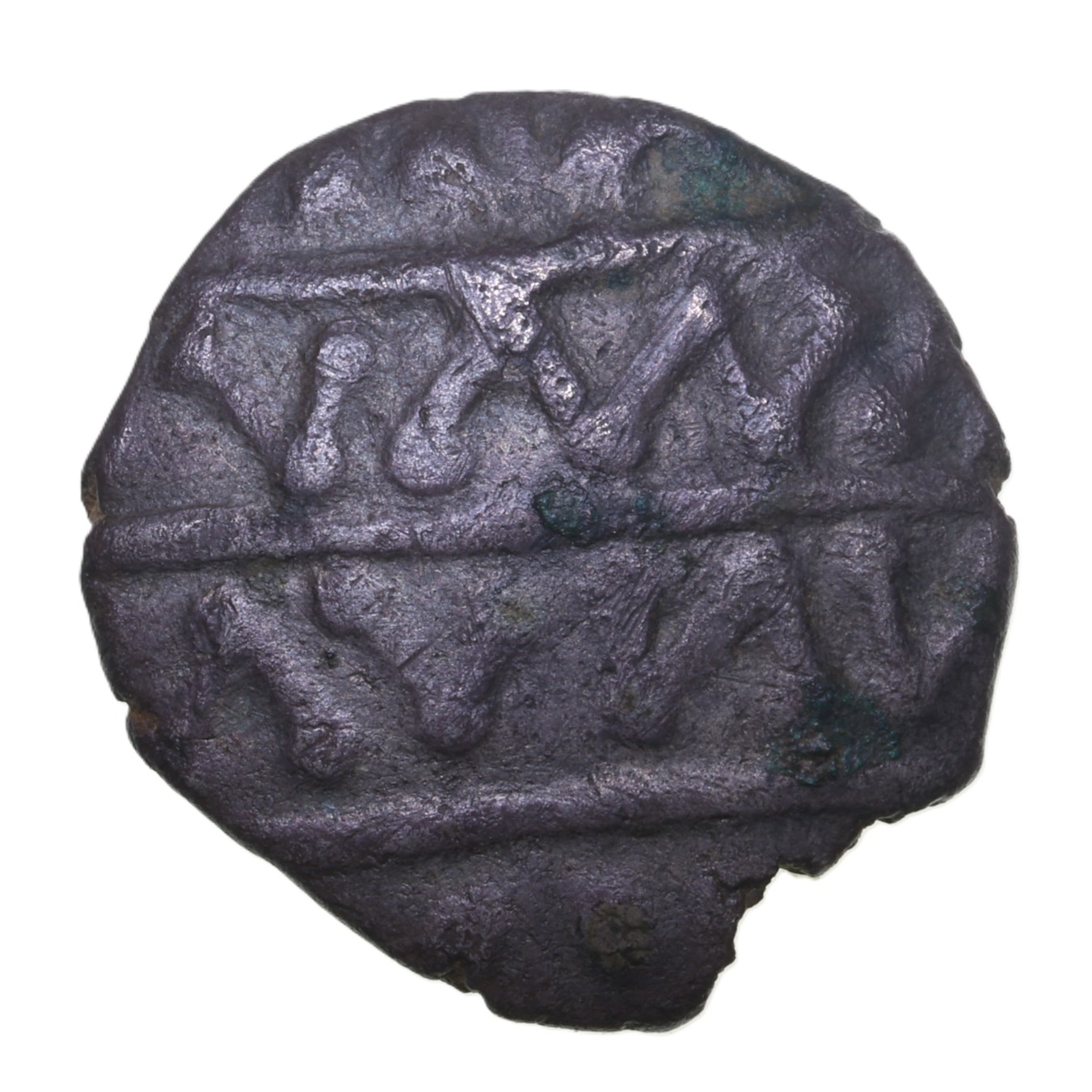
Corieltavi Aunt Cost c. AD 15-40 Aunt Cost Blundered Legend Silver Unit *Rare*
£650.00
Corieltavi Aunt Cost c. AD 15-40 Aunt Cost Blundered Legend Silver Unit
Rare
ABC 1950, 13mm, 1.07g
Obverse
Blundered two-line inscription of letters on panel.
Reverse
Horse left with mane, double upper forelegs. AVN inscription above. Trefoil below.
Comments
Leins Type: AVN 4c, AVN 4d (BNJ 2007, p.43-6). Leins distinguishes inscriptions VVNV (Leins Type 4c; CCI 95.1362) and VATA (Leins Type 4d).
The Catus Cnavo unit (ABC 1947), of which there are seven obverse dies, is otherwise the same as the Cutas Cnavo unit (ABC 1944), of which there are five dies (but more coins), and Blundered Legend. They are also similar to a unique coin inscribed Aota Cosn (N 470892). Chris Rudd (in ABC) and Van Arsdell attribute these to Aunt Cost on account of the reverse inscription AVN CO, seen on the regular Aunt Cost issues (ABC 1938) that are also often blundered. It is worth noting that CNAVO is an anagram of AVN CO.
Van Arsdell calls the obverse inscriptions “gibberish”. However, Rudd suggests CATVS and CNAVO could be a single name, Catuscunavos, referring to Aunt Cost’s father or grandfather (‘Catus’) or even a mint. Interestingly, CVTAS is an abbreviation for Civitas, so that CVTAS CNAVO could be a mint, as with SEGO, VERLAMIO and DVNO. Rudd goes on to suggest grandfather Catus may have struck the ‘Cat’ issues ABC 1845 and ABC 1848 (if those read CAT not TAC, and Aunt Cost’s coins read CATVS not CVTAS). The two ‘Cat’ coins are extremely rare if not unique and the inscriptions are not clear. The unit has untidy ‘letters’ that are retrograde and aligned vertically and sideways. The Cat half unit is associated with the unit because its single letter A is in a distinctive (but not unique) style. It seems more likely these are blundered, as happens with Corieltavi inscriptions – see Retro Vep (ABC 1863 and ABC 1899).
Leins (BNJ 2007) shows that based on the evidence of the Hallaton Hoard, the Corieltavi inscriptions VEPO-COR F, IISVP-RASV and AVN-COST were contemporary and late (30-50), with VEIIA RACN a late irregular issue. He suggests the fact that they were not produced in a linear fashion shows the inscriptions were not rulers, and instead might be blundered copies of Catuvellaunian inscriptions. The Catuvellauni had aligned themselves with the Romans and the Coreiltavi wanted to do the same – having an inscription was more important than what it said. Leins points to the similarity of CATVS CNAVO to Cunobelin’s CAMV CVNO, coins that were found in the Hallaton Hoard, while VEPO COR F is not unlike Verica’s VER COM F. Indeed, Rudd now appears to believe Aunt Cost coins were issued by Esuprasu in the style of coins of the Catuvellauni (see the sale of Aota Cosn).
Provenance
This coin is from The London Collection of Ancient British Coins. For more information click here: The London Collection – Silbury Coins : Silbury Coins.
M O’Bee coll. Found (by Mike) Rothwell Top, Caistor
This coin comes with a previous label.
AVNT COST
The inscription ‘AVNT COST’ on Corieltavian coinage is relatively unintelligible and realistically could refer to a place, person/issuer or indeed simply represent random Latin letters thrown together by the die sinker. Numismatist Ian Leins has devoted considerable attention to researching the coins of this ‘issuer’, suggesting that the prime mover for the inscription could have resulted from copying coins of Cunobelin. As with the coins of ‘VEPO’, these were also prevalent in the Hallaton treasure, similarly dating to the earlier 1st century AD. Coins with inscriptions reading ‘CVTAS CNAVO’ or similar are thought to be related to those of ‘AVN/AVNT COST’, possibly reflecting copying of the same Latin prototype text.
1 in stock
You may also be interested in these…
Related products
-
 New Listing
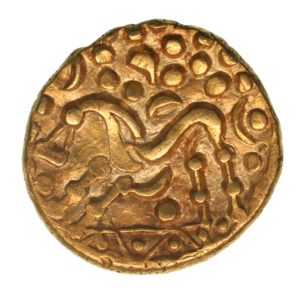
Corieltavi late 1st Century BC North East Coast Left Type Gold Stater *Rare*
£3,250.00Code: IAC314
-
 New Listing
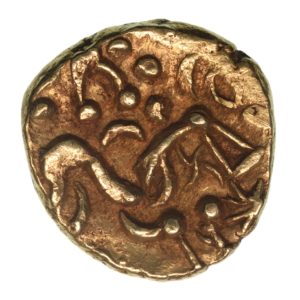
Corieltavi late 1st Century BC North East Coast Right Type with Sun Gold Stater *Scarce*
£1,950.00Code: IAC312
-
 New Listing
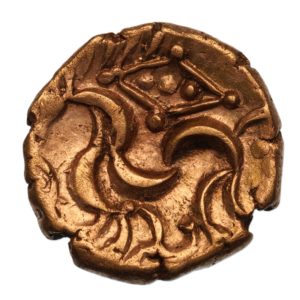
Corieltavi late 1st Century BC 3 Pellet Kite Gold Stater *Excessively Rare*
£3,250.00Code: IAC316
-
 New Listing
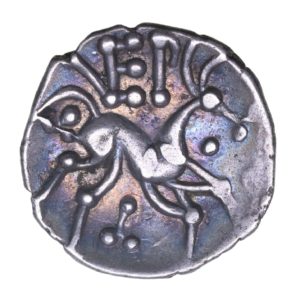
Corieltavi Vepo c. AD 15-40 Vepo Vep Silver Unit *Very Rare*
£775.00Code: IAC326