
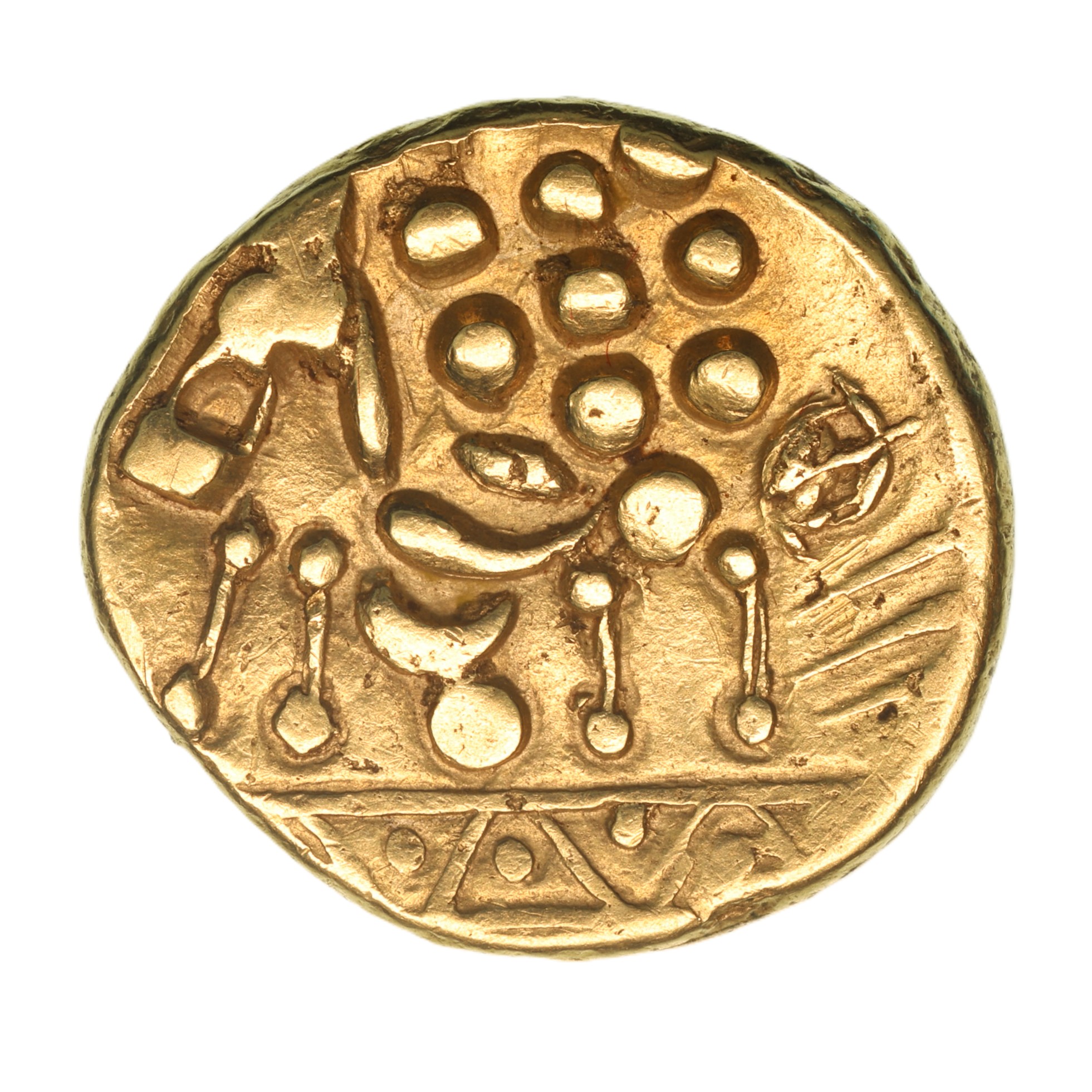
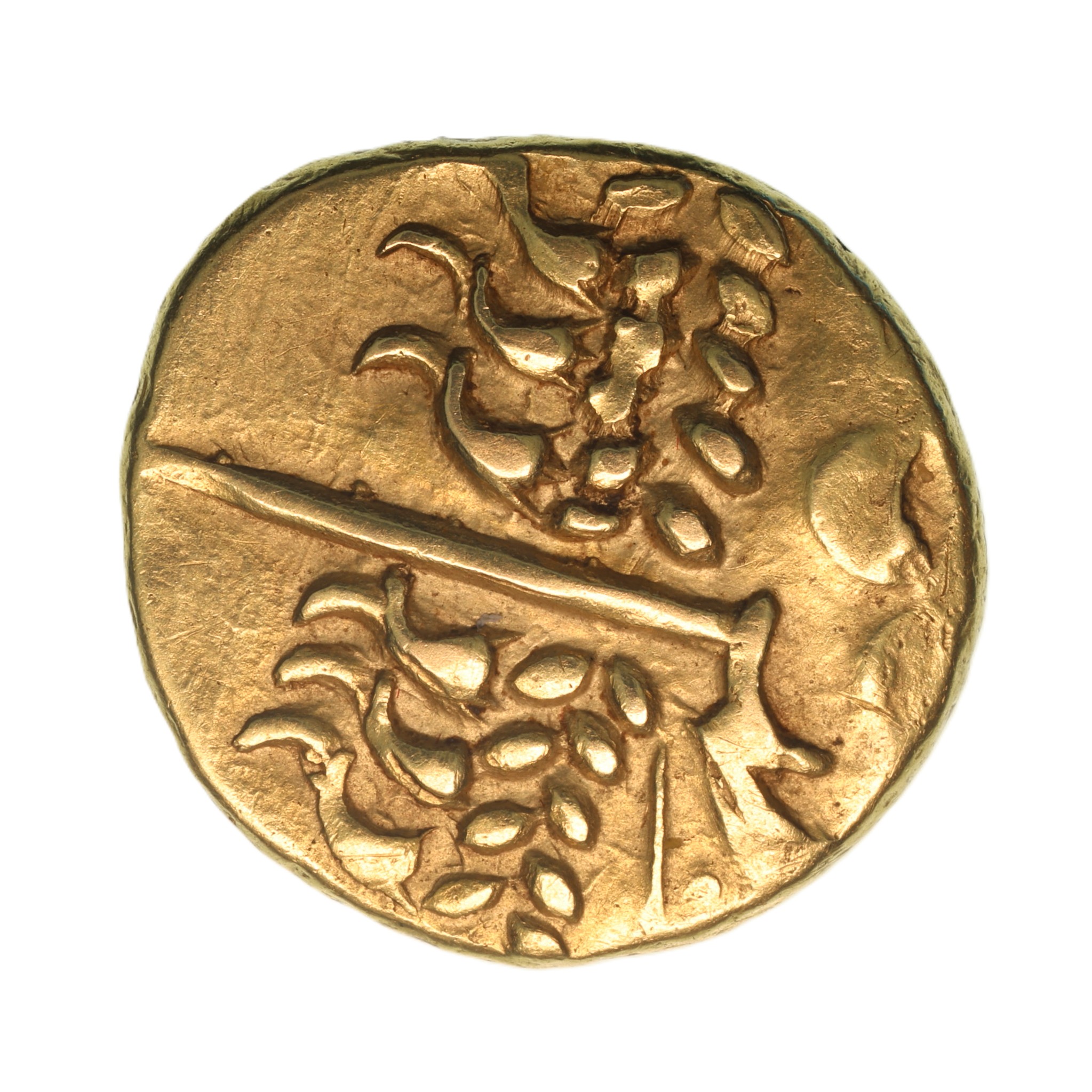
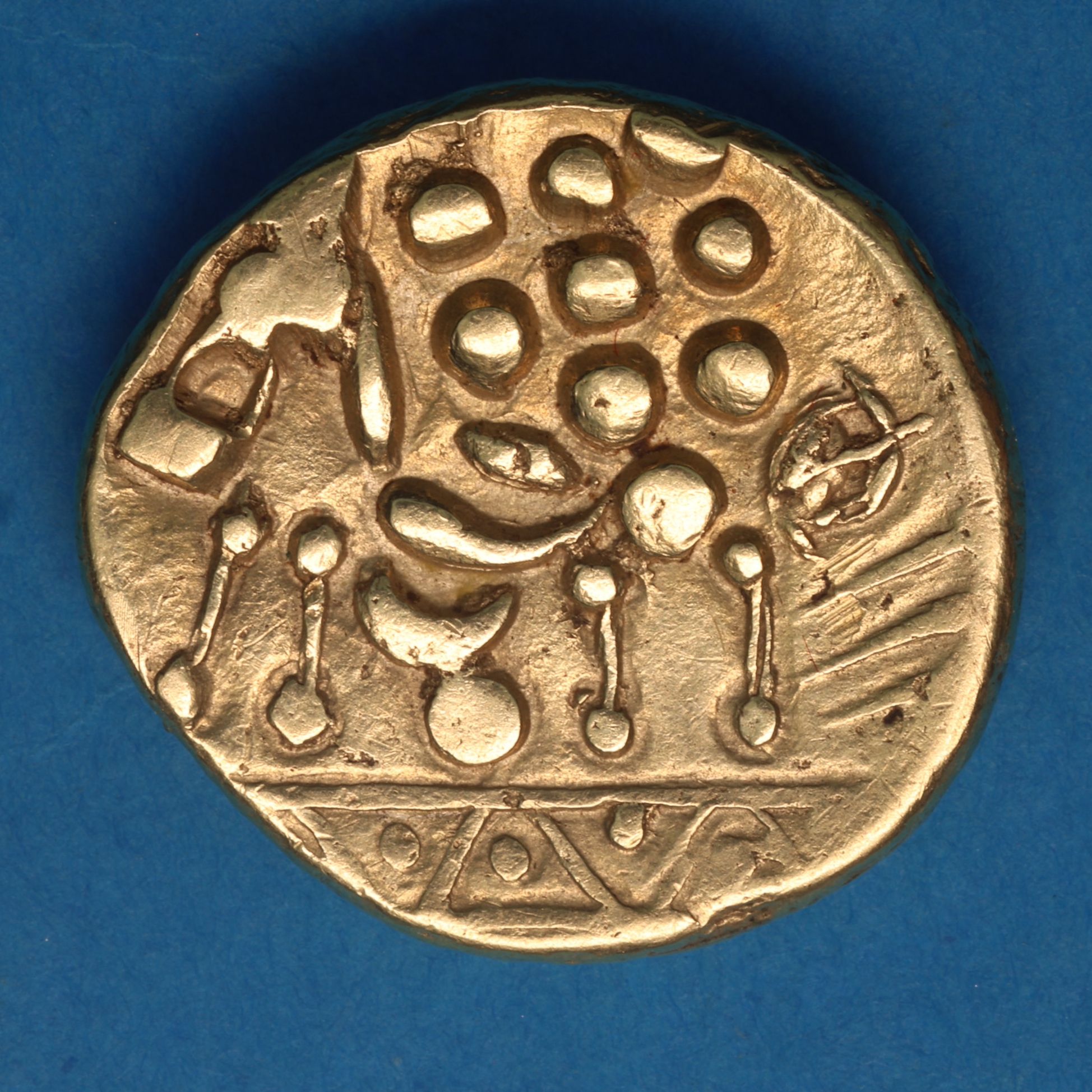
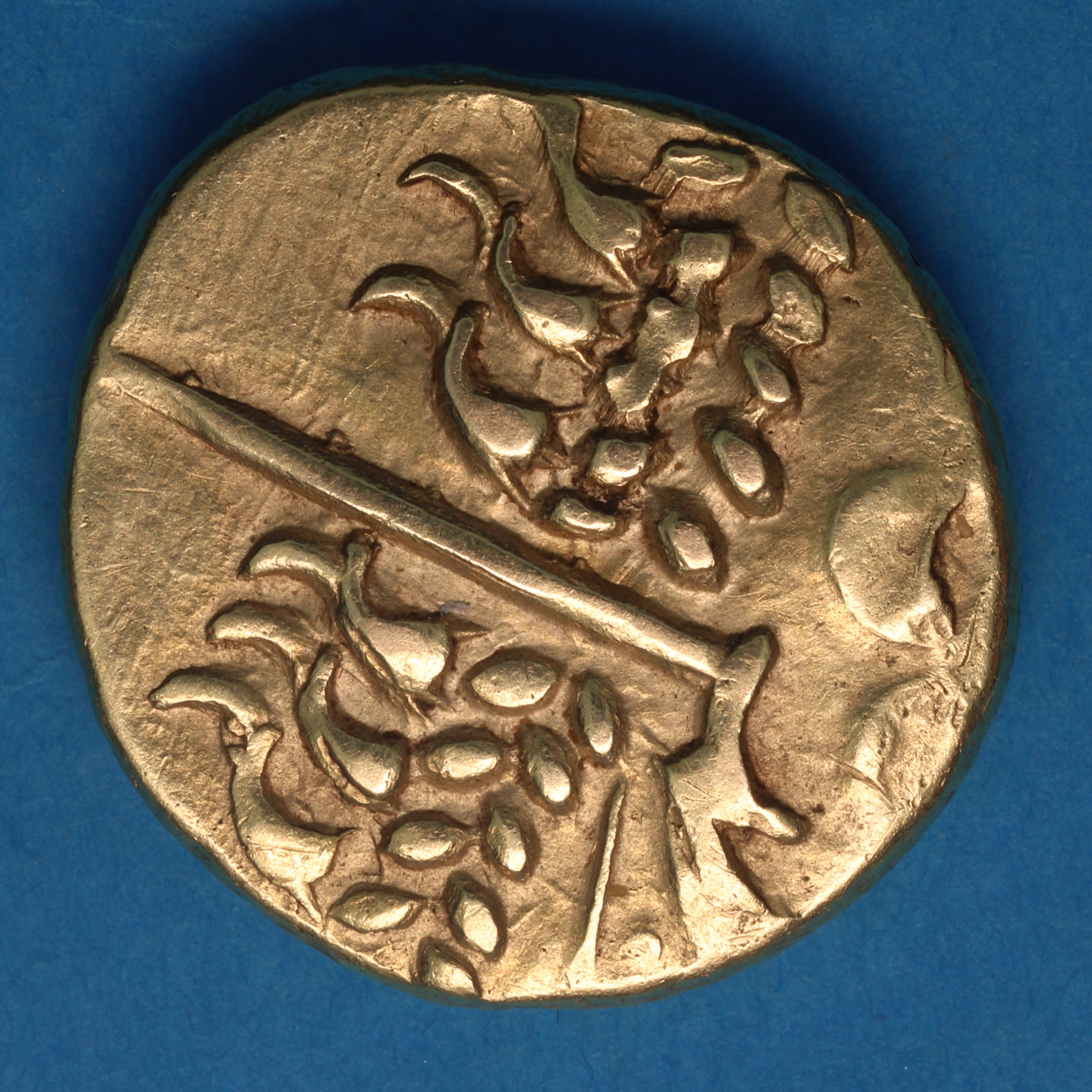
Regini & Atrebates 1st Century BC Westerham South ‘Lepe’ Gold Stater *Scarce*
£1,650.00
Regini & Atrebates
1st Century BC Westerham South ‘Lepe’ Gold Stater
Scarce
ABC 482, 19mm, 6.22g
Obverse
Abstracted head of Apollo right, devolved to wreath (with inside end of each leaf pointing upwards), crescents in front and cloak below. Hairbar (spike with curve) across wreath, often with large flaw below. Bulbous face, small bulge for chin.
Reverse
Disjointed horse left, stick legs. Many pellets above. Pellet under horse.
View Video Here
Comments
Often classified as Tarring (ABC 482) but Sills has these as two different types. The Lepe does not have hooks on the hair curls and no or only a small flaw below the hairbar.
Allen Type: British A.
Van Arsdell Classification: Atrebatic A, Earliest Gold Coinages, Westerham and Geometric Types.
Sills Lepe (12 obverse, 43 reverse dies): Early South-Western Coinage; British Af; Staters: Class 1 – British Af1, Lepe. Based on British Ad and had been assumed to be in the same series. However, Tarring (ABC 482) comes from east of Southampton while Lepe is found further west. Tarring has a prominent flaw below the hairbar which is not on Lepe. Lepe comes from British Ad before the hair curls develop a fish-hook tail, and is not derivative of Tarring. The inside ends of the wreath leaves point up, as on British Ad, but the lines and pseudo flaws on that are absent. The flaws around the horse are also absent. The later coins may have shared an engraver with the earlier Durotriges electrum staters and the series may have been the first coinage of the Durotriges.
Sills DK 293: Earliest obverse die. Dense, linear pellet arrangement on reverse. See CCI 10.2288.
Sills DK 294: Flaw developed below the hairbar. See CCI 10.2816.
Sills DK 295: Flaw from DK 294 copied across the top of the cloak. Neater, wiry horse. See CCI 11.0520.
Sills DK 296: Worn die, parallel striations have developed. Often very base metal by this time and can be confused with Duritrigan silver staters, and reverses can be indistinguishable. See CCI 92.1092.
Sills DK 297: Durotrigan electrum stater. See CCI 94.0462.
Sills chronology: Gallo-Belgic Ca – Insular Cf / Aa Westerham – British Ad (Tarring) – British Af (Lepe) – British B (Chute) – British Da (Curdridge) – British Db (Cheriton).
Provenance
This coin is from The London Collection of Ancient British Coins. For more information click here: The London Collection – Silbury Coins : Silbury Coins.
Bloomsbury Auctions, 14.09.2005, lot 700.C Rudd PT. Ex A Morris, Bonhams 11/1994 VA202
This coin comes with a previous label.
Atrebates
A distinct grouping whose ancestral heartlands in Britain appear to sit within the region now comprising Hampshire, Surrey and Berkshire. Coins from late in the Atrebatic series name their capital, Calleva – which would become the Roman town of Calleva Atrebatum (modern Silchester).
Early uninscribed issues struck in the tribe’s British zone of influence include the so-called ‘Westerham’ type staters (ABC 482/BMC 24–32), whose abstract designs are based upon gold Macedonian staters. The Westerham staters themselves probably provided the inspiration for both Belgic staters of the Chute type, as well as later Cranborne Chase staters of the Durotriges. A particularly beautiful type of uninscribed Atrebatic quarter stater with numerous die varieties is the so-called ‘Selsey Dahlia’ (ABC 500/503/BMC 478–94), which displays a flower-like sun design above the reverse horse. Inscribed issues seem to appear from about 30 BC onwards, naming individuals such as Commios, Tincomarus, Eppillus and Verica. Commios appears to have held particular influence, as the latter three issuers all make claim to be his sons upon their coinages – perhaps a way of legitimising their authority.
Regni/Regini
The Regni, sometimes referred to as the Regini, appear to have occupied what is today the western portion of West Sussex – their tribal civitas probably underlying what became the Roman town of Noviomagus Reginorum (Chichester). Regnian coinage is characterised not only by its sheer diversity, but also scarcity. Indeed, many of the key types are extremely rare. This is perhaps exemplified best by many of the tribe’s quarter-staters, of which no fewer than forty varieties are listed by ABC.
1 in stock
You may also be interested in these…
Related products
-
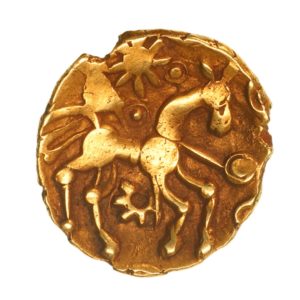
Regini & Atrebates c.60-50 BC Gold Quarter Stater *Very Rare*
£895.00Code: QC865
-
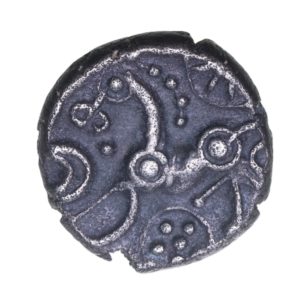
Belgae 1st Century BC Danebury Crescents Silver Unit *Excessively Rare*
£2,400.00Code: IAC68
-
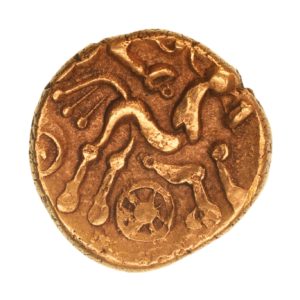
Regini & Atrebates c.60-50 BC Gold Stater Selsey Rings *Excessively Rare*
£2,250.00Code: QC864
-
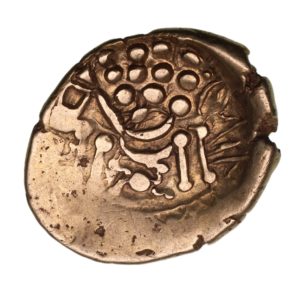
Belgae Gold Stater 65-40 BC Chute Type The Tarrant Gunville Hoard
£1,250.00Code: TG03