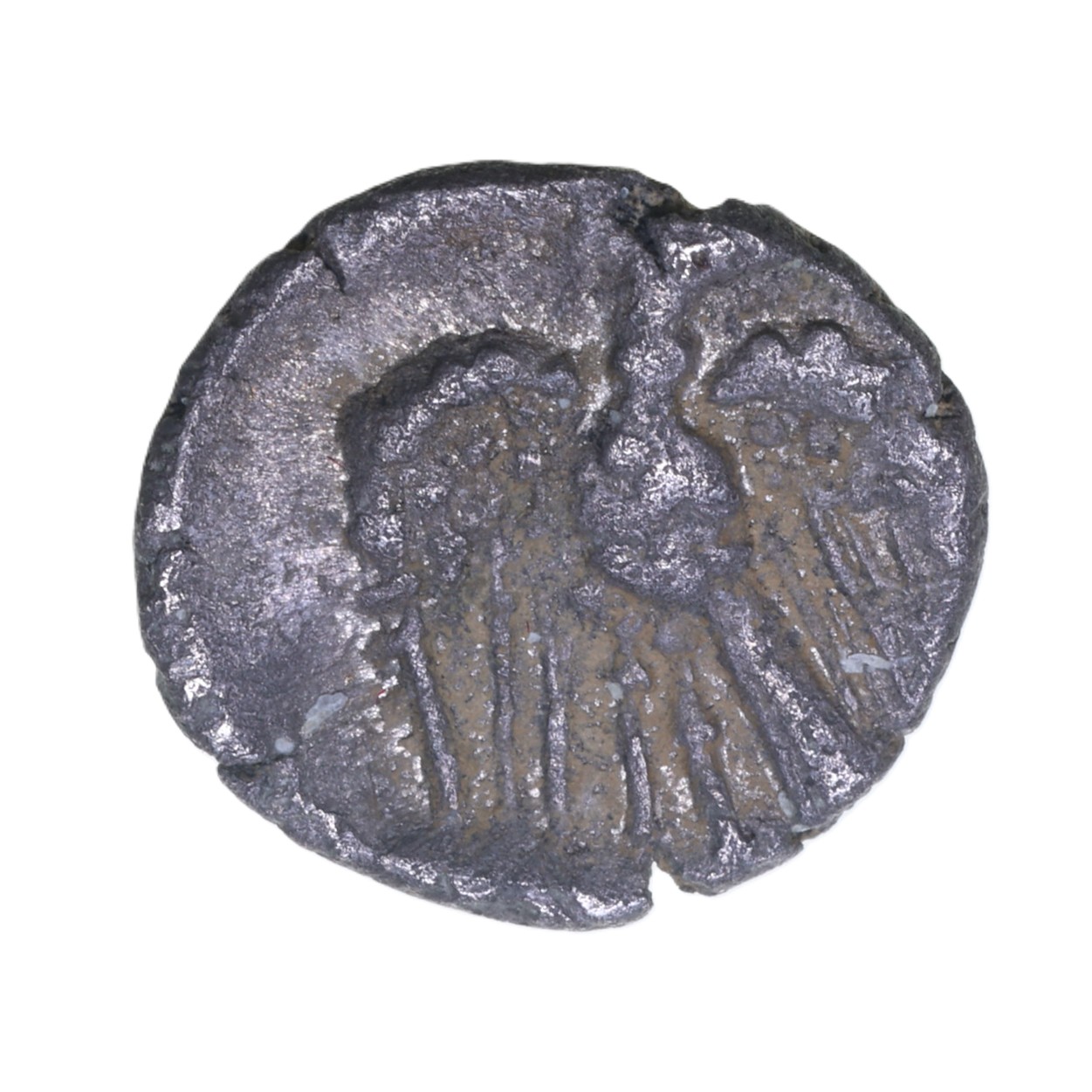
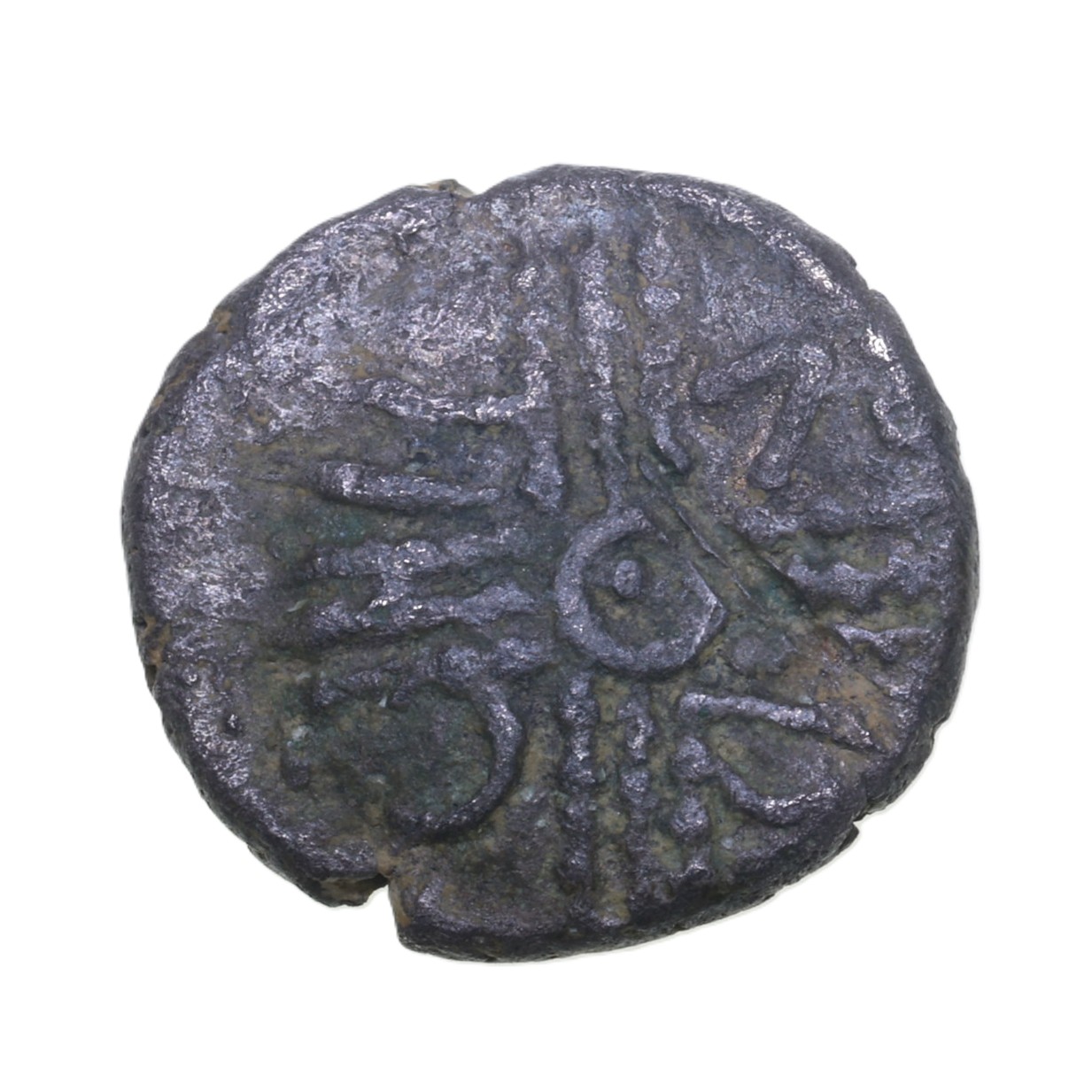
Vectuarii Crab c. 10-40 BC Crab Eagle Silver Unit *Extremely Rare*
£995.00
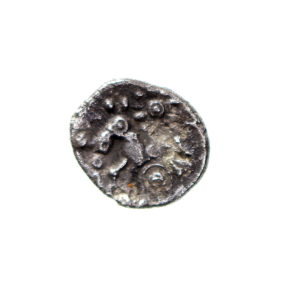
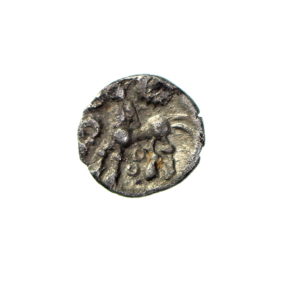
Vectuarii Crab c. 10-40 BC Crab Eagle Silver Unit
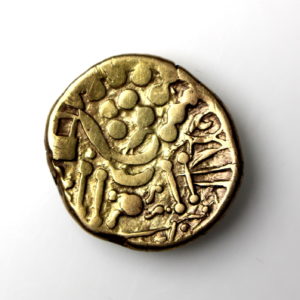
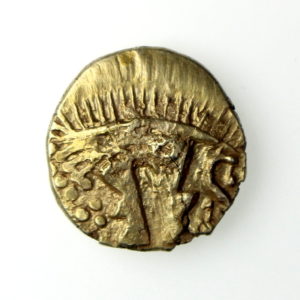
Crossed wreaths, pellet in ring at centre/Eagle standing head turned right
Extremely Rare
ABC 1385; 12mm, 1.08g
This coin has been defaced (linear cuts to obverse) which is often the case with this type, suggesting that they weren’t popular and their rarity supports a very short lived issue. For more information click here: Silver Unit – Crab (Eagle) – Atrebates and Regini tribes – Numista
Provenance
This coin is from The London Collection of Ancient British Coins. For more information click here: The London Collection – Silbury Coins : Silbury Coins
Spink PT 1997. Spink COE 2026 plate coin (373) VA 1285
This coin comes with a previous label.
‘Vectuarii’
The Isle of Wight, known as Vectis to the Romans, was inhabited by a tribe whose original name has not come down to us. While Ptolemy describes its location, he unhelpfully omits any information about the people occupying it. Although the term ‘Vectuarii’ is often promoted as a matter of convenience, the inhabitants of Wight only seem to have called themselves this well after the Romans departed Britain. The term appears in no Classical source, but instead first emerges in the 8th century writings of the historian Bede – suggesting an Anglo-Saxon origin.
In the Iron Age, Wight occupied an important, strategically significant zone straddling the spheres of influence exercised by two important, coin-issuing tribes of the mainland– the Durotriges and the Belgae. Such an advantageous location facilitated trade to the north, east and west, at least some of which may have come by way of Armorica. In consideration of this, it is perhaps unsurprising that coins struck by both the Belgae and Durotriges are prolific on the island, both as single finds and in hoards. While commercial relationships between Wight and these mainland groups are certain, it is unclear whether any political alliances were ever made.
While these coins make up most of the Iron Age issues found on the island, it is nevertheless important to note that the inhabitants of Vectis also got onboard with the process of making money – albeit to a much lesser degree than their commercial partners across the Solent. Only two coin types have thus far been identified as definite products of the ‘Vectuarii’, both of which are inscribed issues attributed to the period AD 10–40. These coins bear the name ‘CRAB’, comprising a silver unit (ABC 1385/BMC 2788) and a silver minim (ABC 1388/BMC 2789). Artistic influences derived from the Mediterranean sphere can be seen on both these types. The reverse of the unit depicts a suspiciously Roman-looking eagle, while on the obverse of the minim, the name ‘CRAB’ appears in a rectangular tablet. Cumulatively, PAS and CCI record no fewer than 12 coins of ‘CRAB’ – of which 9 have been found on Wight and the remaining 3 in close proximity within wider south-western Britain. As such, an association of ‘CRAB’ with the island is wholly indisputable.
Out of stock