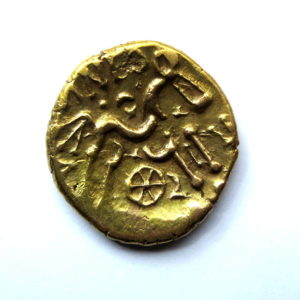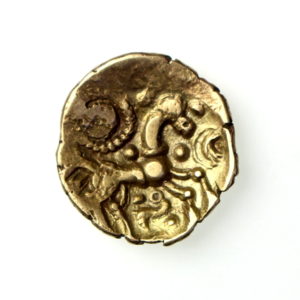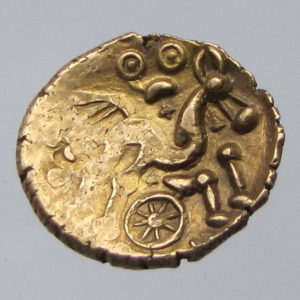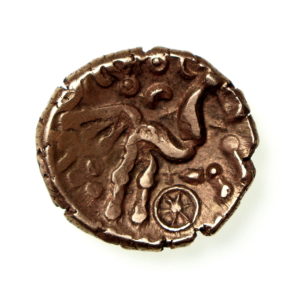
East Wiltshire c.50-35 BC Snake Head Silver Unit *Very Rare*
£475.00
East Wiltshire c.50-35 BC Snake Head Silver Unit
Very Rare
ABC 2122, 11mm, 1.07g
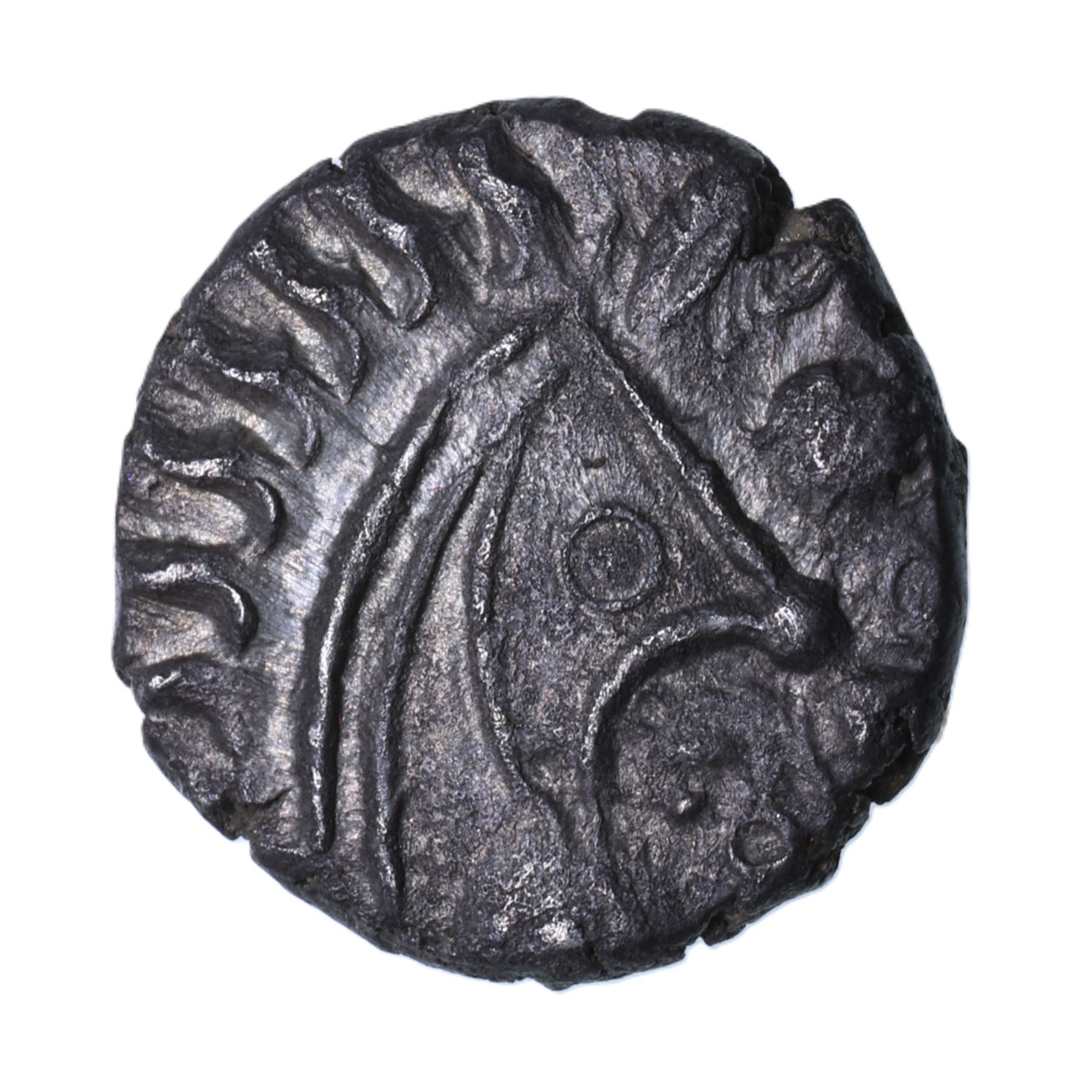
Obverse
Moon head right, large boss on chin, wavy lines for hair, pellet in ring motif for eye, stalk lips. Coffee bean motifs in front and above. Sunburst near nose.
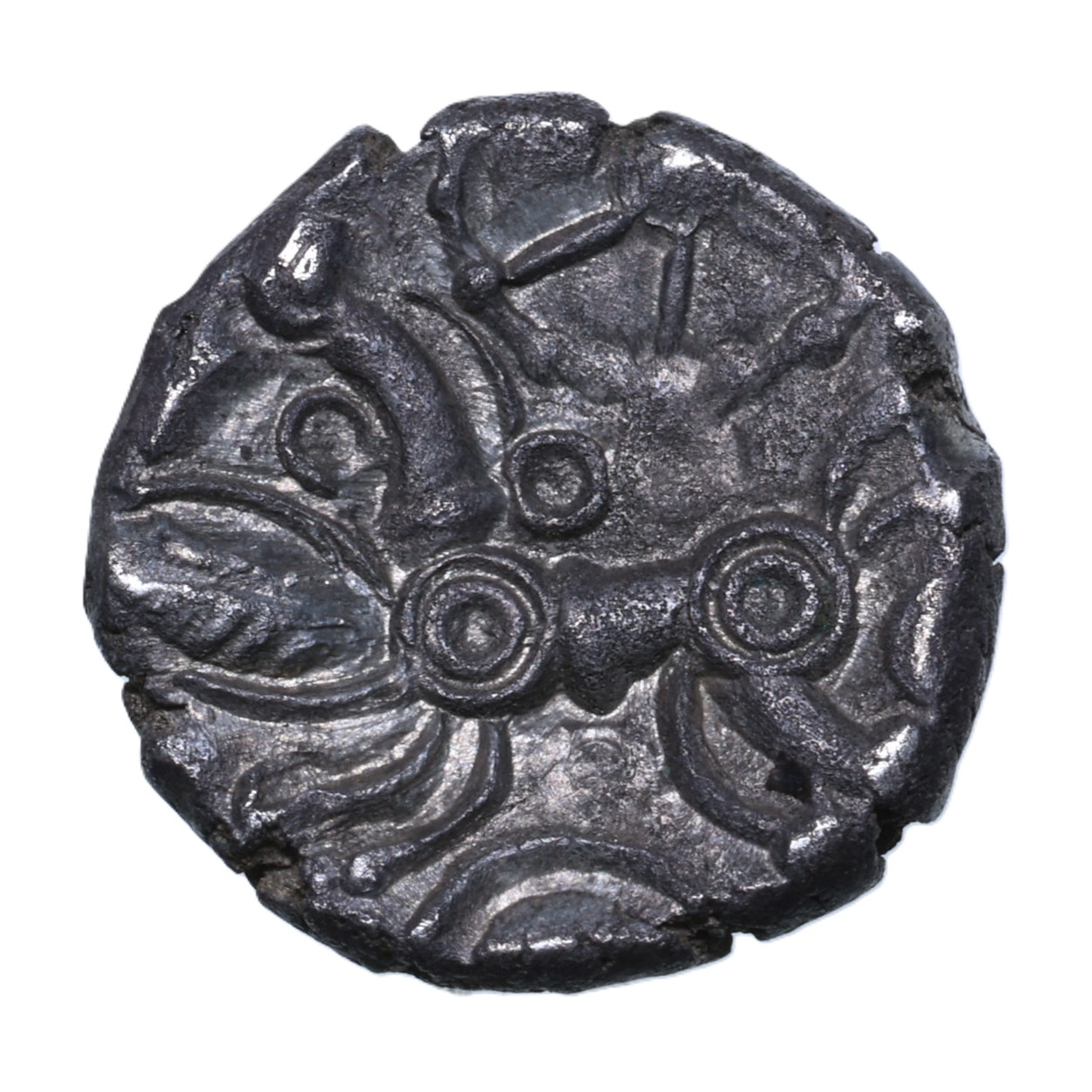
Reverse
Annulate horse left, beaded double tail. Small ring and wheel with pellet rim (sunflower in ring of pellets) above. Two small rings and large cogwheel in ring below.
Comments
Evans: (1890, p. 467).
Allen Type: L.
Van Arsdell Classification: Dobunni, Irregular Silver Issues, Unclassified. “Four unusual types [VA 1170, VA 1171, VA 1180, VA 1185, with many die varieties] have been identified by Allen as an irregular Dobunnic coinage. Though unlikely, these might represent a coinage of a separate tribal group centred in Wiltshire. This now appears to be an over-interpretation of insufficient data [as] recent finds have occurred in other parts of Dobunnic territory [than the Eastern fringe]. In any event, the coins are unusual and probably represent local issues of some sort, not necessarily those of a separate tribal group. Stylistically it appears to come after Dobunnic B and before Dobunnic G (15BC-30).”
Provenance
This coin is from The London Collection of Ancient British Coins. For more information click here: The London Collection – Silbury Coins : Silbury Coins.
M Vosper FPL 121, no 7, Mar 2002. VA1170
This coin comes with a previous label.
‘East Wiltshire’ Tribe
Although Dobunnic coinage holds sway over much of Wiltshire, the central and eastern parts of the county appear to have been home to a different coin-issuing group for at least part of the late 1st century BC. While Derek Allen first noted the possibility of this polity’s existence in 1971, only as a consequence of the important work done by archaeologist Paul Robinson several years later (published in 1977 within BNJ 47) was this confirmed from a numismatic perspective. Previously, these coins had been féted as irregular issues of the Dobunni, a view held by both Allen and the collector R.P. Mack.
Important from a chronological perspective is the fact that no coins of the East Wiltshire group are inscribed, a feature which suggests they probably date to the end of the 1st century BC.
Out of stock