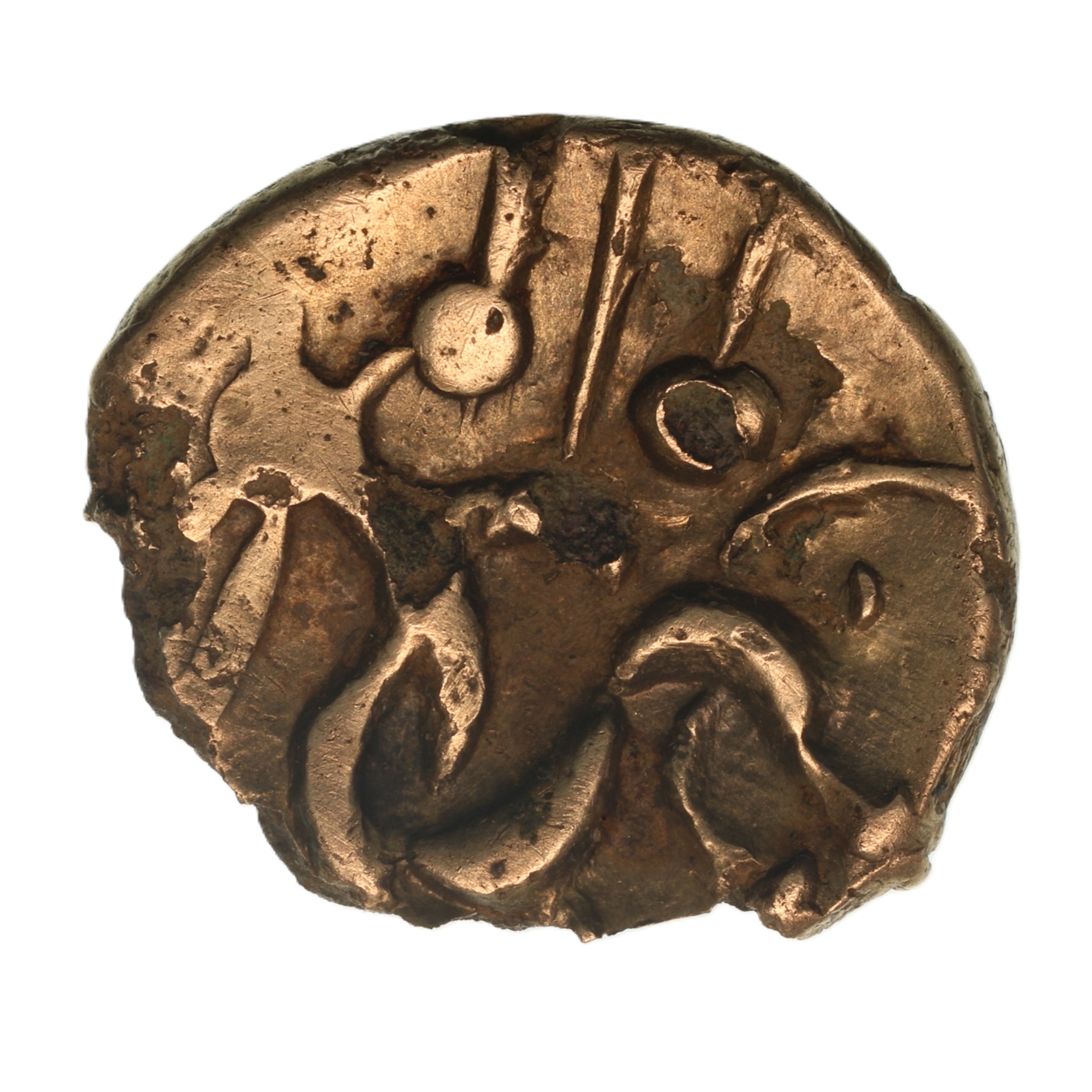
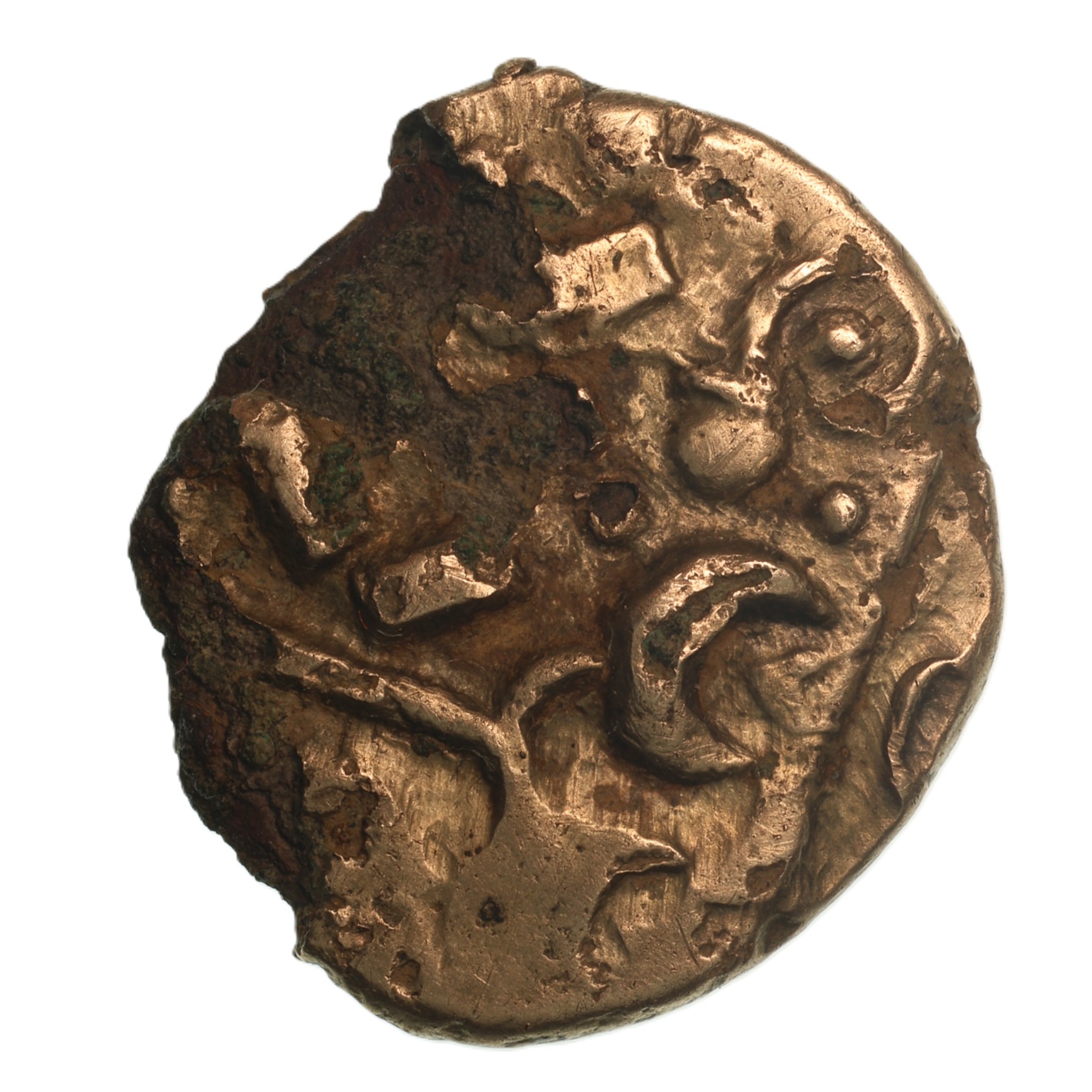
Corieltavi 1st Century BC Gold Plated Stater South Ferriby
£225.00
Corieltavi 1st Century BC Gold Plated Stater
South Ferriby
Wreath / Horse
ABC1743; S390, 20mm, 2.78g
The Corieltavi (sometimes called the Coritani, Corieltauvi or Coritavi) lived in and around what is today the East Midlands. Though their territory was centred on Lincolnshire, Leicestershire and Nottinghamshire, coin distribution patterns suggest that they probably held sway in at least some areas located north of the Humber – likely penetrating some way into modern Yorkshire. This gives them the honour of being Iron Age Britain’s most northerly coin issuers.
While no coins appear to have been minted either by the peoples located north of them, nor their neighbours in the central/western midlands, this position on something of a monetary ‘frontier’ by no means affects either the quality or quantity of their coinage. While there is little direct copying of classical images to be found here, nor evidence of any rulers whose names entered the annals of Rome, the coins issued within what numismatists call the ‘North Eastern Region’, are highly developed, characterful pieces which attest to the presence of skilled metalworkers and imaginative die-cutters.
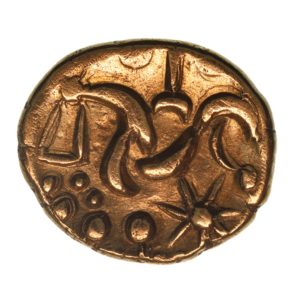
Like many of Iron Age Britain’s coin-issuing tribes, the Corieltavi’s earliest issues date to shortly after the invasions of Julius Caesar, beginning with an extensive coinage of uninscribed gold staters. These, the ‘North East Coast’ type (ABC 1716, 1719, 1722/BMC 182–211) are derived from repeated down-the-line copying of classical Macedonian prototypes. Over time, this type morphs into the so-called ‘South Ferriby’ staters, characterised by the increasingly stylised horse of lunate appearance present on their reverse faces (ABC 1743–52/BMC 3148–80). Other varieties of similar ilk to the South Ferriby types include the ‘Domino’ and ‘Kite’ staters, both of which have intriguing geometric symbols that evoke these modern descriptive terms in their reverse fields (ABC 1758, 1761/BMC 3185–6 and 3181–84). Contemporary with the latter is a highly unusual coinage unique to the Corieltavi, comprising the so-called ‘Lindsey Scyphates’. These, which are thin and of distinctly cup-shaped appearance, depict stylised bristling boars on their obverse faces (ABC 1773/BMC 3189–92). The boar is an animal which seems to have held particular significance to the Corieltavi, given that it not only appears on the gold uninscribed scyphates, but also on the extensive series of uninscribed silver coins which seem to emerge slightly later, such as the ‘Proto Boar’ type and its derivatives (ABC 1779/BMC 3194–98). While boars also appear on the early ‘South Ferriby’ silver units (e.g. ABC 1800), these slowly disappear during the transition towards inscribed types.
The inscribed Corieltavian coinages, which probably emerge during the early 1st century AD (that is, c. AD 10–20/30) and continue till shortly after the Claudian invasion, are some of the most mysterious in the Late Iron Age series – not least because unlike those from the southern and North Thames regions, we cannot tie the individuals named upon them with historically attested figures named in written sources.
1 in stock
You may also be interested in these…
Related products
-
Corieltavi 1st Century BC Bronze Stater core
£125.00Code: MC944
-
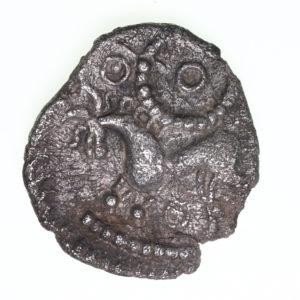
Corieltavi 1st Century BC Silver Unit Proto Boar with Spear Scarce
£165.00Code: NC873
-
 New Listing
Corieltavi late 1st Century BC South Ferriby Ladder Gold Stater *Extremely Rare*
£2,500.00Code: IAC317
-
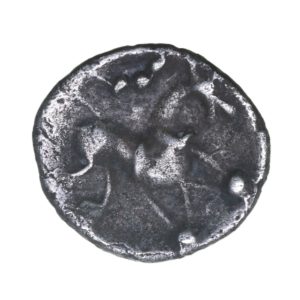
Corieltavi 1st Century BC Silver Half Unit
£165.00Code: QC327