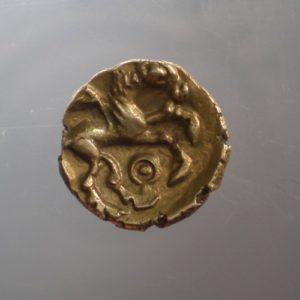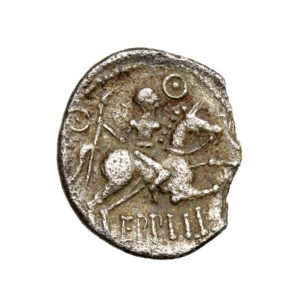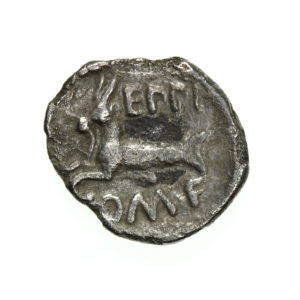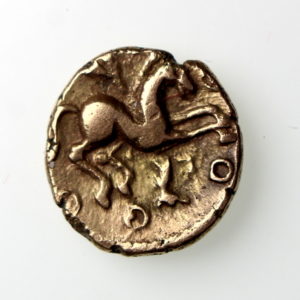
Cantiaci 3rd-1st Century BC Curved Bull Cast Bronze Unit
£195.00
Cantiaci
3rd-1st Century BC Curved Bull Cast Bronze Unit
ABC 150, 20mm, 1.91g
High grade
Obverse
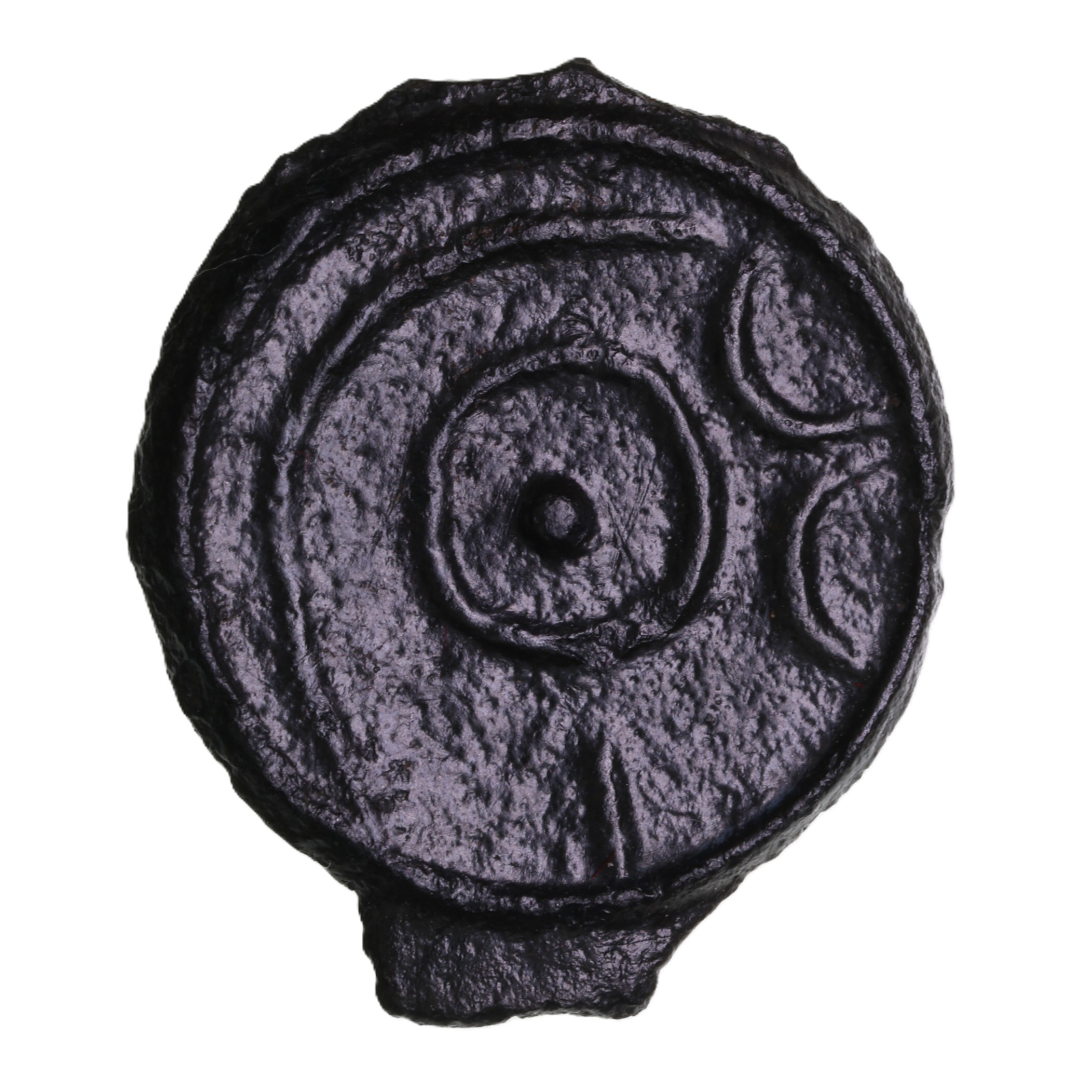
Outline head of Apollo right, with line down centre of neck, eye ring with pellet.
Reverse
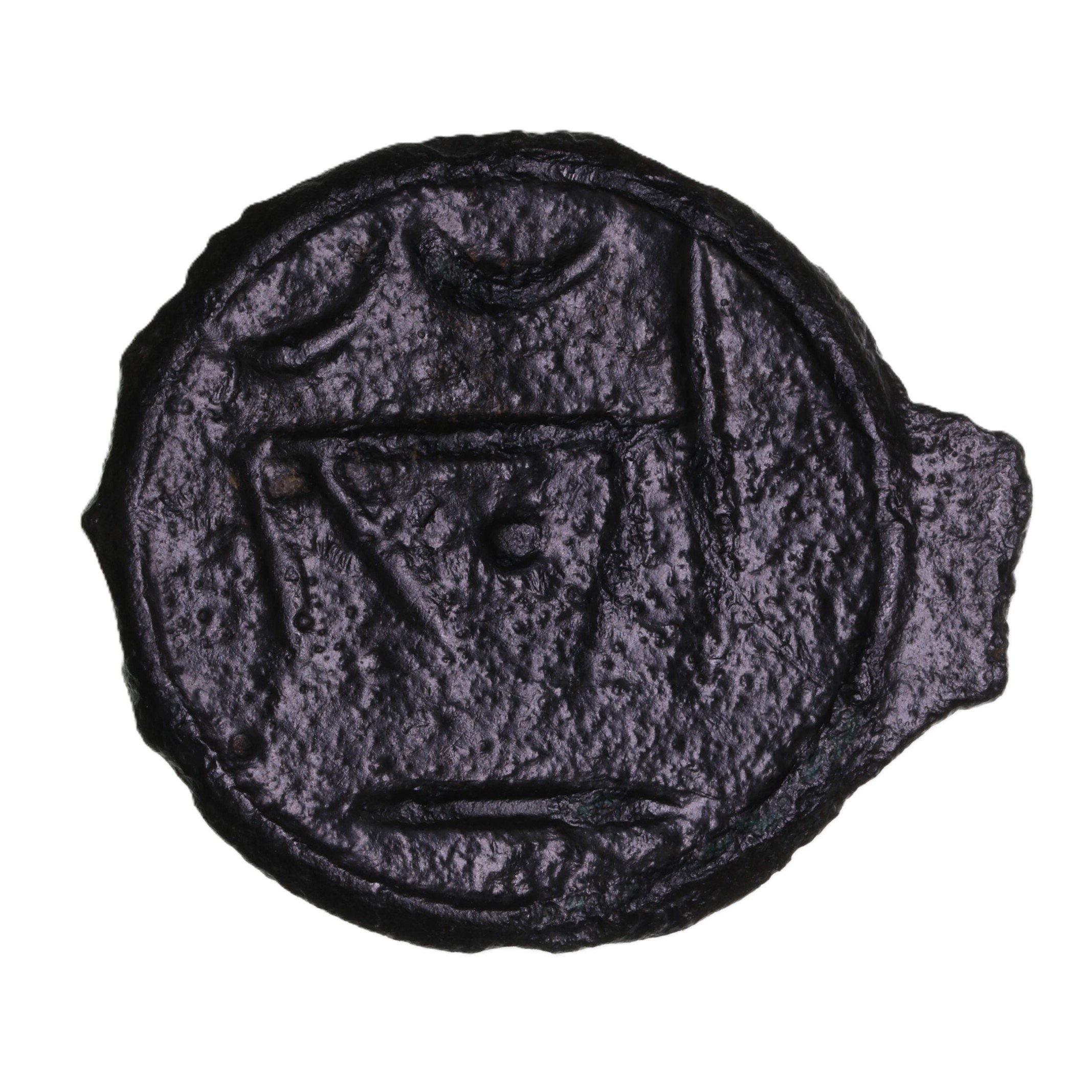
Outline bull left, mostly of straight lines but some curves still appear, legs usually apart, two crescents above. Exergual line below.
Comments
Evans: H5 (1864, p. 123, pl. H).
Allen Type: H2, L1, L2, L3, L4, L5.
Mack 17: Class 1 (large module). Crude head of Apollo right, eye an annulet with pellet. Crude bull left (Allen L1-5). See Holman F2/3-2, F2/3-4, F2/3-5, F2/3-7, F2/3-9, F2/3-11.
Van Arsdell ‘Angular Bull’. Van Arsdell Classification: Cantian D, Optimization Period. His corresponding varieties are:
VA 129 – 01 (Holman F2/3-2): Head faces right, bull faces left.
Holman proposes a detailed classification in A New Classification System for the Flat Linear Potin Coinage. These coins correspond with his Group F, which derive from Holman Group E.
Holman characterises Group F (Allen H2-4, J6-7, L) as the latest of the large flan issues, with thin, neat flans and designs. The bull comprises straight lines, notably the legs, although the body and tail may be a little curved. There is usually a pellet in the eye ring. Striations are very rare. Given the variability of the series, Holman suggests a degree of flexibility, where the features given are not taken to be exact. There are four subgroups in Group F, of which this is the second:
Subgroup F2 (Allen H2 and L) is the largest group with the most variants and most common varieties, likely due to an increase in mints. The bull now consists of mostly straight lines (with the occasional curve) and the legs are more likely joined at the top.

Next in the chronological sequence is Holman F3. The previous type is Holman F1. The previous group is Holman E and the next is Holman G.
Provenance
This coin is from The London Collection of Ancient British Coins. For more information click here: The London Collection – Silbury Coins : Silbury Coins.
C Rudd FPL 97, no 12. CCI 07.1174 VA129
This coin comes with a previous label.
Cantiaci
‘Of all the Britons the inhabitants of Kent, an entirely maritime district, are by far the most civilised, differing but little from the Gallic manner of life.’
Caesar, De Bello Gallico, book V, chapter 13.
The modern county of Kent was, according to the Romans, the homeland of the Cantiaci or Cantii. The closest portion of mainland Britain to the Continent, it is unsurprising that in the Late Iron Age the region boasted strong links with north-east France – a legacy maintained to this day, one could argue, with the continued importance of Dover and Folkestone as key cross-channel ferry ports.
Kent’s earliest Iron Age coins (and indeed, probably the earliest indigenously-produced British coins) are represented by cast bronze pieces called potins, whose alloy has a high tin content. On the basis of single finds and hoards, we know that imported gold in the form of Gallo-Belgic coinage was widely used in Kent at around the same time as the potins.
The somewhat mysterious series of uninscribed Kentish gold, including the so-called ‘Weald Net’ staters (ABC 177/BMC 2466) and ‘Corded Triangle’ quarter staters (ABC 198/BMC 2469–71) were probably struck c. 50–30/25 BC, they perhaps slightly precede a diverse group of uninscribed silver and bronze issues.
Inscribed issues belong towards the end of the Kentish coin-sequence, as is invariably the general case in Late Iron Age Britain. Their production probably began from c. 25 BC onwards and runs onward till shortly before the Claudian invasion. It is worth noting that at this time, Kent seems to have been taken over to varying extents by rulers from neighbouring regions. These rulers in turn came to issue coins in the region, even though they themselves might not originate from it, nor it reflect their main power-base.
Out of stock