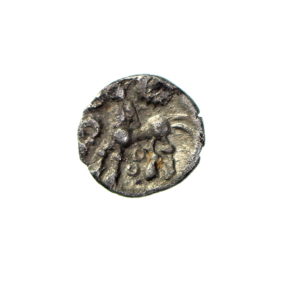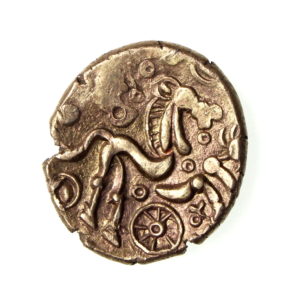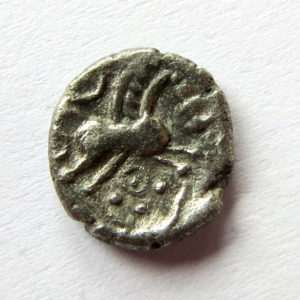
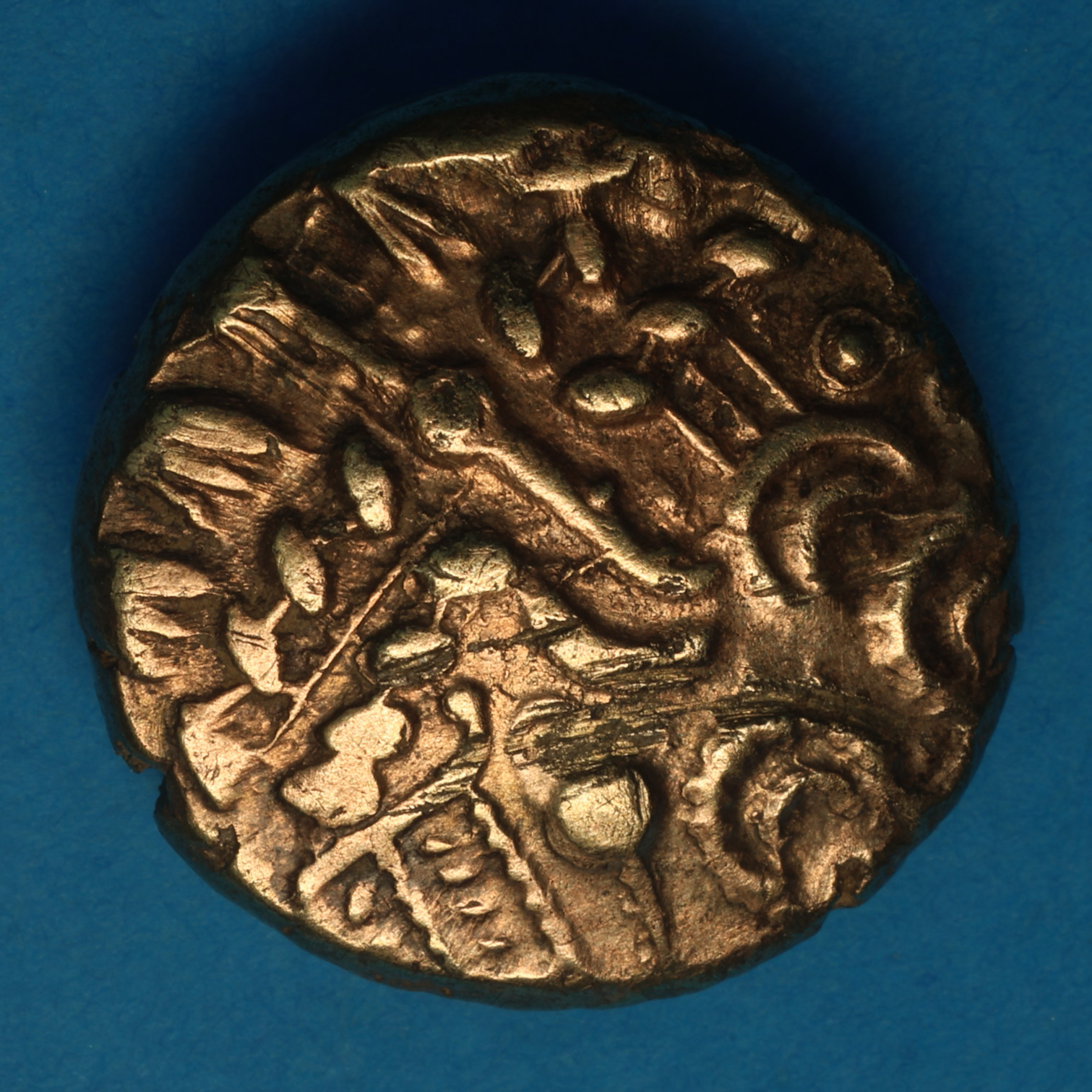
Belgae 1st Century BC Cheesefoot Head Gold Stater *Extremely Rare*
£3,950.00
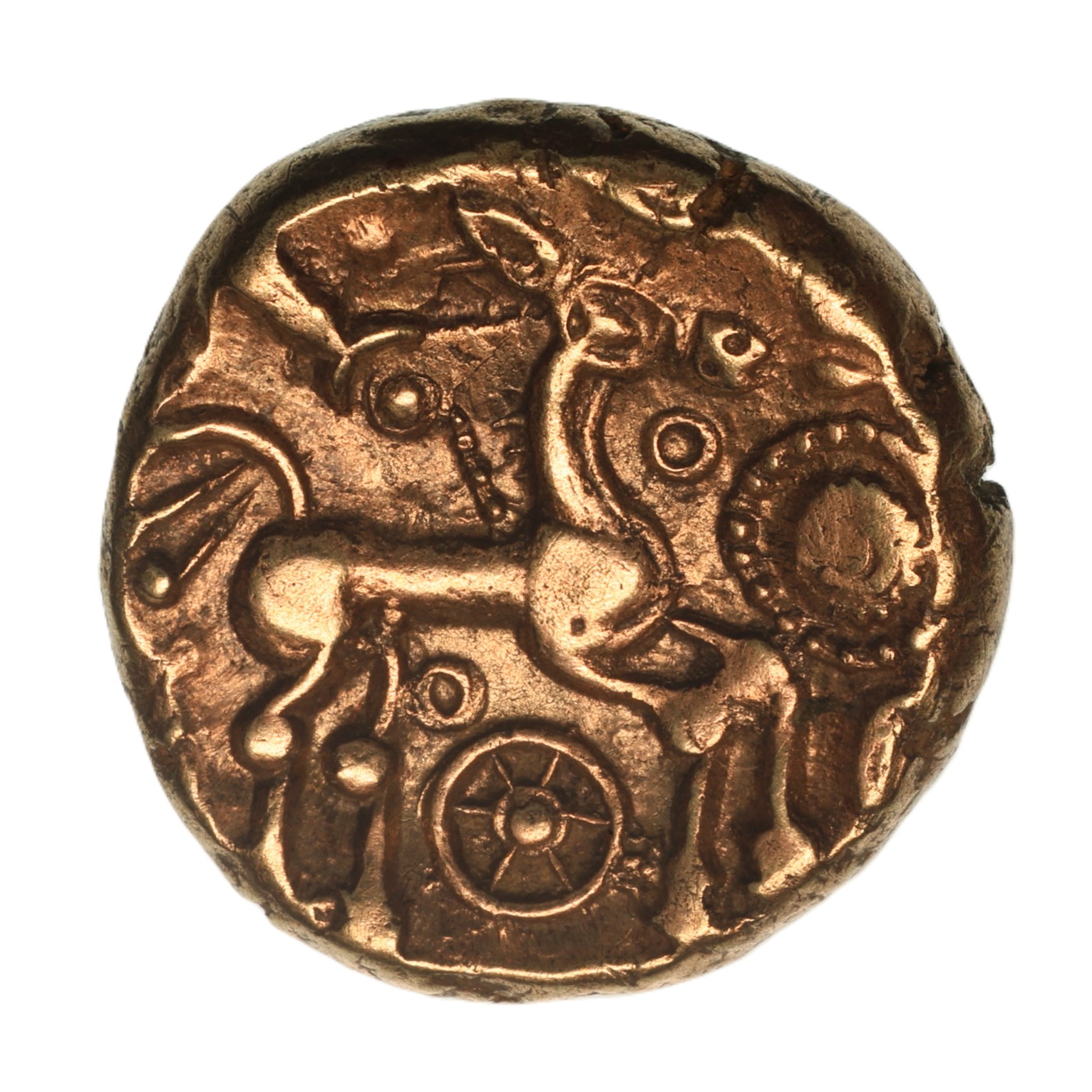
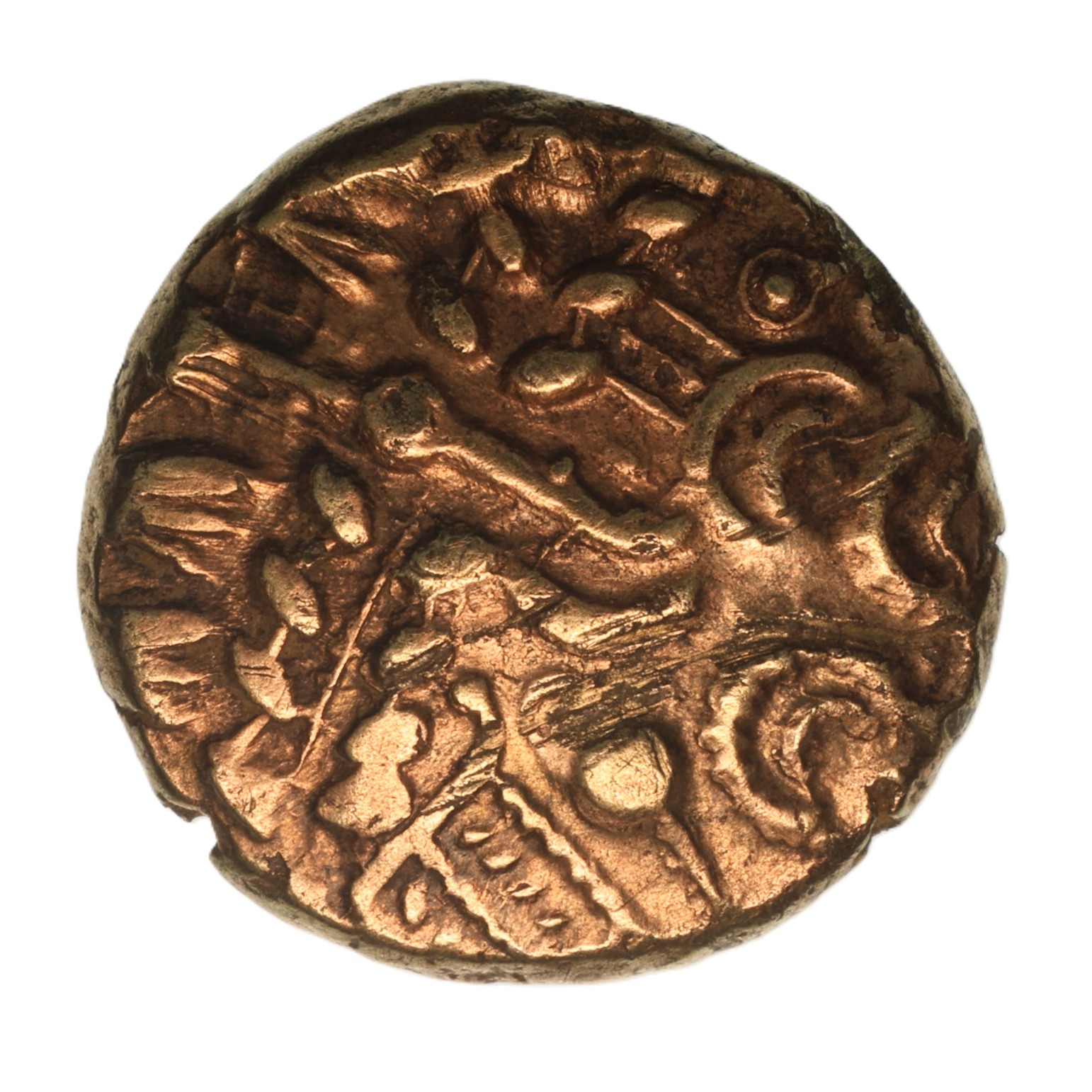
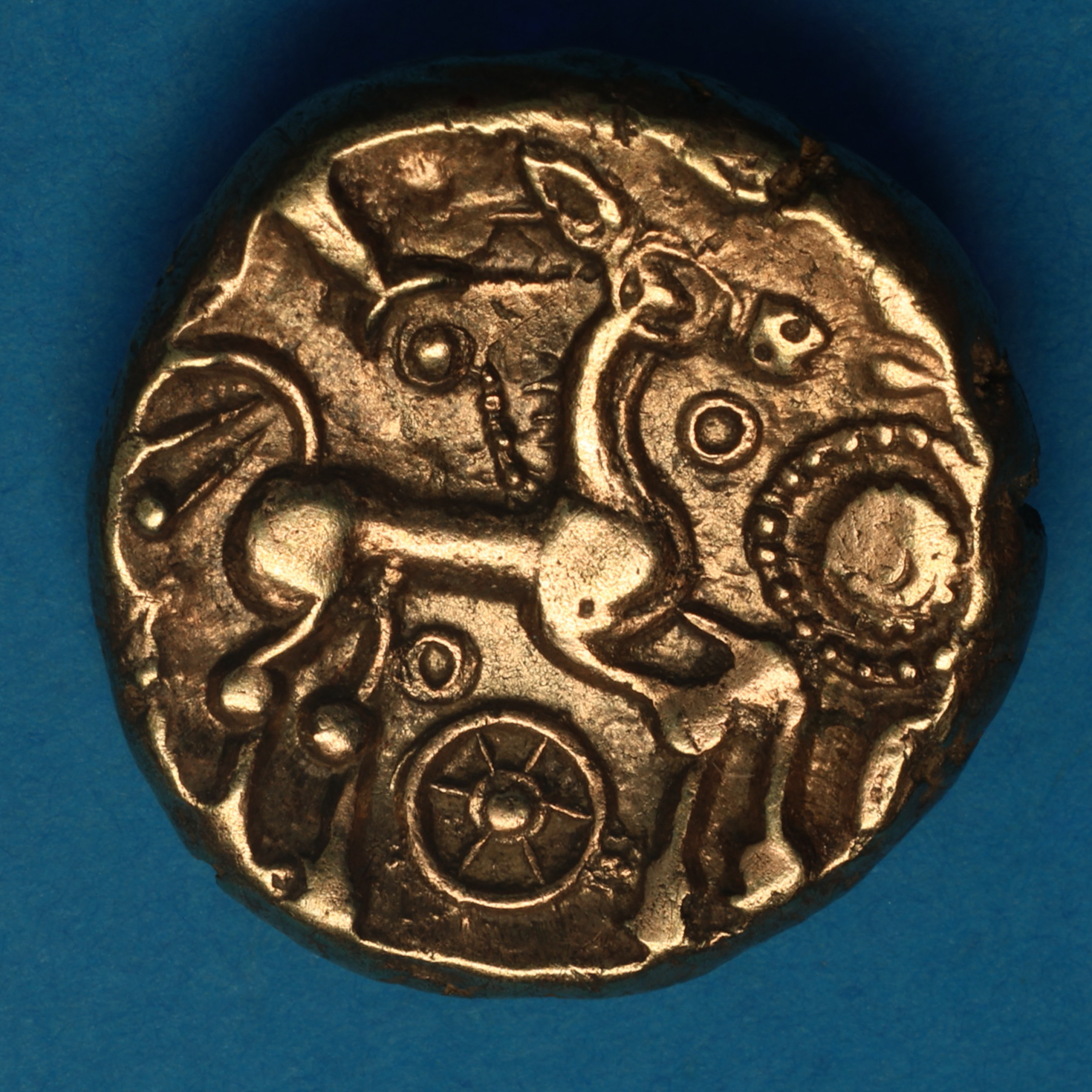
Belgae 1st Century BC Cheesefoot Head Gold Stater
Wreath, cloak and crescents/Triple tailed horse right with beaded mane, wheel below, charioteers arm over, pelletal sun in front
Extremely Rare
ABC 761; 16mm, 4.96g
A excellent example of this seldom seen type, which likely got its name from this very coin as it was found in 1997 at Cheesefoot Head, Hampshire. 11 known.
Provenance
This coin is from The London Collection of Ancient British Coins. For more information click here: The London Collection – Silbury Coins : Silbury Coins
C Rudd FPL 27, no 28. Found Cheesefoot Head, Hants 1997. CCI 97.0036
This coin comes with a previous label.
Belgae
Coin types attributed to the Belgae are extremely varied and, with one notable exception, uninscribed.
Developing onwards from two main stater types (Chute & Cheriton) are an extensive range of quarter-staters. Most common among these are two key issues – the ‘Hampshire Thunderbolt’ (ABC 767/BMC 129–36) and the stylistically more developed ‘Petersfield Wreath’ (ABC 773/BMC 568–70). A further 23 types of quarter-stater are listed by ABC, which show considerable variation in style. Many are obscenely rare, so much so that neither the cabinets of the British Museum nor those of major 20th century British collectors possessed examples. The horse is ubiquitous on the reverses of all these types, while obverses tend towards geometric designs – specifically those of cruciform appearance. Wheels, solar motifs, pellets-in-rings, stylised animals and wreaths abound here, truly reflecting the apogee of ‘Celtic’ art! Selected highlights include the ‘Huxtables Eagles’ (ABC 782/BMC 542–3 and ‘Danebury Scrolls’ types (ABC 791/BMC 539). It is worth noting that the ABC names for many types of the Belgae reference Danebury, the important Hampshire hillfort excavated by Barry Cunliffe in the later 20th century.
Silver units struck in the territory of the Belgae are even more variable than the quarter-staters. Several different stylistic ‘strands’ seem to be visible here. Some employ profile busts of a lunate appearance, which is sometimes combined with multiple crescents to represent the hair (e.g. ABC 836, 839, 923, 926) – a feature which connects them, as with Dobunnic issues, to prototypes deriving from Armorican coinage. By contrast, there are also coins with distinct, helmeted busts. These, like the East Anglian ‘Bury Diadem’, strongly evoke the bust of Roma on Roman Republican denarii. These types include the ‘Hampshire Helmet’, ‘Mossop Helmet’ and, to a lesser extent, the ‘Danebury Sunrays’ (ABC 851, 854, 866/BMC 609, 595–601). Another type whose obverse may take influence from denarii is the sole inscribed issue attributed to the Belgae – the so-called ‘Ex Head’ (ABC 995/BMC 614–28). Other types of silver unit still are entirely zoomorphic and depict only animals. Some of these are entirely conventional, such as the various ‘Danebury Boar’ variants (ABC 872, 875, 878/BMC 637), while others depict beasts of a more fantastical appearance. For example the ‘Danebury Dragon’, which displays a recurved, clawed animal on its obverse (ABC 896/BMC 631–33).
While no bronze coinage appears to be attributable to the Belgae, the group did produce fractional half-units and minims. These comprise a highly diverse suite of types characterised by their extreme rarity.
Out of stock