Iceni
The Iceni, who largely inhabited modern Norfolk, represent what is probably Iron Age Britain’s best known tribal confederation. Thanks to the efforts of their last ruler, Boudicca, they have truly earned their place in the annals of British history. Representing a potent symbol of resistance against Roman rule, they have been wholly immortalised via contemporary culture – featuring widely in art, television and even through the medium of video games. Nevertheless, it is important to acknowledge that there is much more to the Iceni than their swansong, a final hurrah pitched against the inevitability of Roman victory in Britain.
This was a land of skilled metalworkers in both gold and bronze, as evidenced by finds like the Snettisham torcs and the recent carnyx (war trumpet) discovered near Thetford, cunningly crafted in sheet-metal. Hoards of horse gear, such as bridle fittings and terret rings, are increasingly common here, showing an adherence to local art styles well into the later 1st and even earlier 2nd centuries AD.
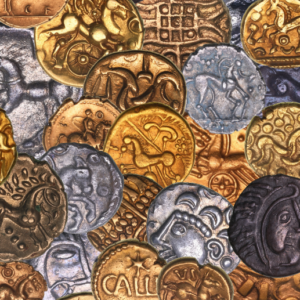
Our knowledge of Icenian coinage has been much advanced in recent years by Dr John Talbot, whose extensive publication of the series represents one of the few truly up-to-date syntheses of an entire, regional Iron Age coinage. The sequence begins with two iconic gold stater types. Perhaps most famous of these is the so-called ‘Norfolk Wolf’ (ABC 1393,1396,1399/BMC 212–78). This type, on which the reverse wolf faces either left or right, is one of only a very few Iron Age coins to feature canids. The second of the iconic Icenian staters is the extensive ‘Freckenham’ series and its variants (e.g. ABC 1426/BMC 3396–3404). Named after an 1885 hoard of ninety such coins, found in the village of Freckenham, Suffolk, these types generally depict a large, rose-like flower in the middle of their obverse faces, set at the centre of a four-spoked wheel. Accompanying these are varying types of uninscribed quarter-staters, most common of which is the so-called ‘Irstead’ type with its distinctive lattice-square obverse motif. Other uninscribed quarter-staters vary from rare to extremely rare, the latter best exemplified by the so-called ‘Mildenhall Mystery’ (ABC 1489).
While extensive, the Icenian gold issues are nevertheless dwarfed by the sheer variety of silver coinages present, which utterly predominate in regard to the site-finds generally recovered by detectorists and archaeologists alike. Iconography varies considerably on these. Most developed are the ‘Bury Diadem’ and ‘Bury Helmet’ type units (e.g. ABC 1495/1498/BMC 3524–32), which have obverses depicting scowling female helmeted busts. The stylistic links between these and Roman republican denarii of the late 2nd and early 1st century BC are uncanny, suggesting these formed the prototypes for Icenian die-cutters. Subsequent types depicting human busts are distinctly more crude, such as the ‘Odin Eye’ and its derivatives (ABC 1537/BMC 3538–39) – the lips now amusingly exaggerated and the hair coarsely braided.
A subsequent coinage where the human bust is replaced by a boar, what John Talbot generally refers to as the ‘boar-horse’ series (e.g. ABC 1579/BMC 3455–72), marks the beginning of coin-design standardisation. These in turn are superseded by the most common Icenian silver coins of all, which depict a pair of opposed crescents on the obverse and a prancing horse on the reverse. Examples of this highly variable general type (e.g. ABC 1660, 1663, 1699, 1702) are prolific. Text is now added wholesale to coin designs, with lettering of varying kinds appearing on this issue. Those present include the inscriptions ECE, ECEN, EDN, ANTED, AESU and SAENU, amongst others. Are these rulers, moneyers, officials, traders, mint-names, total gibberish or simply imitations of Latin inscriptions? The answer may simultaneously lie in any or all of these areas, though John Talbot favours the idea that they are personal names. What we do know for certain is that these coinages were produced in very large quantities at multiple mints, and that they turn up in hoards accompanied by worn Republican denarii and early Imperial issues. On the basis of the latter, their manufacture and deposition can probably be assigned to the first few decades of the 1st century AD.
Showing all 37 results
-
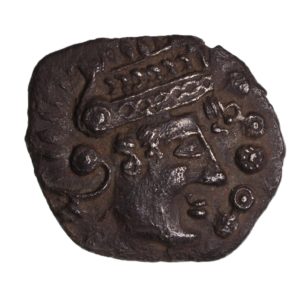
Iceni 1st Century BC Bury Helmet Silver Unit
£875.00Code: IAC300
View Item -
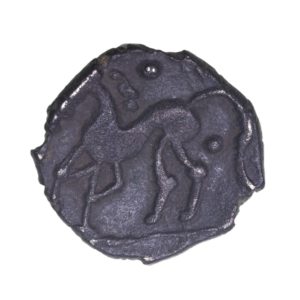
Iceni 1st Century BC Corn Ear Quatrefoil Silver Half Unit *Extremely Rare*
£450.00Code: IAC304
View Item -
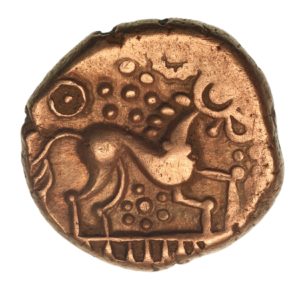
Iceni 1st Century BC Freckenham Crescents Moon Faces Type Gold Stater *Extremely Rare*
£3,750.00Code: IAC296
View Item -
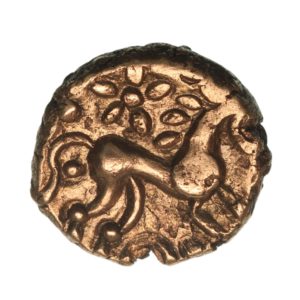
Iceni 1st Century BC Irstead Windflower Gold Quarter Stater *Excessively Rare*
£1,950.00Code: IAC297
View Item -
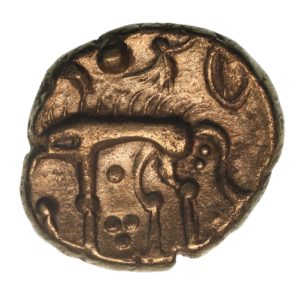
Iceni 1st Century BC Norfolk Wolf Left Type Gold Stater
£1,250.00Code: IAC292
View Item -
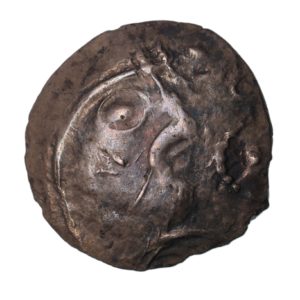
Iceni 1st Century BC Punk Head Silver Unit
£795.00Code: IAC301
View Item -
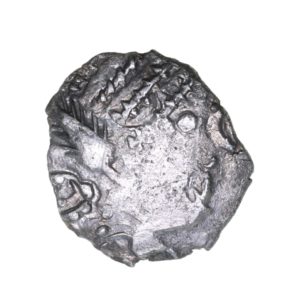
Iceni 1st Century BC Silver Half Unit Barley Boar *Excessively Rare*
£225.00Code: MC530
View Item -
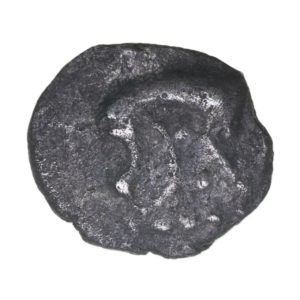
Iceni 1st Century BC Silver Half Unit Stickman Boar *Rare*
£165.00Code: QC249
View Item -
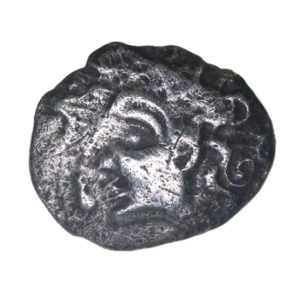
Iceni 1st Century BC Silver Unit Bury Diadem
£295.00Code: QC237
View Item -

Iceni 1st Century BC Silver Unit Bury Helmet right
£275.00Code: MC361
View Item -
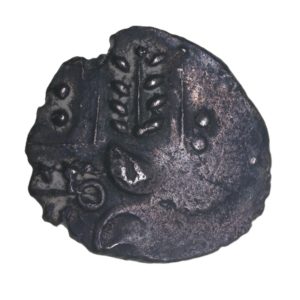
Iceni 1st Century BC Silver Unit Crescent Corn Ears *Scarce*
£165.00Code: QC248
View Item -
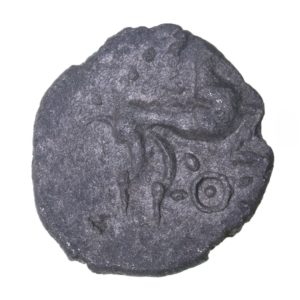
Iceni 1st Century BC Silver Unit Eyelash Crescents
£99.00Code: QC625
View Item -
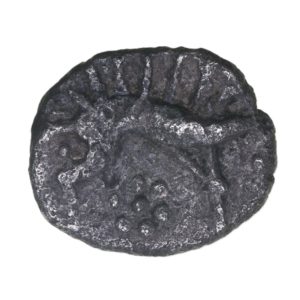
Iceni 1st Century BC Silver Unit Freckenham Boar *Ext. Rare*
£275.00Code: QC251
View Item -

Iceni 1st Century BC Silver Unit Mossop Proto Head *Rare*
£1,350.00Code: MC362
View Item -
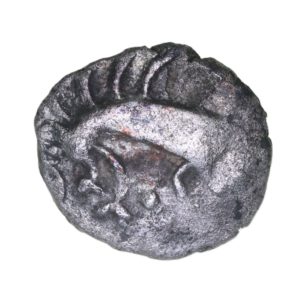
Iceni 1st Century BC Silver Unit Norfolk Boar Phallic
£165.00Code: QC245
View Item -

Iceni 1st Century BC Silver Unit Norfolk Boar star
£195.00Code: MC368
View Item -

Iceni 1st Century BC Silver Unit Norfolk Boar star
£275.00Code: MC370
View Item -
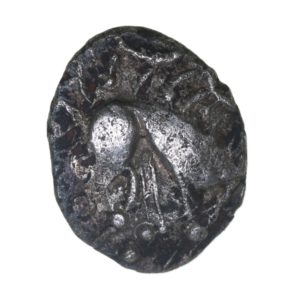
Iceni 1st Century BC Silver Unit Norfolk Boar Star
£165.00Code: QC242
View Item -
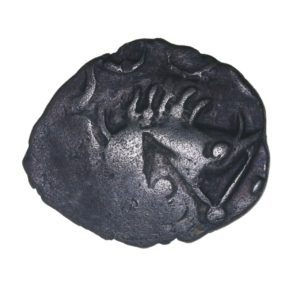
Iceni 1st Century BC Silver Unit Norfolk Boar Star
£250.00Code: QC244
View Item -
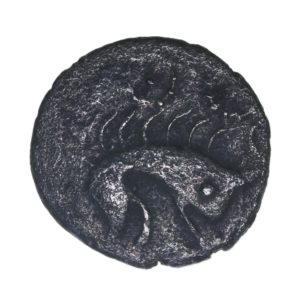
Iceni 1st Century BC Silver Unit Norfolk Boar Triadic *Rare*
£275.00Code: QC240
View Item -
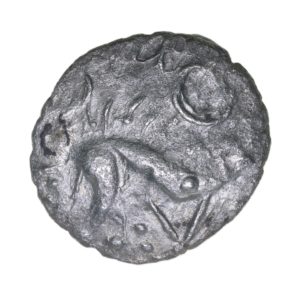
Iceni 1st Century BC Silver Unit Norfolk Boar Triadic *Rare*
£275.00Code: QC241
View Item -
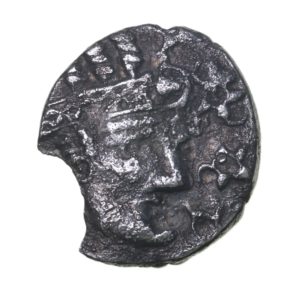
Iceni 1st Century BC Silver Unit Norfolk Diadem
£195.00Code: QC250
View Item -
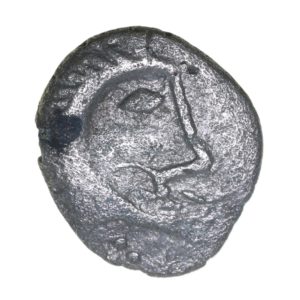
Iceni 1st Century BC Silver Unit Norfolk God Moustache
£175.00Code: QC239
View Item -

Iceni 1st Century BC Silver Unit Punk Head type
£495.00Code: MC363
View Item -
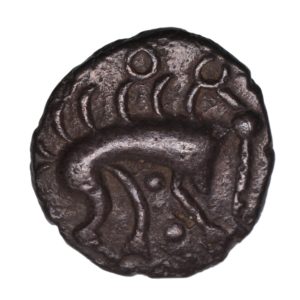
Iceni 1st Century BC Stickman Boar Silver Half Unit *Rare*
£550.00Code: IAC305
View Item -
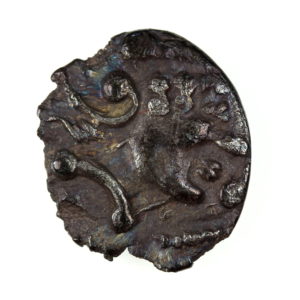
Iceni 65-45 BC Bury Helmet Silver Unit
£475.00Code: CG824
View Item -
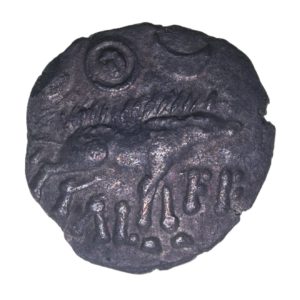
Iceni Alii Scavo c. AD 35-45 Alii Scavo Silver Unit *Extremely Rare*
£2,250.00Code: IAC311
View Item -
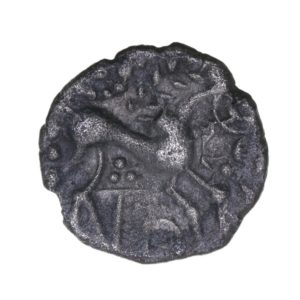
Iceni Antedios AD 10-30 Silver Unit Antedios Antd D Bar
£250.00Code: MC533
View Item -
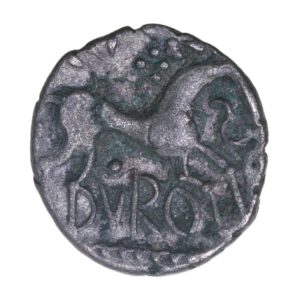
Iceni Cani Duro c. AD 10-20 Cani Duno Silver Unit *Rare*
£550.00Code: IAC306
View Item -
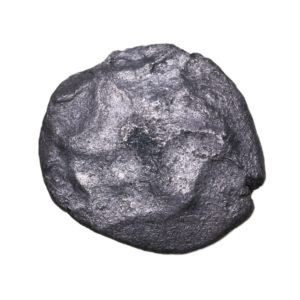
Iceni Ecen AD 10-43 Silver Half Unit
£165.00Code: MC951
View Item -
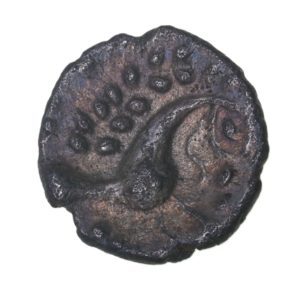
Iceni Ecen AD 10-43 Silver Unit Ecen Corn Ear
£165.00Code: QC256
View Item -
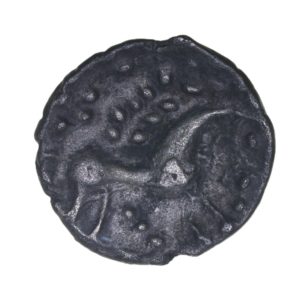
Iceni Ecen AD 10-43 Silver Unit Ecen Edn
£165.00Code: QC263
View Item -
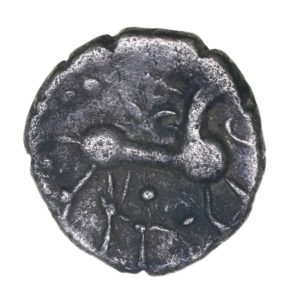
Iceni Ecen AD 10-43 Silver Unit Ecen Edn
£135.00Code: QC265
View Item -
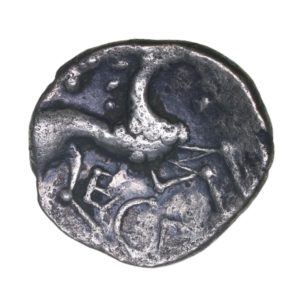
Iceni Ecen AD 10-43 Silver Unit Ecen Six
£175.00Code: QC259
View Item -
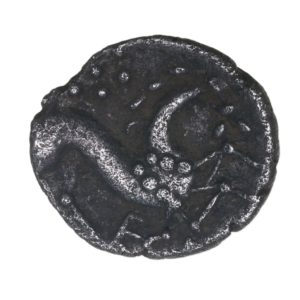
Iceni Ecen AD 10-43 Silver Unit Ecen Six
£175.00Code: QC261
View Item -
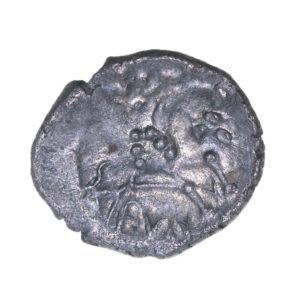
Iceni Saenu c. AD 30-43 Silver Unit *Scarce*
£395.00Code: QC871
View Item -
The London Collection
Code: TheLondonCollection
View Item