
Durotriges
The Durotriges, based deep in south-western Britain, were a confederation of peoples who occupied much of modern Dorset, Somerset and western Hampshire. Their major population centres were probably somewhat dispersed across the region, although one important location is that of Hengistbury Head – a fortified location which benefitted greatly from its international trade-networks. Evidence for metalworking and the presence of abundant coin-finds at the site additionally indicates that this was almost certainly the location of a Durotrigan-controlled mint. It is possible that the tribe were indirectly referenced by Suetonius in his ‘Lives of the Twelve Caesars’, while describing the exploits of Legio II Augusta during the Claudian invasion. Pushing into south-western Britain under the leadership of their legate, Vespasian (later to become emperor), the legion apparently subdued ‘two powerful tribes’, fought numerous battles against the Britons, stormed twenty fortified sites and subjugated the Isle of Wight. Although it is possible that one of these tribes may well have been the Durotriges, neither are explicitly referred to by name.
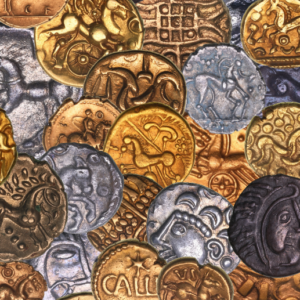
Durotrigan coinage is some of the most stylistically conservative in the entire British Iron Age series, its designs remaining essentially consistent from initial inception right up till the Conquest of AD 43. Neither classical imagery nor Latin inscriptions are to be found here at all, by stark contrast with their neighbours to the north and east. Instead, the highly abstract artistry on much Durotrigan coinage is primarily drawn from southern gold staters of the so-called ‘Westerham’ type (ABC 482). This conservatism in design is matched by a comparably conservative metallurgy, the tribe apparently lacking any significant gold coinage – a unique trait amongst all the coin-issuing polities of Iron Age Britain.
The earliest Durotrigan coins were probably struck during the mid 50s BC, typified by the ‘Cranborne Chase’ type staters and their derivatives (ABC 2157). This prolific series of coins begins with a high-quality alloy comprising of silver with a little gold mixed in, before the gold eventually peters out in favour of purer silver. In turn, the silver itself becomes more and more debased over the course of the later 1st century BC, eventually becoming billon. Contemporary with the various stater issues are several types of quarter-stater. These begin with coinages of good silver content (e.g., the ‘Duro Boat Bird’ and iconic ‘Badbury Starfish’ types – ABC 2208/ABC 2220), the precious metal subsequently reducing proportionally with successive types. Quarter-staters of a more debased nature include the so-called ‘Badbury Rat’ (ABC 2214) and ‘Duro Thunderbolt’ (ABC 2217), both of which are relatively common finds. By the early 1st century AD, the debased versions of the Cranborne Chase staters mutate into a cast bronze coinage, many examples of which have been found at Hengistbury Head.
Showing all 13 results
-
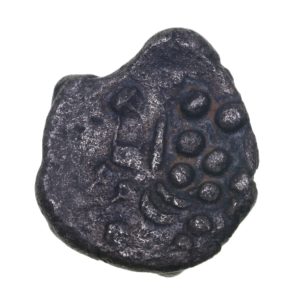
Durotriges 50 BC-AD 43 Silver Stater Cranborne Chase
£79.00Code: LC583
View Item -
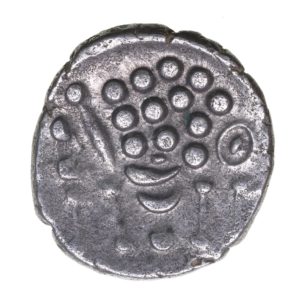
Durotriges 58 BC-AD 43 Silver Stater
£325.00Code: QC608
View Item -
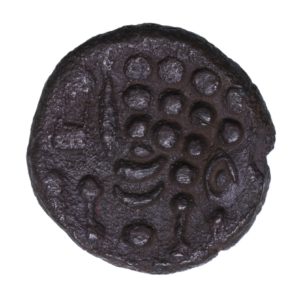
Durotriges c.58 BC-AD 43 Cranborne Chase Silver Stater
£165.00Code: YC76
View Item -
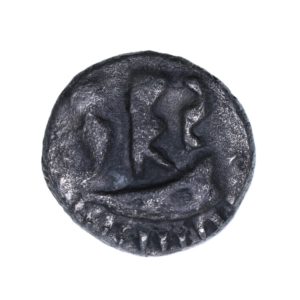
Durotriges c.58 BC-AD 43 Duro Boat Bird Silver Quarter Stater
£125.00Code: YC83
View Item -
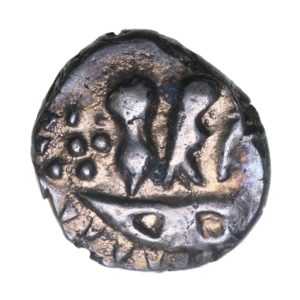 New Listing
Durotriges c.58 BC-AD 43 Duro Boat Gold Quarter Stater *Scarce*
£495.00Code: IAC353
View Item -
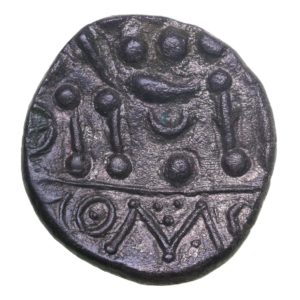 New Listing
Durotriges c.58 BC-AD 43 Omo Silver Stater *Very Rare*
£675.00Code: IAC350
View Item -
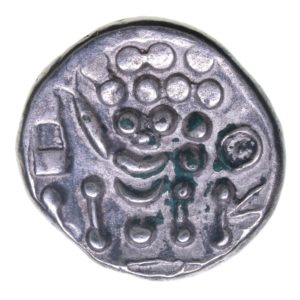 New Listing
Durotriges c.58 BC-AD 43 Spread Tail Silver Stater
£550.00Code: IAC349
View Item -
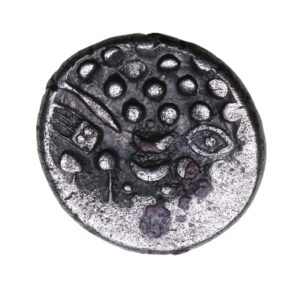
Durotriges c.60 – 30 BC Billon Stater
£395.00Code: MC934
View Item -
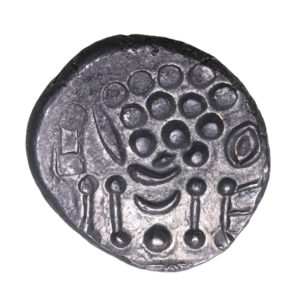
Durotriges c.60 – 30 BC Silver Stater
£475.00Code: MC927
View Item -
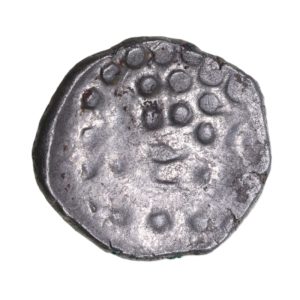
Durotriges c.60 – 30 BC Silver Stater
£125.00Code: MC931
View Item -
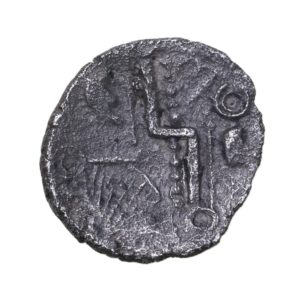
Durotriges c.60 – 30 BC Silver Unit
£89.00Code: MC936
View Item -
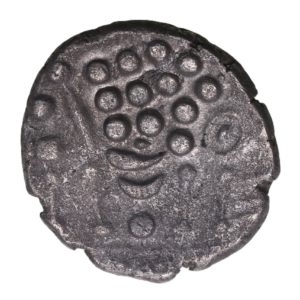
Durotriges Silver Stater 50 BC – AD 43 Cranborne Chase Type The Tarrant Gunville Hoard
£295.00Code: TG29
View Item -
The London Collection
Code: TheLondonCollection
View Item