Dobunni & East Wilts
The Dobunni, the most westerly coin-issuers of Late Iron Age Britain, had a key zone of influence centred around what is today the Cotswolds – encompassing modern Gloucestershire, Worcestershire, parts of Oxfordshire and the lower Severn valley. Ptolemy places them firmly in and around Roman Corinium (modern Cirencester), although their original capital was probably located a few miles away at Bagendon – a massive site with huge enclosure ditches that was abandoned in about AD 60.
The earliest Dobunnic types are a small, restricted series of uninscribed gold coins perhaps issued in the period 50–20 BC, characterised by examples contained within the small hoard recovered in 1993 at Pershore, Worcestershire. These, along with many of their inscribed cousins, appear to partially overlap with a very extensive, uninscribed silver coinage first classified by Robert Van Arsdell – types such as the so-called ‘Cotswold Cock’ (ABC 2012/BMC 2950–1), ‘Cotswold Eagle’ (ABC 2015/BMC 2953–62) and ‘Cotswold Oxo’ (ABC 2024/BMC 2976–80).
Dobunnic coinage possesses a strong sense of regionalism in its artistry, having a relatively restricted, perhaps even conservative decorative range. There are no hints of agricultural prowess, as hinted at by the plentiful corn-ears rendered on Cunobelin’s gold staters and quarter-staters. Neither are there mint-names, as can be found proudly declared on issues of Calleva and Verlamion. Most certainly absent are both Latin titles such as ‘REX’ (king) and images from the Classical world; sphinxes, centaurs, griffins and wine-cups – as encountered on the silver coins of Cunobelin, Tasciovanus and Verica.
‘East Wiltshire’ Tribe
Although Dobunnic coinage holds sway over much of Wiltshire, the central and eastern parts of the county appear to have been home to a different coin-issuing group for at least part of the late 1st century BC. While Derek Allen first noted the possibility of this polity’s existence in 1971, only as a consequence of the important work done by archaeologist Paul Robinson several years later (published in 1977 within BNJ 47) was this confirmed from a numismatic perspective. Previously, these coins had been féted as irregular issues of the Dobunni, a view held by both Allen and the collector R.P. Mack.
Important from a chronological perspective is the fact that no coins of the East Wiltshire group are inscribed, a feature which suggests they probably date to the end of the 1st century BC.
Showing all 12 results
-
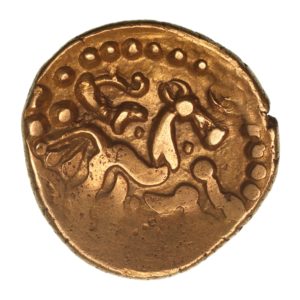
Dobunni 1st Century BC Gold Stater Tribal Tree *Very Rare*
£4,500.00Code: QC768
View Item -
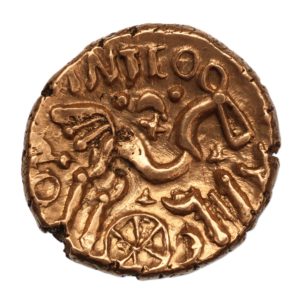
Dobunni Anted c. AD 20-43 Anted Rig Gold Stater *Scarce*
£5,950.00Code: IAC336
View Item -
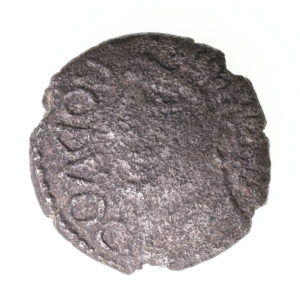
Dobunni Bodvoc 25-5BC Silver Unit
£495.00Code: HC775
View Item -
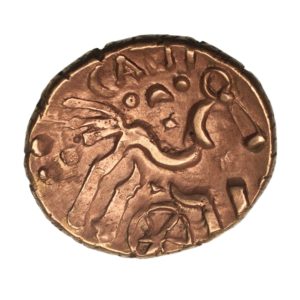
Dobunni Catti c. AD 1-20 Catti Tree Gold Stater *Rare*
£2,950.00Code: IAC131
View Item -
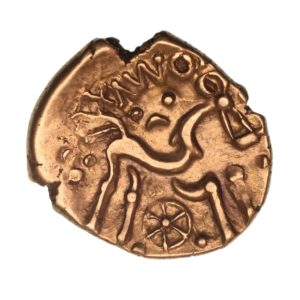
Dobunni Comux c. AD 1-15 Comux Tree Gold Stater *Extremely Rare*
£6,950.00Code: IAC130
View Item -
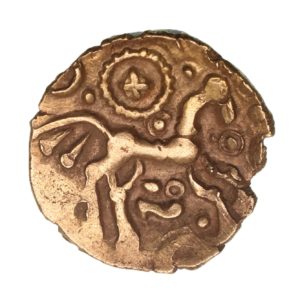
Dobunni Corio 20 BC-AD 5 Gold Quarter Stater
£1,650.00Code: MC68C
View Item -
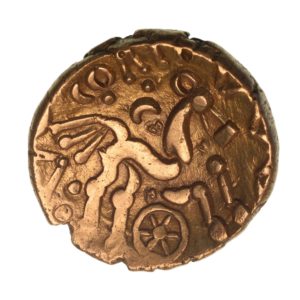
Dobunni Corio C.20 BC-AD 5 Gold Stater Corio Tree
£4,500.00Code: QC770
View Item -
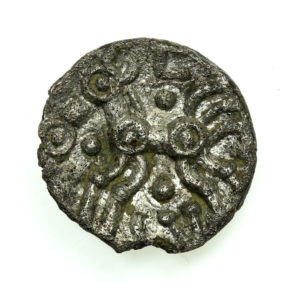
Dobunni Eisu AD 20-43 Silver Unit
£295.00Code: CC996
View Item -
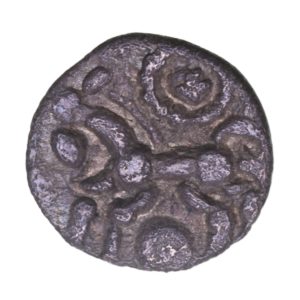
East Wiltshire c.50-35 BC Bagendon Beasts Silver Half Unit *Excessively Rare*
£995.00Code: IAC347
View Item -
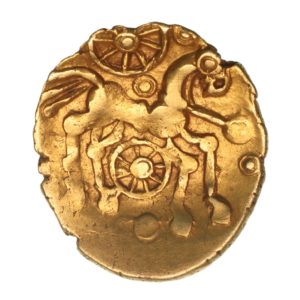
East Wiltshire c.50-35 BC Three Wheels Gold Quarter Stater *Extremely Rare*
£2,500.00Code: IAC339
View Item -
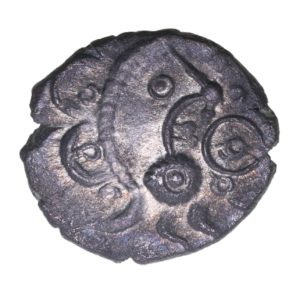
East Wiltshire c.50-35 BC Upavon Moon Head Silver Unit *Scarce*
£375.00Code: IAC345
View Item -
The London Collection
Code: TheLondonCollection
View Item