
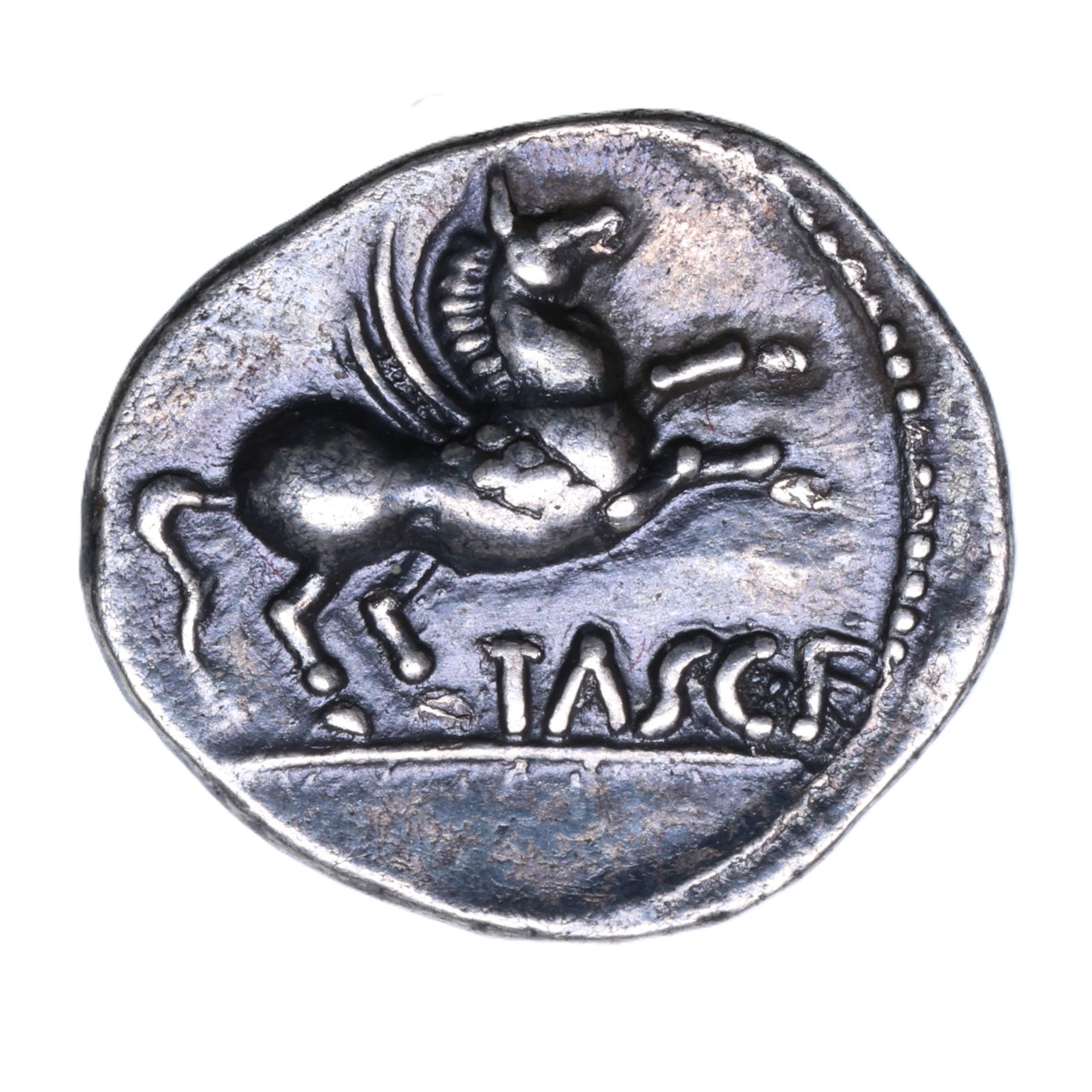
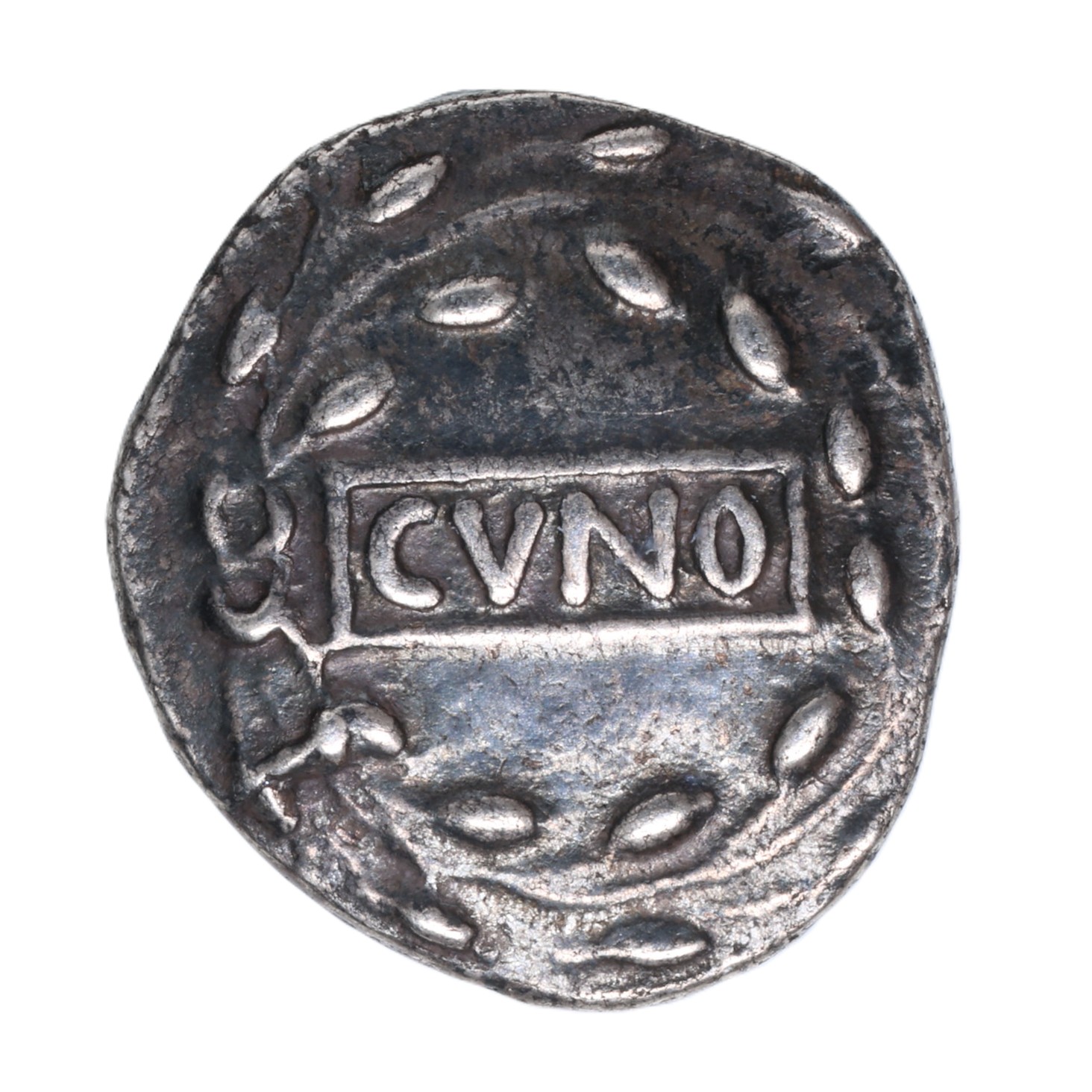
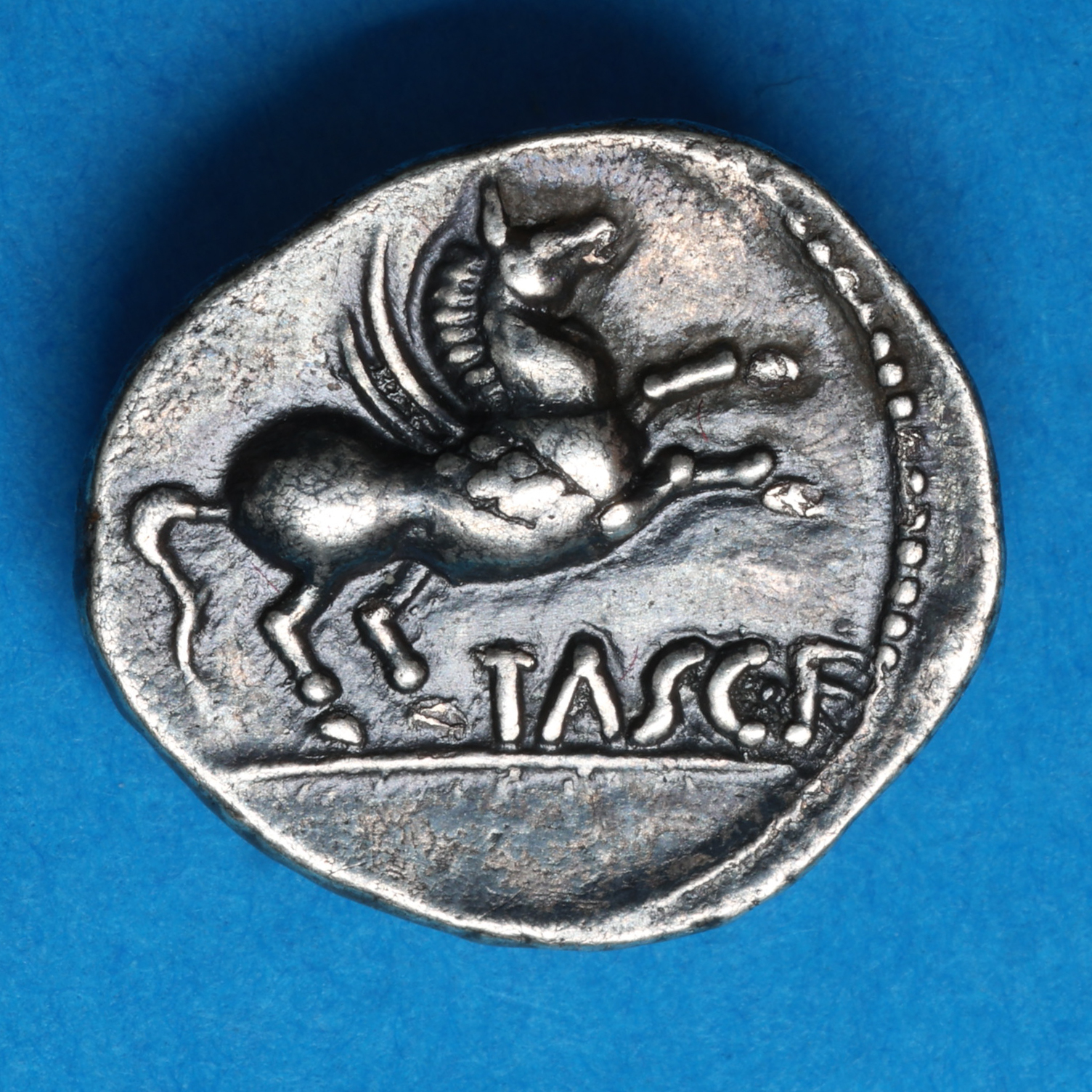
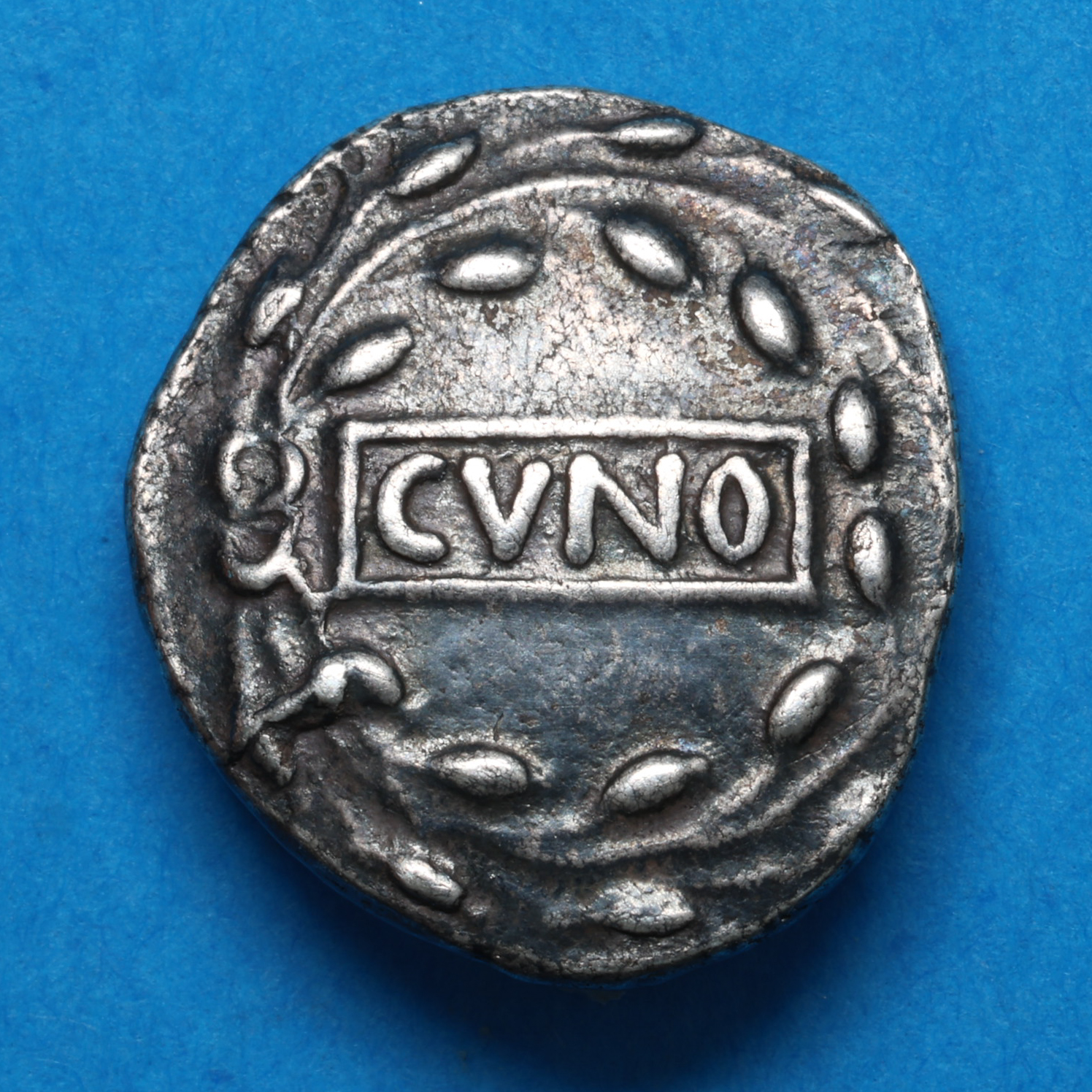
Catuvellauni and Trinovantes Cunobelinus c. AD 8-40 C. Pegasus Right Silver Unit *Extremely Rare*
£2,250.00
Catuvellauni and Trinovantes Cunobelinus c. AD 8-40 C. Pegasus Right Silver Unit
Extremely rare
ABC 2876, 13mm, 1.33g
Dies cutting of the highest standard, good silver and a wonderful coin in hand.
Obverse
CVNO inscription in panel. Wreath border. Pellet border.
Reverse
Pegasus rearing right. TASC.F inscription on exergual line. Pellet border.
View Video Here
Comments
Evans: X.7 (1864, p. 308, pl. X).
Van Arsdell Classification: Trinovantian W, Coinage of Cunobeline, Expansion Period (Light Staters), Later Silver Coins.
Philip de Jersey, “Cunobelin’s Silver”, Britannia, Vol. 32 (2001), pp. 1-44:
de Jersey Type D (Tasciovanus Issues). de Jersey lists seven types, listed separately here. All have elements copied from classical prototypes. This coin is D5:
D1: Hercules standing right with club; CV-NO. Seated female on animal; TASCIIOVA (see ABC 2864).
D5: CVNO in panel in wreath. Pegasus right; TASC F (this coin).
Provenance
This coin is from The London Collection of Ancient British Coins. For more information click here: The London Collection – Silbury Coins : Silbury Coins.
M Vosper PT, 21.04.2008. Found Watton, Norfolk. Ex J Fay coll. CCI 07.0167 De Jersey type D5 VA2053-1
This coin comes with a previous label.
Cunobelin (c. AD 10–40)
Shakespeare’s Cymbeline, based on his extensive bronze coinage Cunobelin appears to have been a son of Tasciovanos – where he is often styled ‘CVNOBELINI TASCIOVANI F’ (Cunobelin, Son of Tasciovanos). Writing in the early 1st century AD, the Roman historian Suetonius erroneously refers to Cunobelin as ‘Brittanorum Rex’ – King of the Britons. While this may exaggerate his power and influence somewhat, it is evident that he was viewed by the Romans as a key figure within the region. He was potentially sponsored or endorsed in some way by Rome’s first emperor, Augustus. Indeed, like Verica, many of his coins (especially those of silver and bronze) show high levels of classical influence.
As a ruler in his own right, Cunobelin’s first act seems to have been to finish the task begun by his father, definitively exerting control over both Camulodunon and the Trinovantian territory surrounding it. Numismatic evidence for this can be found in the prolific quantities of gold staters and quarter-staters he struck at the settlement, which depict a corn-ear flanked by the inscription ‘CAMV’. Having solidified his holdings north of the Thames, it seems that Cunobelin extended his influence into Kent. Indeed, many of his coins are found there, as are those of his probable son – Adminius (Amminus). The subsequent power vacuum caused by his death in AD 40, followed by a brief period of instability which seems to have manifested across much of eastern and southern Britain, would be quickly filled following the Claudian invasion of AD 43 – an event which changed Britain forever.
Out of stock
You may also be interested in these…
Related products
-
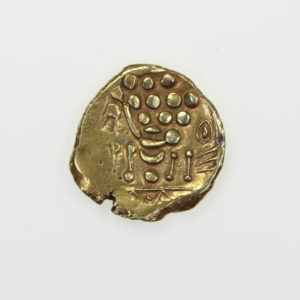
Early Uninscribed, Westerham Gold Stater 1st Century BC
£625.00Code: JC219
-
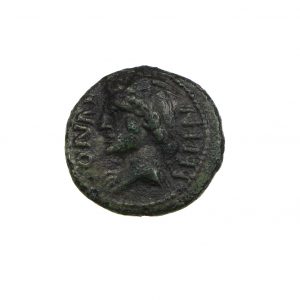
Catuvellauni & Trinovantes Cunobelin Bronze Unit 8-41AD Metalworker High Grade
£300.00Code: AC396
-
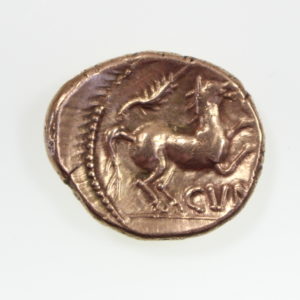
Catuvellauni & Trinovantes Cunobelin Wild Type Gold Stater 8-41AD
£1,250.00Code: JC931
-
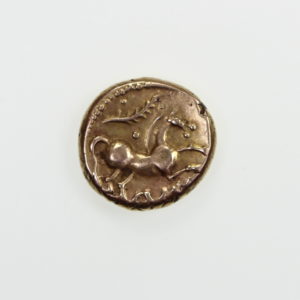
Catuvellauni & Trinovantes Cunobelin Linear Type Gold Stater 8-41AD
£995.00Code: DC930