
Regini & Atrebates Eppillus c. 25 BC-AD 1 Eppillus Rex Silver Unit *Very Rare*
£1,200.00
Regini & Atrebates
Eppillus c. 25 BC-AD 1 Eppillus Rex Silver Unit
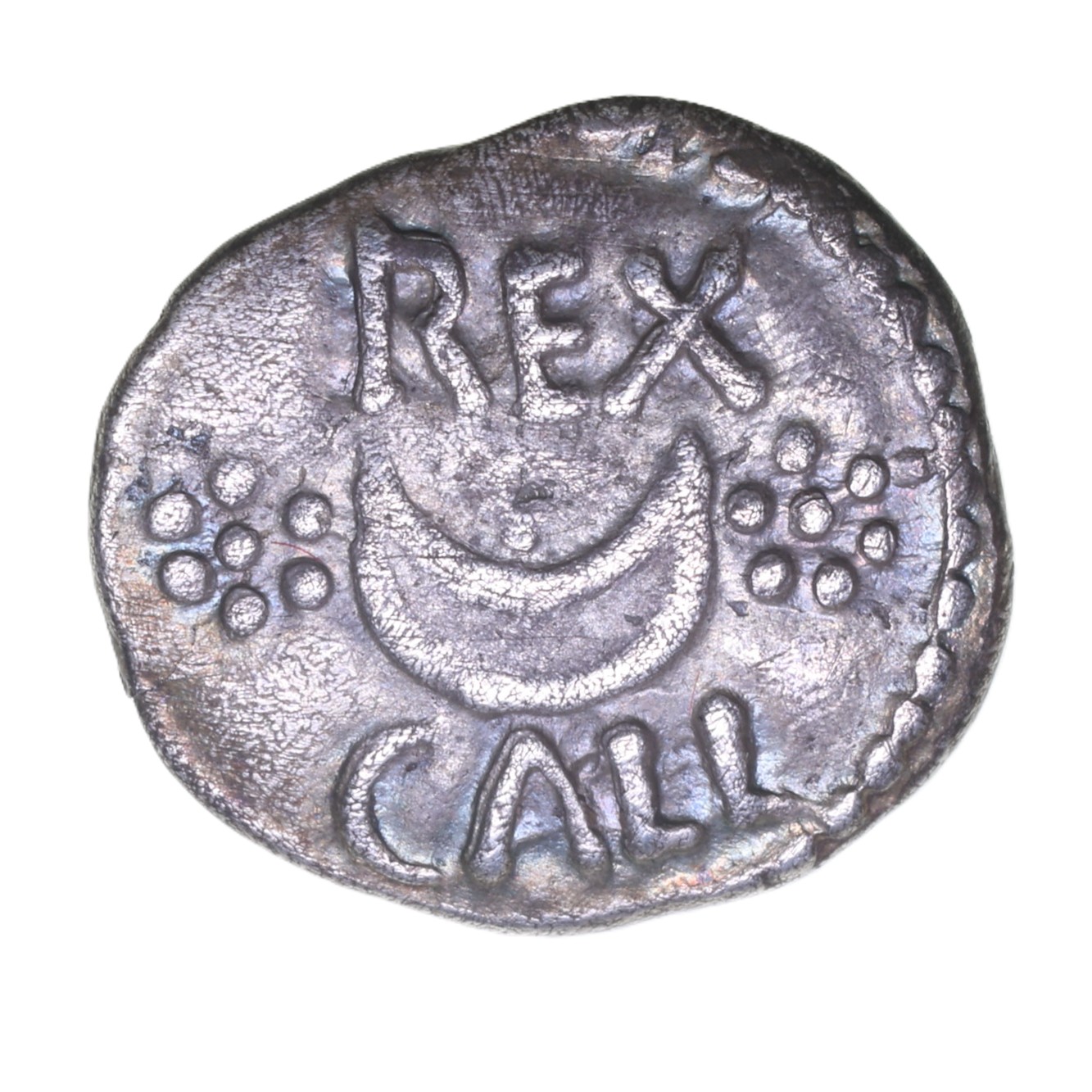
Very rare (with CALL inscription).
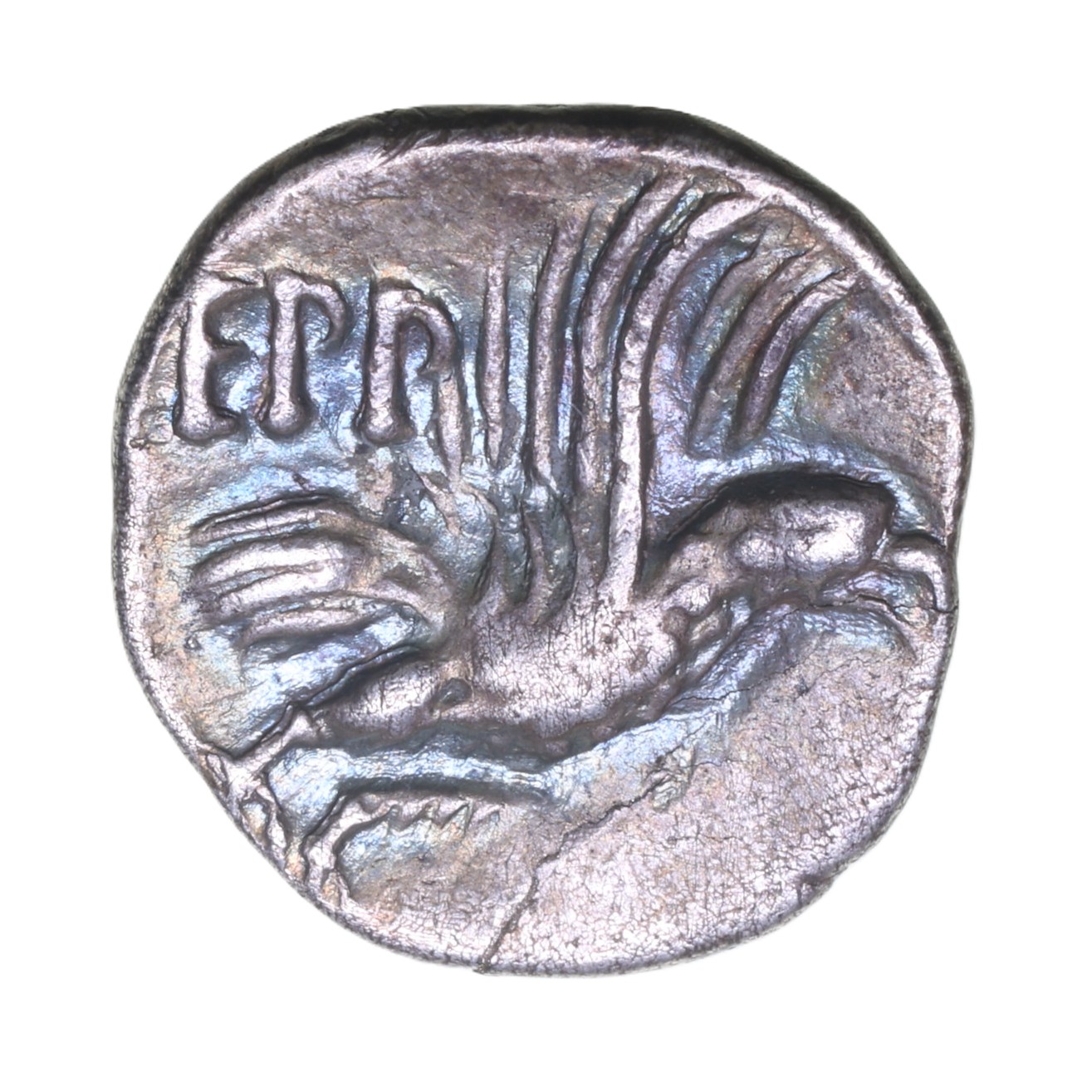
ABC 1160 variant, 13mm, 1.12g
Obverse
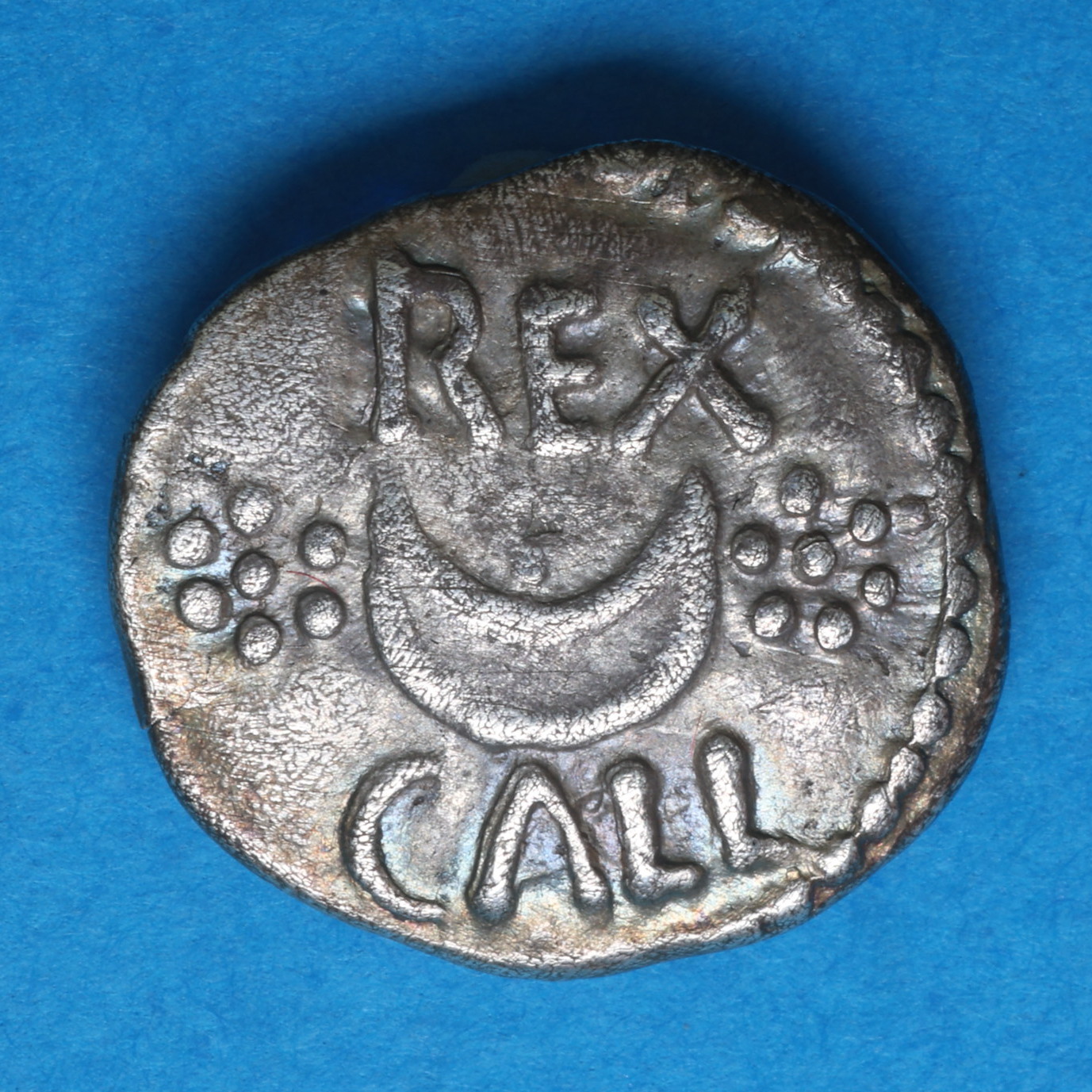
Outline crescent, points upwards, in centre. CALL inscription above and below. Daisy on either side of crescent. Pellet border.
Reverse
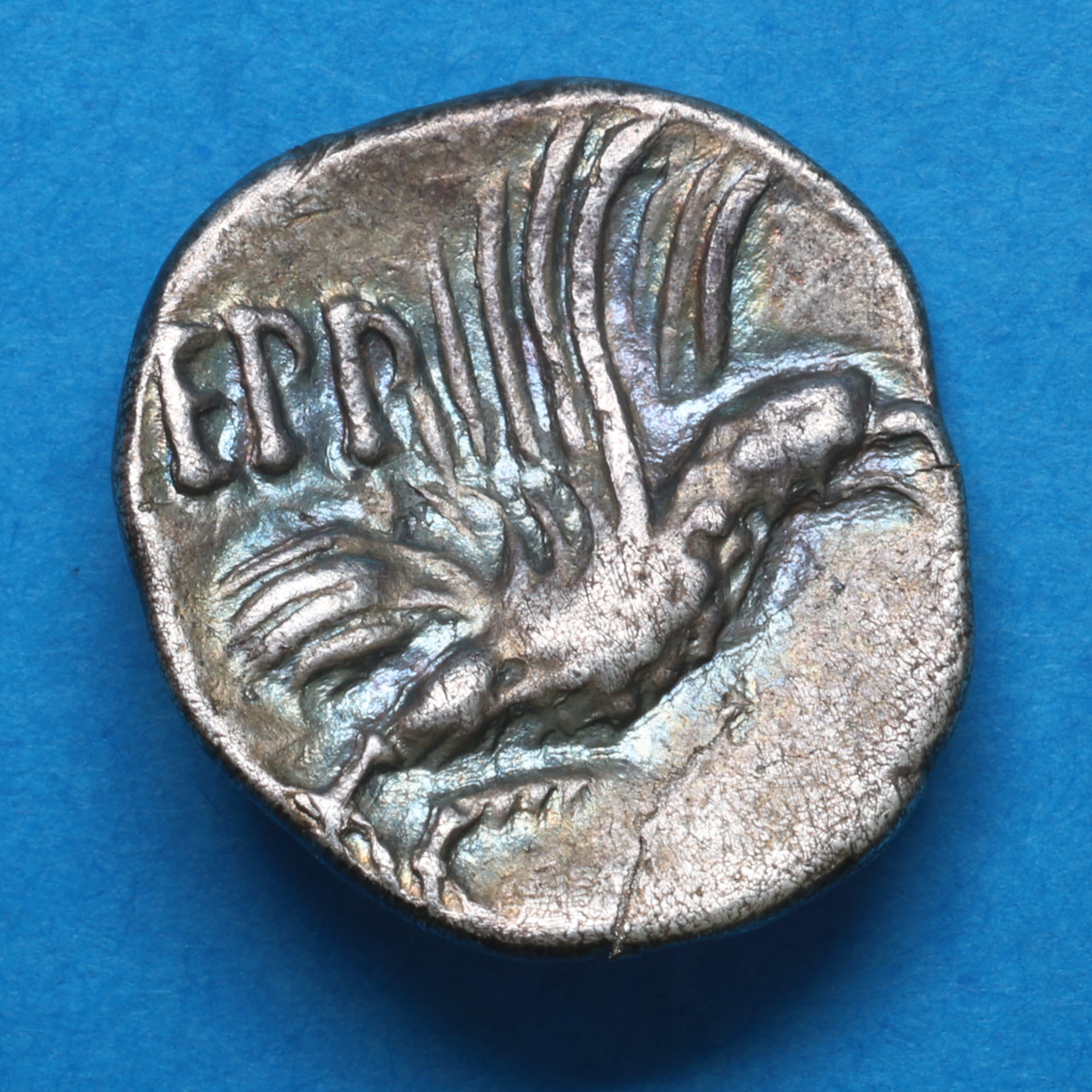
Spread eagle right. EPP inscription behind (over eagle’s tail). Pellet border.
Mint
| CALLE | Calleva Atrebatum, modern-day Silchester, United Kingdom |
View Video here
Comments
Evans: IV.1 (1864, p. 195, pl. IV).
Van Arsdell Classification: Atrebatic G, Eppillus Calleva Types.
Sills has the Calleva quarters (ABC 1151 and ABC 1148), the Rex unit and the U Type minim (ABC 1169) as equivalents due to the mint name, six pellet rosette, lettering style and use of the title Rex, which nevertheless appears for the first time on British coinage and later copied by Verica. They may have been struck at a similar time to Crescent quarters (ABC 1157). They come at the end of the series following Pegasus (ABC 1154) and equivalents.
Provenance
This coin is from The London Collection of Ancient British Coins. For more information click here: The London Collection – Silbury Coins : Silbury Coins.
C Rudd FPL 75, no 21 (2004) CCI 04.0399. VA415 var.
This coin comes with a previous label.
Eppillus (20 BC – AD?)
The second Atrebatic ruler to proclaim ‘COM F’ on his coins, Eppillus’ issues can be divided into two broad categories – those produced at the tribal civitas of Calleva (the imaginatively named ‘Calleva types’), and those seemingly struck in Kent (the equally imaginative ‘Kentish types’). On the basis of this, it is highly probable that Eppillus held some kind of influence either over or in Kent – although whether this was economic, territorial or military in nature is uncertain. Coin evidence does a lot of the heavy lifting in informing about his rule, as he is otherwise completely unknown to the historical record. His status as a king, or at least his desire to see himself portrayed as one, is revealed by one of his silver unit types – where the inscription ‘REX CALLE’ prominently appears (ABC 1160/BMC 1016–60). Robert van Arsdell theorised that Eppillus’ disappearance from the record might have arisen as a consequence of Cunobelin’s rise to power, suggesting that he was killed when the Trinovantes and Catavellaunii directed their territorial ambitions southwards into Kent.
Out of stock
You may also be interested in these…
Related products
-
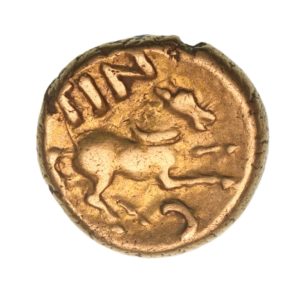
Regini & Atrebates Tincomarus c. 25 BC – AD 10 Tincomarus Tinc Horse Gold Quarter Stater *Rare*
£1,100.00Code: IAC77
-
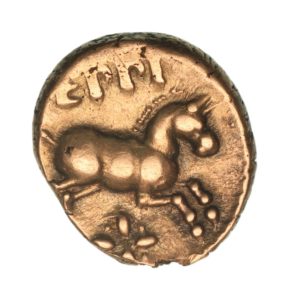
Cantiaci Eppillus c.AD 1-15 Margate Gold Quarter Stater *Extremely Rare*
£2,950.00Code: QC757
-
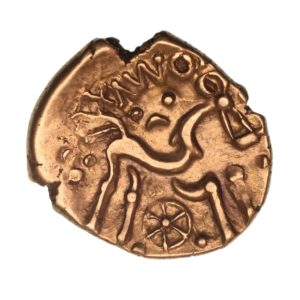
Dobunni Comux c. AD 1-15 Comux Tree Gold Stater *Extremely Rare*
£6,950.00Code: IAC130
-
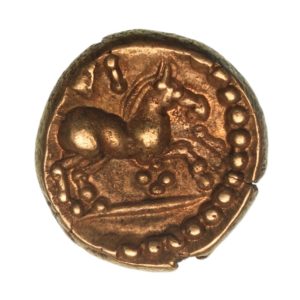
Regini & Atrebates Verica c. AD 10 – 40 Verica Little Horse Rearing Gold Quarter Stater *Scarce*
£1,100.00Code: IAC85