Regini & Atrebates Tincomarus c. 25 BC-AD 10 Tincomarus Cernunnos Silver Unit *Very Rare*
£675.00
Regini & Atrebates
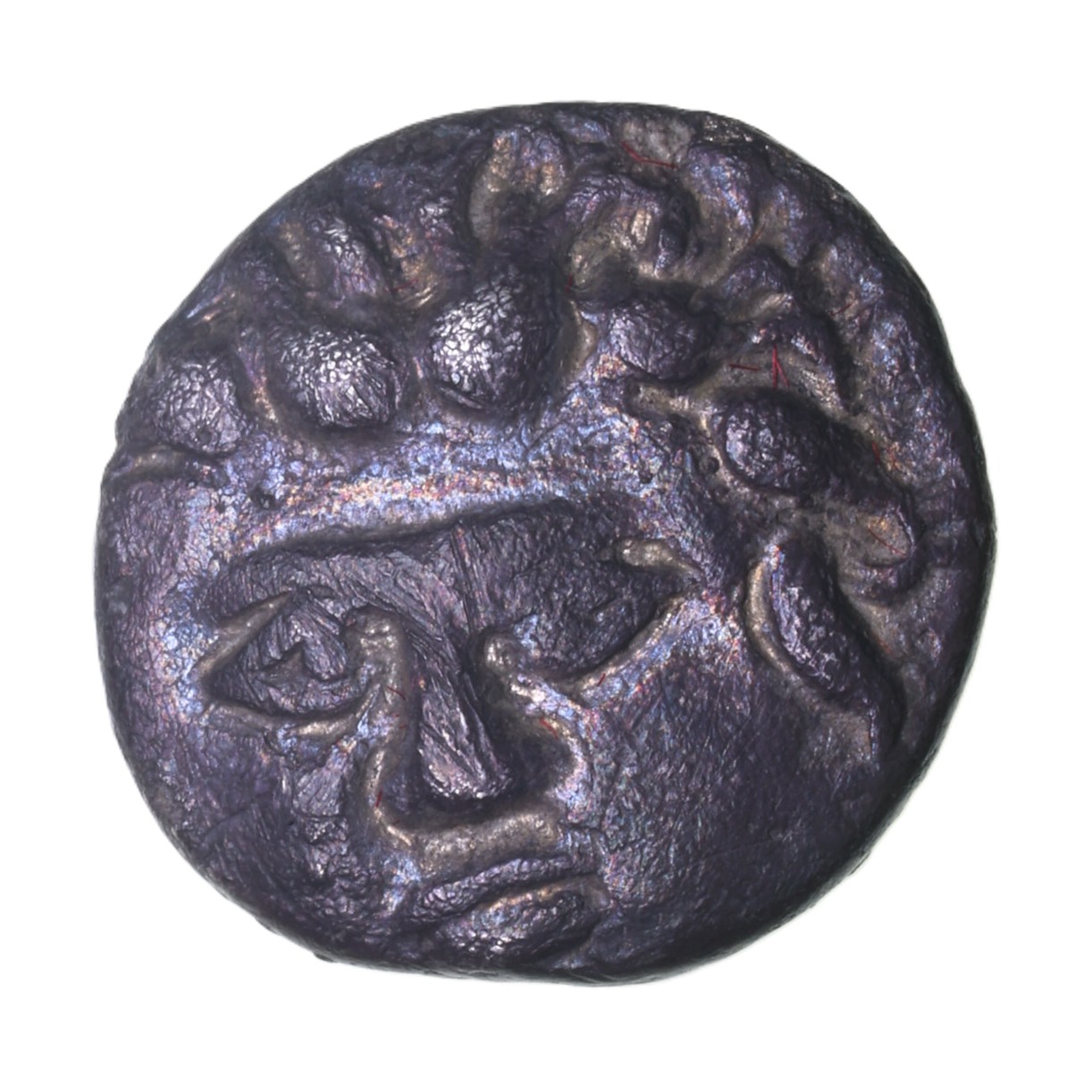
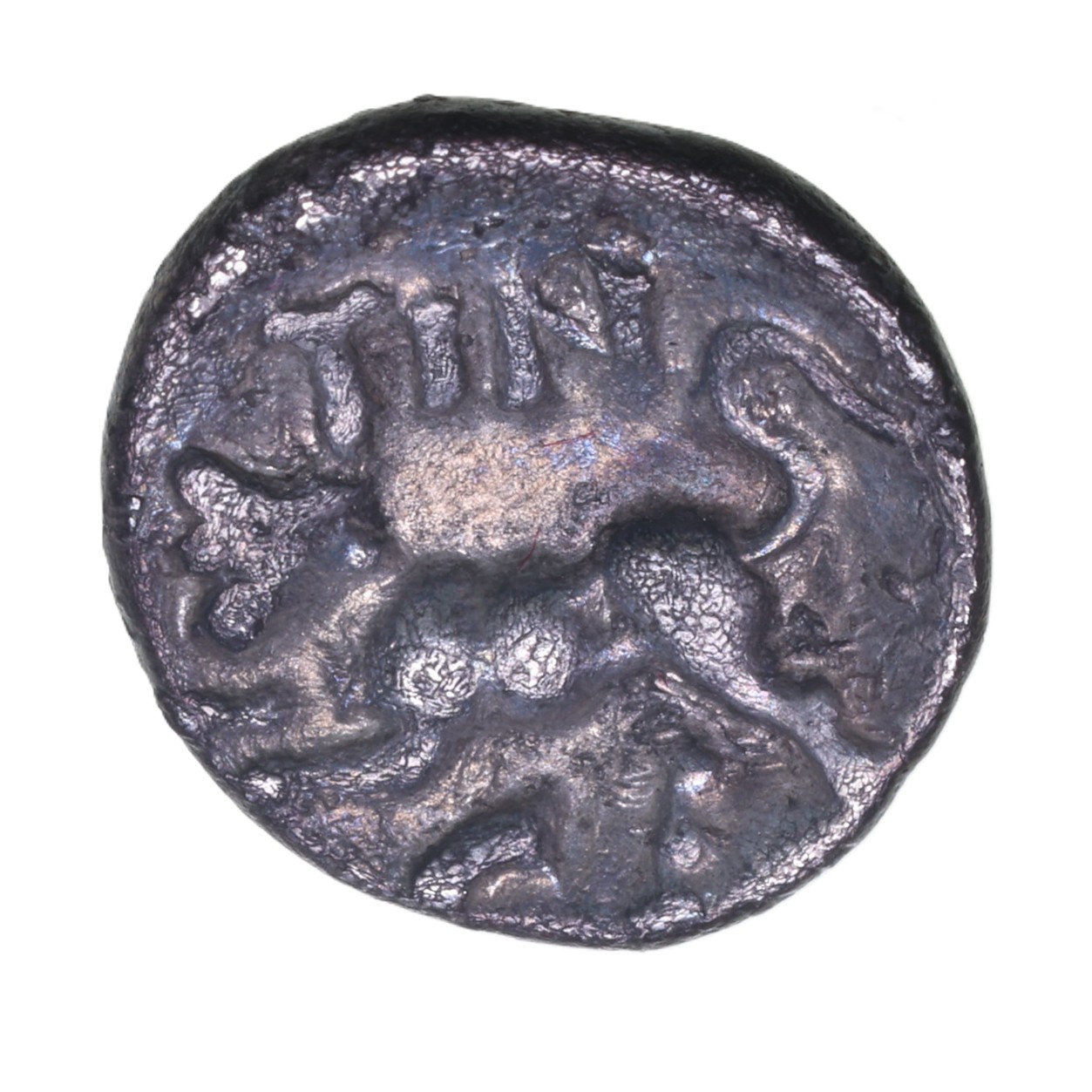
Tincomarus c. 25 BC-AD 10 Tincomarus Cernunnos Silver Unit
Very Rare
ABC 1109
12mm, 1.19g
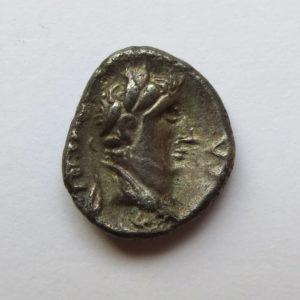
Obverse
Facing horned head with rounded face and thick hair.
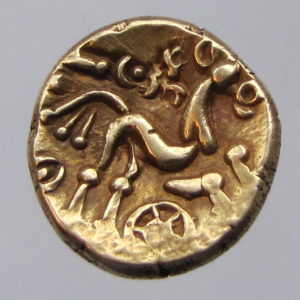
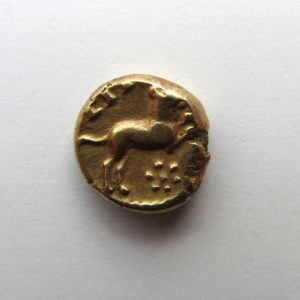
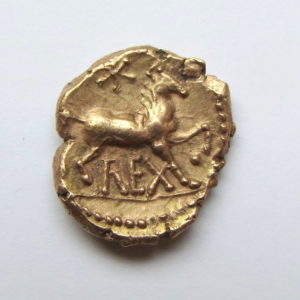
Reverse
Bull left. Inscription above and below. Pellet below tail.
Script: Latin
Lettering:
TIN
C
Unabridged legend: Tincomarus.
Comments
Van Arsdell Classification: Atrebatic D, First Coinage of Tincomarus.
Sills has the Warrior Com F Tinco stater (ABC 1064), the Com F Tinc quarter (ABC 1085) and the Cernunnos unit as equivalents due to the crude obverse inscriptions and similar leaping animals. They follow on from the Native Warrior stater (ABC 1061) and its equivalents.
The facing bust is copied from denarii of L. Plautius Plancus from 47BC (Crawford 453/1c).
Sills chronology: Gallo-Belgic Ca – Insular Cf / Aa Westerham – British Ad – British Q and L – British Qa-b Derivatives – Commios – Tincomarus.
23 in the Celtic Coin Index.
26 on the Portable Antiquities Scheme database.
4 in the British Museum.
7 on ACSearch.
The above counts include duplicates.
Findspots: West Sussex (Chichester, Clapham, Tangmere, Ratham), Surrey (Wanborough Temple, Haslemere), Berkshire (Waltham St Lawrence), Hampshire (Bradley), Kent (Frinsted).
Hoards: Waltham St Lawrence 1977, Wanborough Temple 1979.
Provenance
This coin is from The London Collection of Ancient British Coins. For more information click here: The London Collection – Silbury Coins : Silbury Coins.
M Vosper FPL 90, no 22, April 1996. VA370
This coin comes with a previous label.
Tincomarus (25 BC–AD 10?)
Striking both in gold and silver, Tincomarus is notable in that he is one of several Atrebatic rulers to style himself ‘COM F’ on coinage – an abbreviation of the Latin Commii Filius (‘son of Commius’). His issues are highly variable, being divided into no fewer than four different styles. These demonstrate a clear shift from indigenous art-styles towards Classically-influenced motifs, which often employ designs derived from contemporary Roman prototypes. The latter has been suggested as evidence that Tincomarus spent time in Rome as a hostage, which in all likelihood exposed him to a plethora of Classical art in various mediums. No finer example of this exists in his coinage than the so-called ‘Tincomarus Warrior’ staters (e.g. ABC 1061/BMC 767–8), the reverse featuring an equestrian design lifted directly from Republican denarii of 82 BC, struck by the moneyer P. Crepusius. He appears in Augustus’ Res Gestae, being named as a suppliant British king alongside the Kentish Dubnovellaunos.
Out of stock