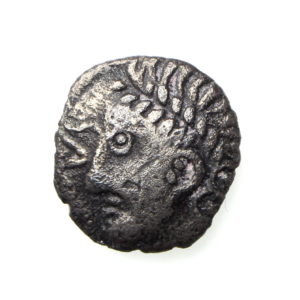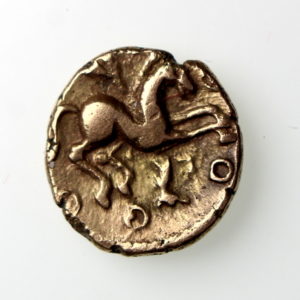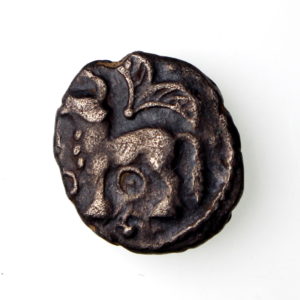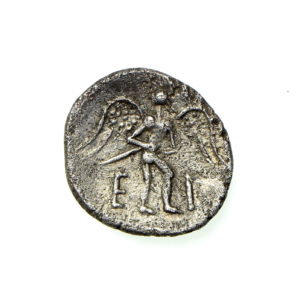
Cantiaci Dubnovellaunos c. 25 BC-AD 5 Pentagram Gold Quarter Stater *Very Rare*
£2,250.00
Cantiaci
Dubnovellaunos c. 25 BC-AD 5 Pentagram Gold Quarter Stater
Very rare, 28 known.
ABC 309, 12mm, 1.30g
Obverse
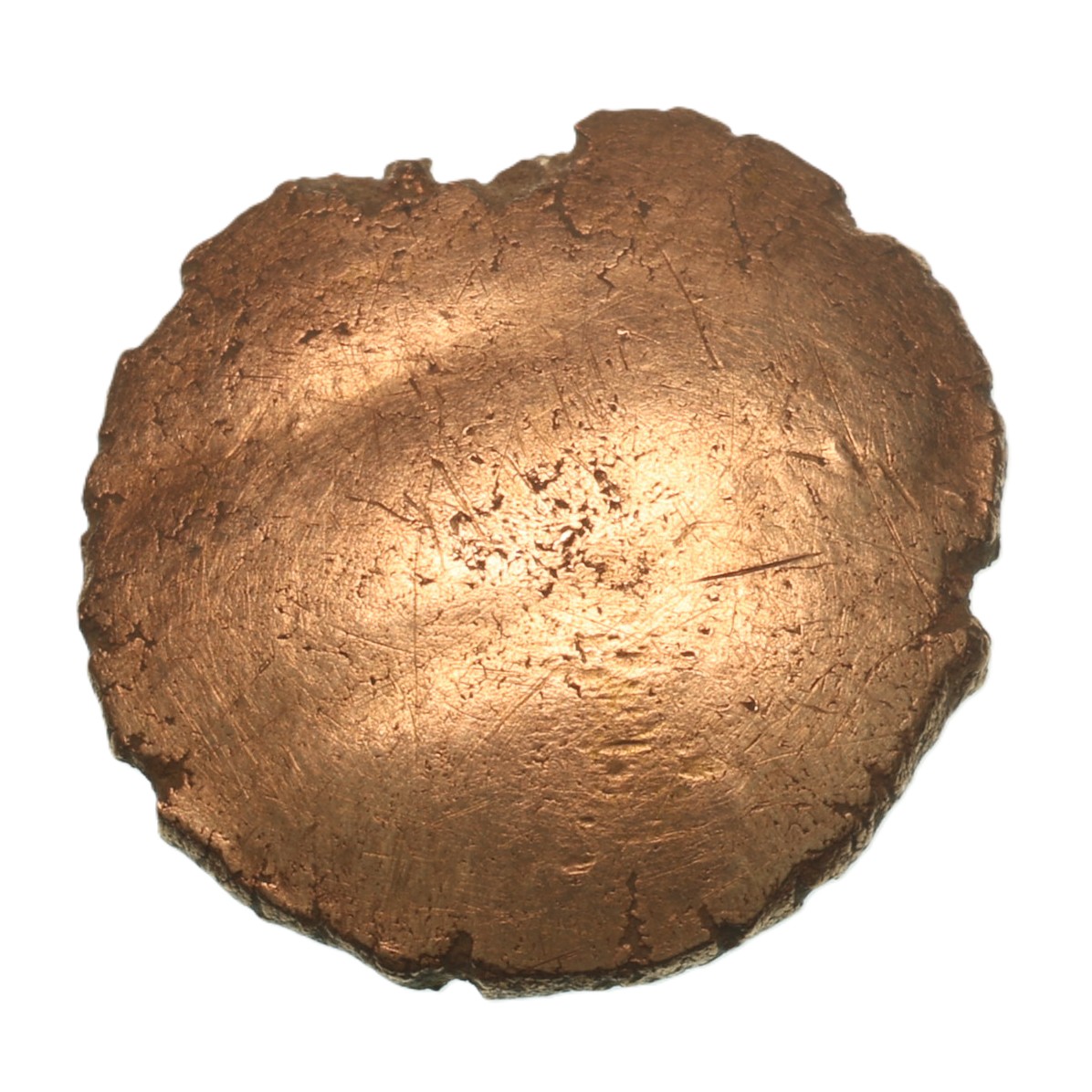
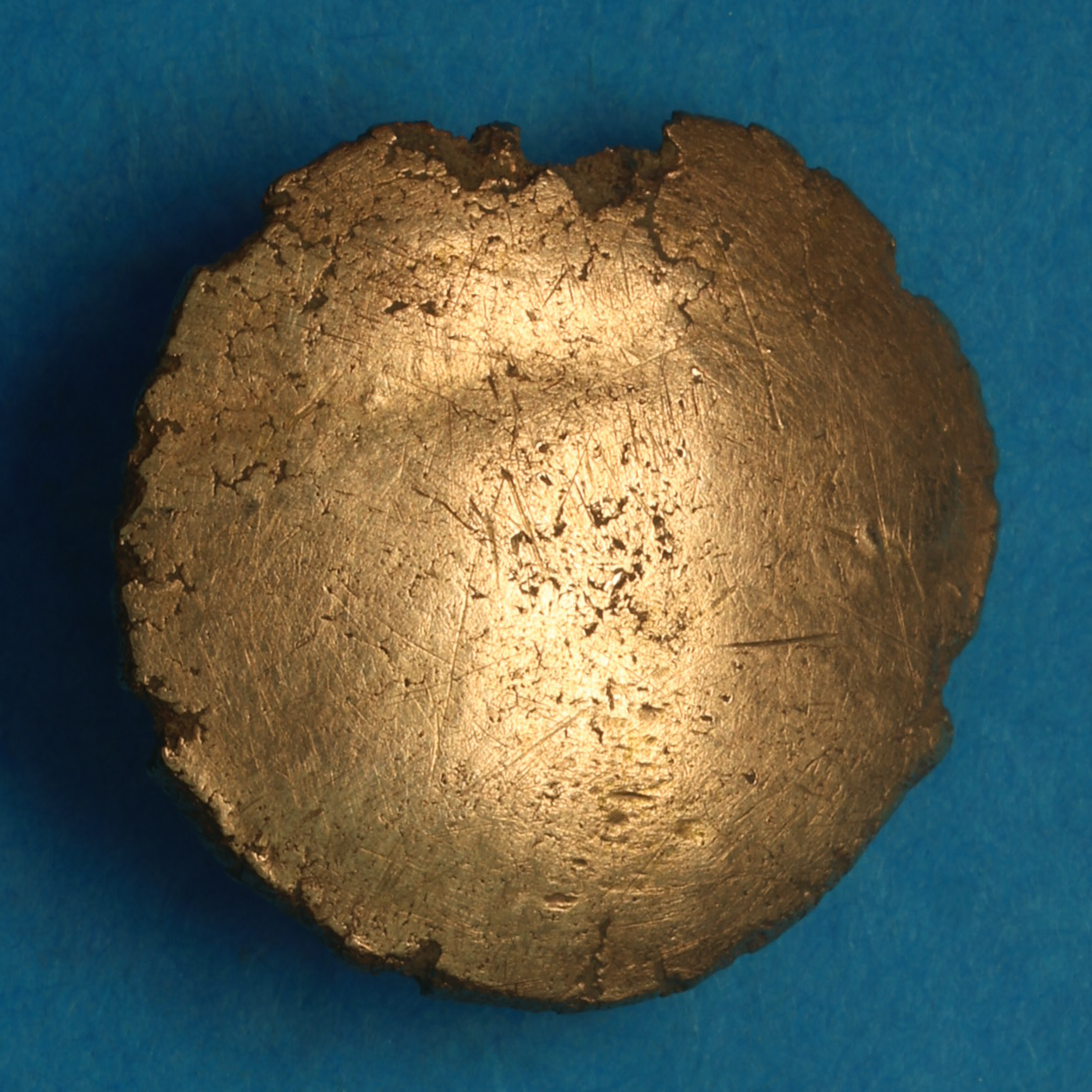
Plain with slight banding (a raised band is visible across the centre).
Reverse
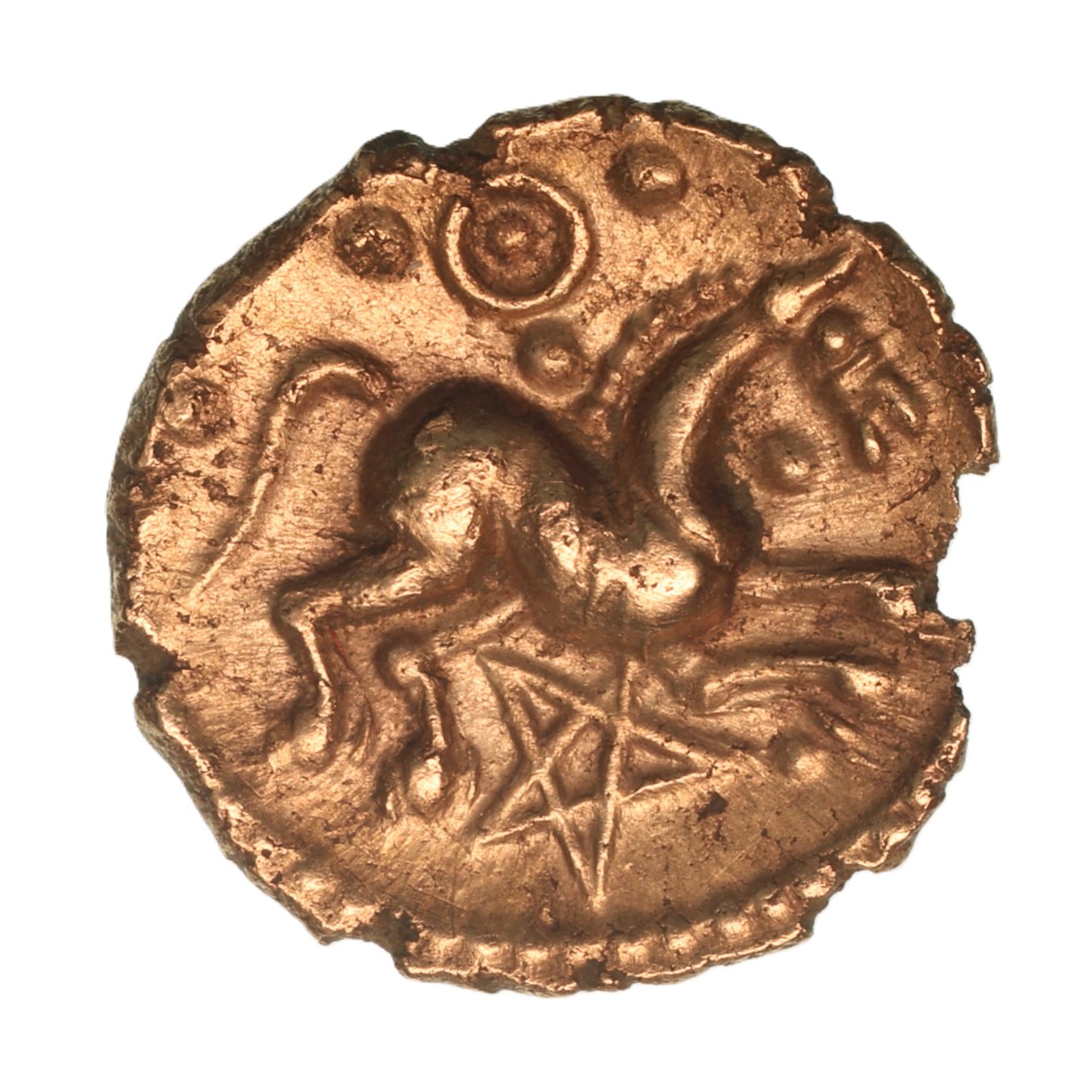
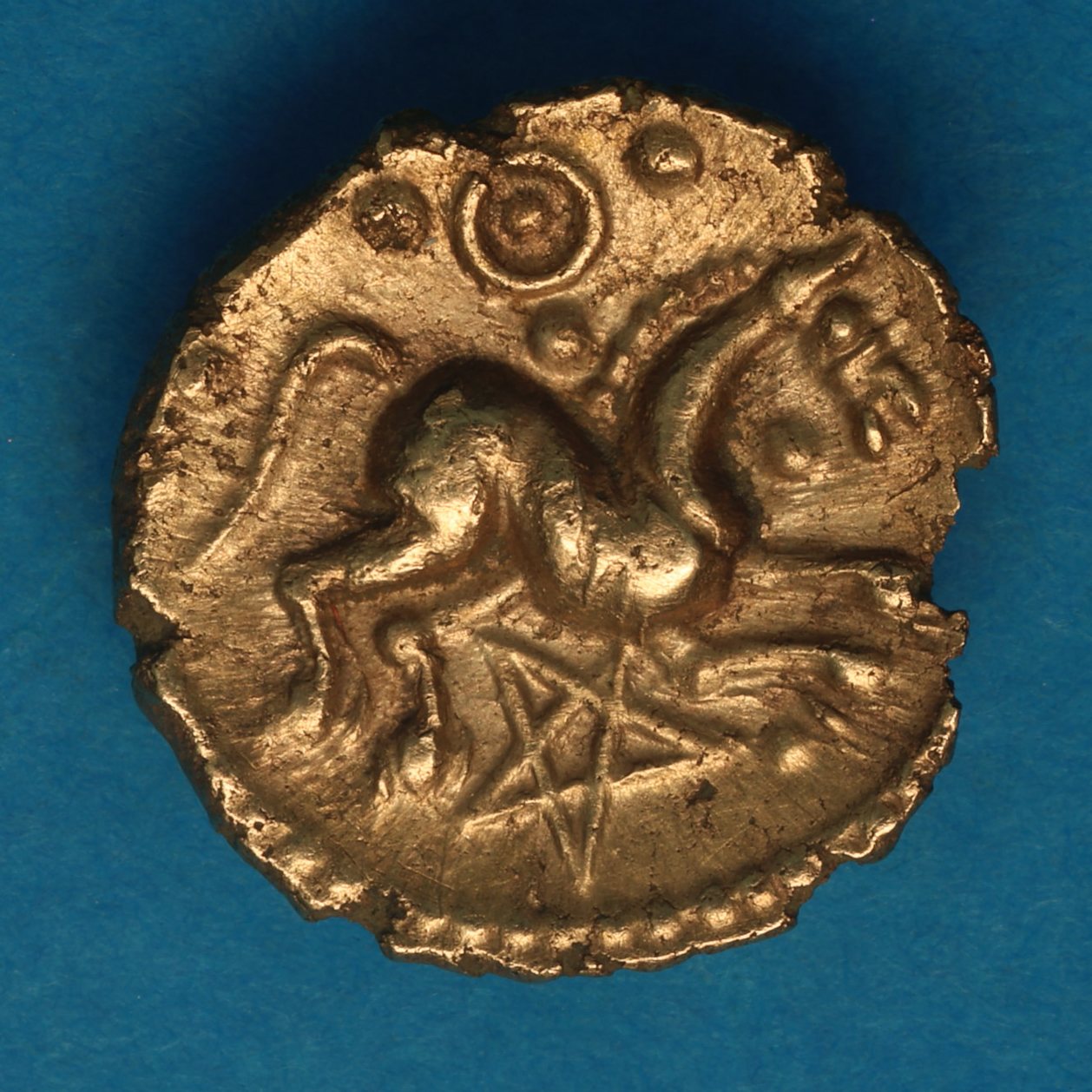
Horse with necklace rearing right, pellet mane, solid head. Pellet under neck. Pellet-in-ring motif above horse with three pellets around it. Pentagram below.
Comments
Evans: E14 (1864, p. 98, pl. E).
Allen Type: British Ly5.
Van Arsdell Classification: Cantian J, Dubnovellaunus in Kent, First Coinage.
Sills DK 80 (1 known obverse, 4 reverse dies): Coinage of Kent, Dubnovellaunos, Vosenos and Sam; Type: Dubnovellaunos Issues; Quarter Staters: Class 4 – Pentagram. The weight is as Class 3 (lighter than Class 1). Pentagrams are found on Cantian coins, but this issue is linked to Dubnovallaunos in Essex through the ringed pellet in pellet triangle above the horse found on Class 2d staters, as is a star behind the horse’s tail. Staters are very rare after this issue, suggesting Dubnovallaunos moved his gold reserves north of the Thames.
Uncertain attribution to Dubnovellaunos (there is no equivalent stater).
Dubnovellaunos was almost beyond doubt king of both the Trinovantes and Cantii. Around 7, at the end of his reign, he and Tincomarus of the Atrebates appeared in the res gestae as supplicants to Augustus, but it is not known whether that was king of the Trnovantes or Cantii at the time. He could not be the Dumnovellaunus of the Corieltauvi.
Provenance
This coin is from The London Collection of Ancient British Coins. For more information click here: The London Collection – Silbury Coins : Silbury Coins.
SNC FPL CXVI/4, no 3433, Aug 2008. VA163-1
This coin comes with a previous label.
Dubnovellaunos (25 BC – AD 5/10?)
Based on current evidence, it seems to be the case that Dubnovellaunos is the earliest individual to be named on Kentish coinage of the Late Iron Age. It has been suggested that he was the ‘Dumnobellaunos’ named in the 32nd passage of Augustus’ Res Gestae, although this is not certain. Other individuals named ‘Dumnovellaunos’ are present in the Late Iron Age coin series from other regions of Britain (e.g., the north-east), and indeed it may be a completely different individually totally unconnected with the issuance of these coins.
‘The following kings sought refuge with me as suppliants…Dumnobellaunus and Tincommius, kings of the Britons….’
It has been hotly debated as to whether the Dubnovellaunos issuing coinage in Kent is the same as that who produced a relatively restricted, trimetallic series of coins whose distribution centres on Essex. As Kent and Essex share a land border, it is perfectly plausible from a geographic perspective to suggest that Dubnovellaunos may well have been a ruler in Kent who chose to extend his territory and influence northwards. It is certainly true that that the Kentish series of coins struck in his name are much more extensive than those found in Essex, which might suggest an origin in the former rather than the latter. Nevertheless, whatever his affiliation, Dubnovellaunos was out of the picture soon after the commencement of the 1st century AD – his territories potentially absorbed by Eppilus of the Atrebates and the much better-known Cunobelin of the Catavellaunii.
Coins of Dubnovellaunos struck in Kent are the most extensive of the inscribed series to be struck there, including some of the most iconic inscribed silver units in the entire Late Iron Age corpus. These include types such as the ‘Dubnovellaunos Pegasus’ (ABC 315/BMC 2443–44) and ‘Dubnovellaunos Metalworker’ (ABC 324/BMC 2502–3).
Out of stock