
We are sizzling here in England! For those of you in Europe and the UK, we hope you are enjoying the warmer weather and managing to stay cool.
It’s been a busy few months at Silbury Coins, and we’re delighted to bring you a selection of exciting new collections, fascinating research and recent discoveries. This summer sees the launch of The London Collection of Ancient British Coins, an exceptional cabinet assembled over more than thirty years and one of the most important collections of its kind ever offered for sale. We also take a closer look at the English Gold Noble and are pleased to announce the forthcoming release of coins from the Vale of Pewsey Hoard, a fascinating Late Roman treasure discovered in merry old Wiltshire. We hope you enjoy this edition and, as always, thank you for your continued support and enthusiasm for our coins, this make all of our hard work worthwhile.
The Team at Silbury Coins
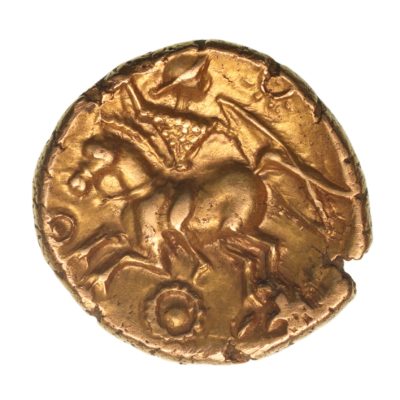
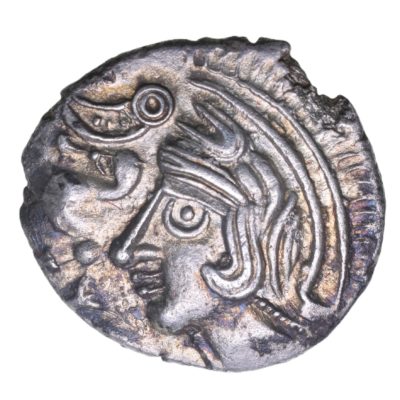
The London Collection
The London Collection of Ancient British Coins, a ‘once in a lifetime’ event which we are proud to have been chosen to handle. This is one of the finest across-the-board selections of Ancient British coins that has ever been offered for sale.
From a collection over 30 years in the making, covering the whole range of Ancient British coinage, and including many ABC/Spink plate coins, this collector, exercising careful and methodical selection bought only the best pieces, helped by long-term acquisition during the ‘golden years’, when new discoveries were plentiful. This shows in the overall quality and completeness of the collection.
Whether gleaming, impressive gold staters or intricately cut silver units bearing the only surviving portraits from Britain’s ancient past are your thing, this collection has all that and more in abundance.
The overall quality is supported by the number of plate coins present and in many cases these coins are the finest known of their respective types. Every coin has a carefully recorded provenance and handwritten label, most have recorded find spots too.
Part 1 is now live, to view coins available or learn more, click here.
History of the English Gold Noble
Up until the reign of Edward III the highest denomination in the English coinage was the Silver Penny, which had to be struck in monumental numbers to keep up with the demands of an ever-wealthier society.
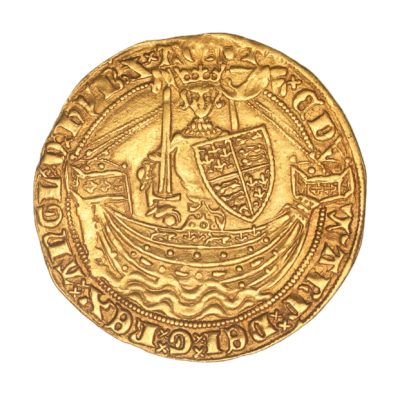
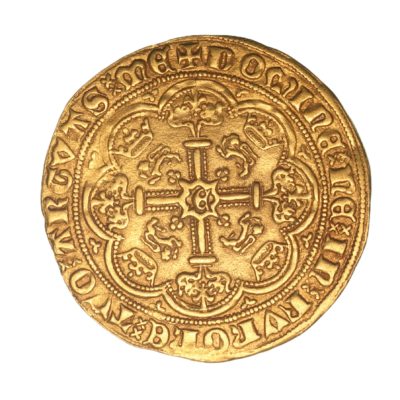
In order to transport a sizable wealth you needed two oxen, a cart and several oak barrels. Which posed all sorts of issues as demonstrated with the Tutbury hoard where 100,000+ Edwardian pennies were found in three oak barrels in a river near the castle, presumably stashed their by their owner, under threat of imminent attack. With an increase in trade & wealth during the 14 Century there became an increasing need for coinage of higher denomination. th The Gold Noble series, which was introduced during the 3 coinage of Edward III in AD 1344, were the first gold coins to be produced in quantity. Struck at the royal mints in London & Calais.
The obverse of the coin featured a portrait of the king standing in a ship and holding a sword and shield. This commemorated Edward’s recent naval victory over the French at the Battle of Sluys in AD 1340. The reverse depicted the Royal Cross in tressure. Half and quarter nobles were also issued. When introduced the Gold Noble had a weight of 138 grains and was given a value of 6 shillings and 8 pence. It was adopted by each subsequent monarch and whilst the face value was maintained the weight was reduced progressively down to 108 grains by AD 1412. The noble remained in circulation until AD 1464 during the reign of Edward IV when it was super ceded by the Ryal or Rose Noble. This was because the value of gold had increased and as a result Gold Nobles became worth more in Europe than in England. To prevent the gold coinage from disappearing abroad the Ryal was introduced at an increased weight of 120 grains, and it was revalued to 10 shillings.
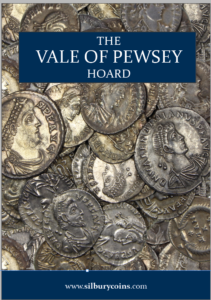
Coming Soon: The Vale of Pewsey Hoard
Introducing the Vale of Pewsey Hoard, found near Pewsey in Wiltshire by three metal detectorists in 2020, 160 Roman silver coins, consisting of siliquae & miliarense from Constantius II (AD 323-361) to Honorius (AD 393-423). Dating to the end of the Roman era in Britain this find and others represent a turbulent time for the Roman Empire and its citizens. The hoard was declared Treasure and subsequently disclaimed and returned to the finders & landowner who chose to sell the hoard, making the coins available to private collectors around the world for which we are most grateful. We have produced an interesting information booklet, a copy of which will be sent with each coin and will also be available on our website ‘News and Articles’ section soon. This looks at the find and the wider background to the area and coinage in Late Roman Britain, a fascinating chapter in history. An exciting opportunity to own a coin from a fully provenanced and researched treasure find, coins will be listed individually and available on our website from next month.
Archaeology News: Rare Roman Gold Ring and Coin Hoard Unearthed in Somerset
A remarkable Roman treasure discovery has recently made headlines in Somerset. Metal detectorist Kevin Minto unearthed an exceptionally rare gold signet ring dating to around AD 297, together with a hoard of nearly 300 Roman coins. Featuring an engraved image of the goddess Victoria in a chariot, the ring is thought to have belonged to a wealthy Roman individual and has been described as one of the most significant Roman jewellery finds in Britain for many years. The artefacts have now been secured for the local museum, where they will help shed new light on Roman life in south-west Britain.
-
Latest News
Ancient British coins have been added to our extensive fixed price inventory today, including this beautiful gold stater of Tasciovanus showing one of the iconic symbols of the Ancient Brits, the Carnyx.
This ancient war trumpet is being paraded by Tasciovanos himself astride his trusty steed. This example well centred and with clear detail on both sides, the obverse displays hidden faces amongst the elaborate design.
To view this and the rest of our stock click here https://www.silburycoins.co.uk/product-category/celtic-coins-for-sale/
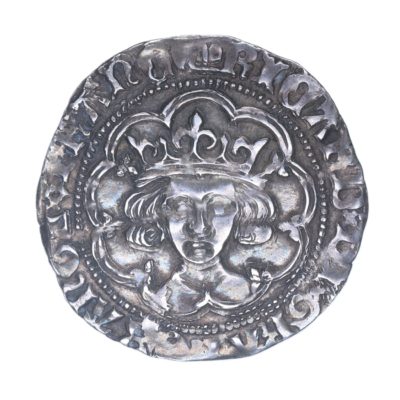
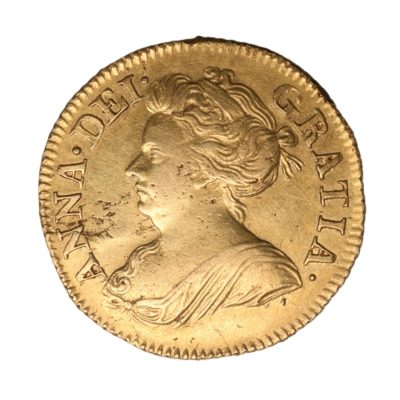
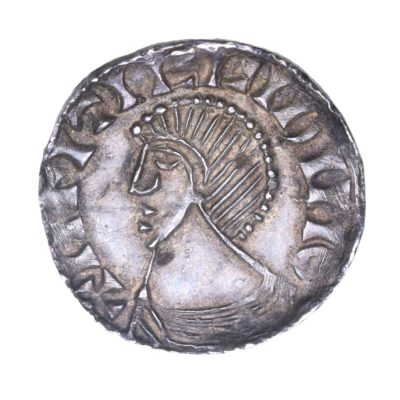
At Silbury coins we have specialised in Ancient British Coinage for over 20 years and are always happy to share this experience and the enjoyment gaining in handling these coins with our clients.Today’s upload consists of choice English silver coins, beginning with pennies from the kingdom of Wessex, Aethelstan, Eadred and the late Saxon kings. Both William I & II (Rufus) are represented then we skip to Tudor rarities including a clear Boars head penny of Richard III, wonderful portrait of Henry VII and a run of Newark siege pieces.
There is so much history represented in this tray!Today we have added a fantastic selection of Medieval gold coins from across Europe, English kings like Edward III & Henry VI stand alongside Louis De Male from Belgium & Philip De Bon from Holland.
Design varied greatly in this period but was elaborate & intricate, surviving in these wonderful gold coins which can still be very much enjoyed today.
www.silburycoins.com