
Trinovantes Dubnovellaunos c.5 BC-AD 10 Gold Stater
£3,750.00
Trinovantes Dubnovellaunos c.5 BC-AD 10 Gold Stater
Dubnovellaunos Branch
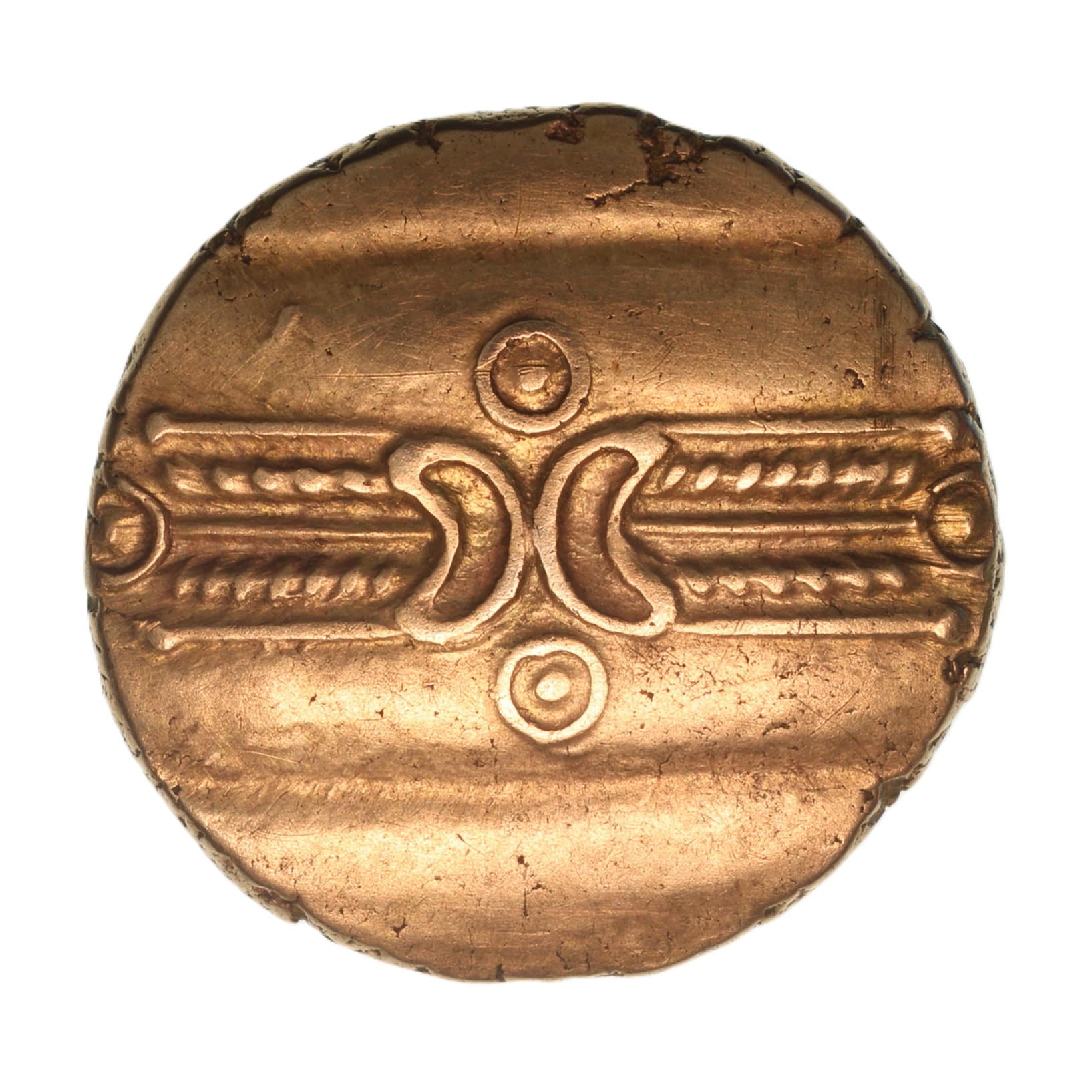
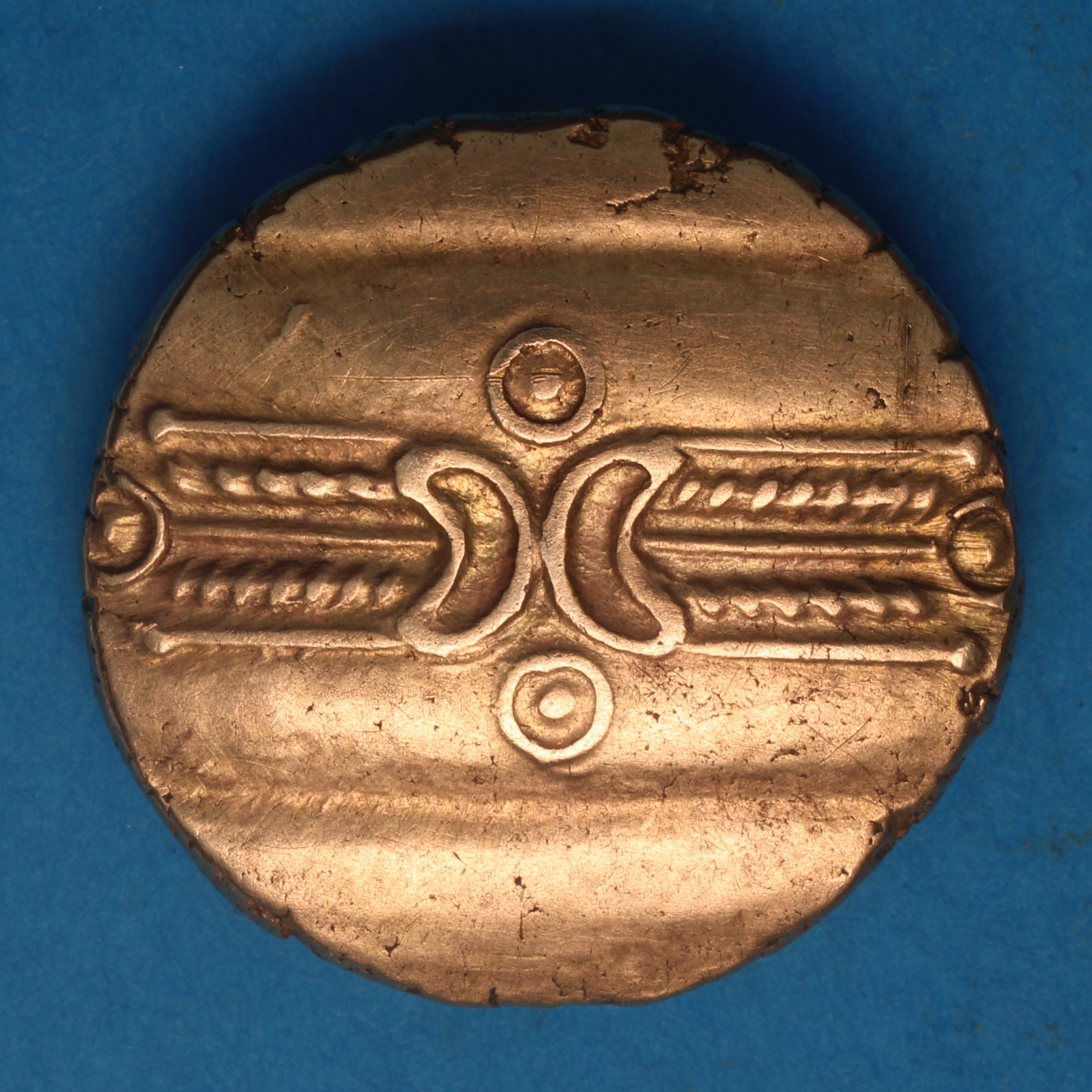
Obverse – Back-to-back outline crescents at centre of straight wreath with very fine leaves between three parallel lines and ending in ringed pellets. Ringed pellets either side and parallel grooves either side of those.
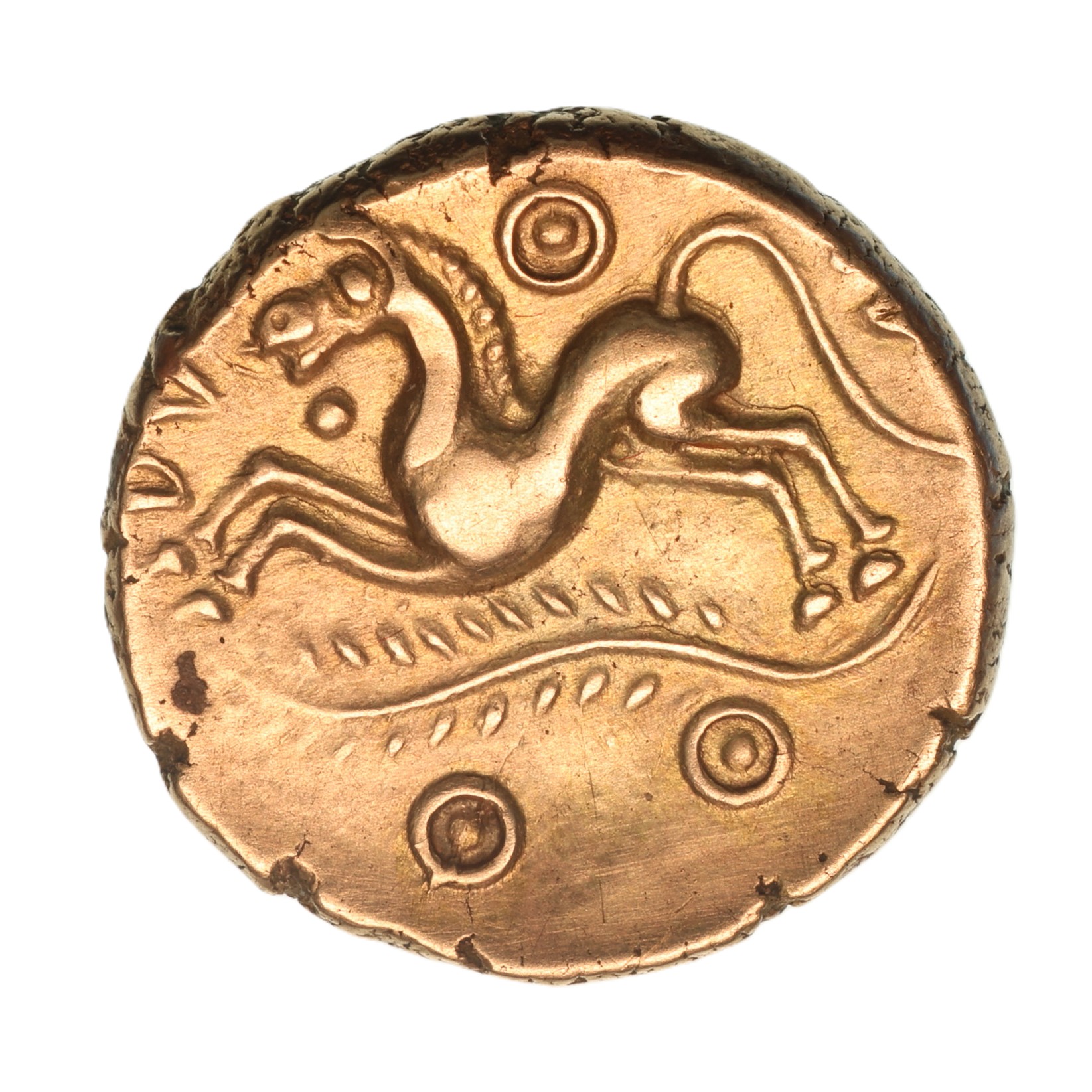
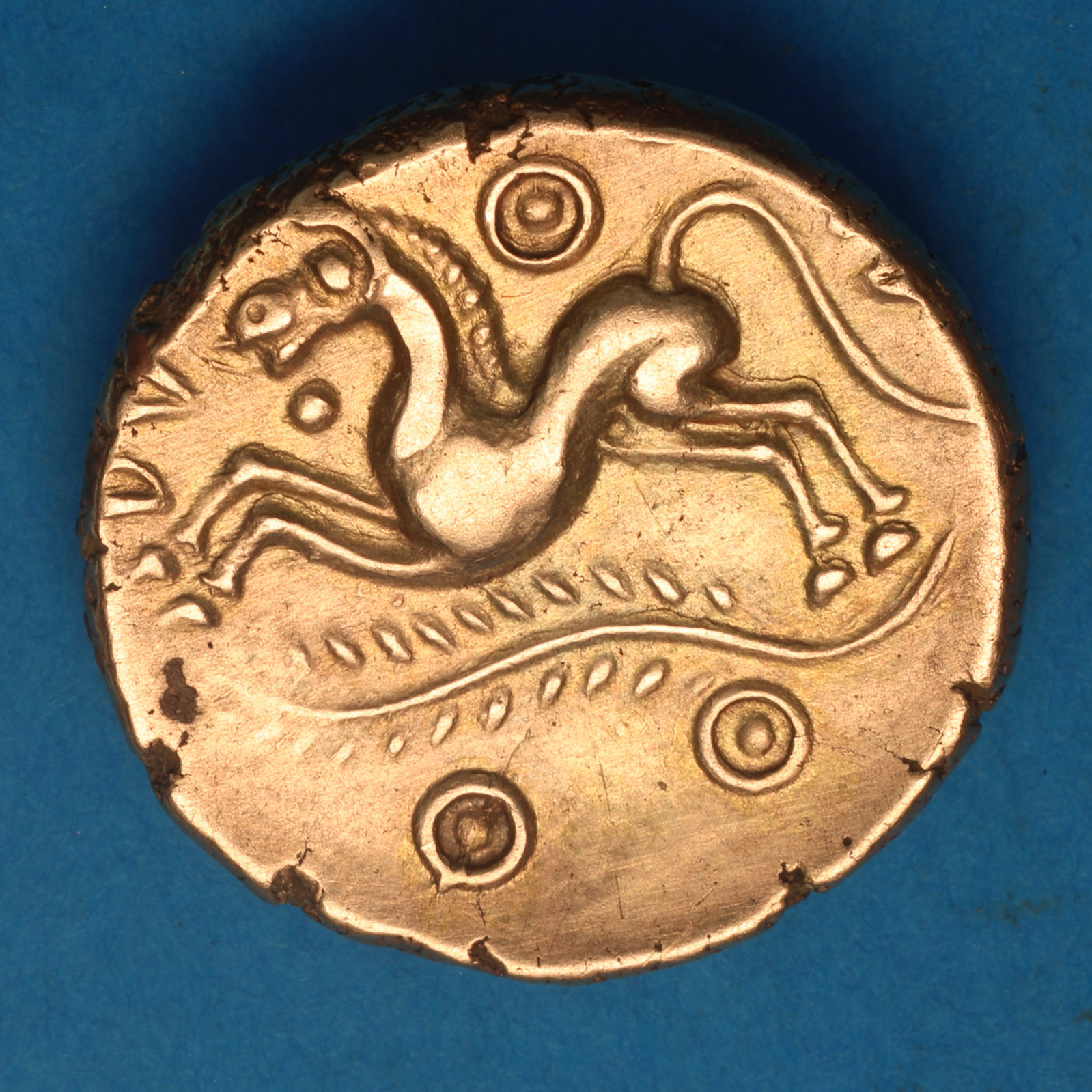
Reverse – Naturalistic, leaping horse left with pellet mane, sharply-angled front legs and extended rear legs. Leafy, arched branch below. Ringed pellet above and two below. Pellet in front and sometimes above (either side of ringed pellet), below, under the tail, over the tail, behind the rear leg, and sometimes a pellet triad behind or under the tail. Inscription around.
A beautiful coin in hand, reverse struck high so only the very beginning of the inscription is showing but a full horse and decoration is a pleasing compromise. Perfect obverse.
ABC2392, S207; 17mm, 5.35g
This coin comes with a rough find area provenance.
Van Arsdell Classification: Trinovantian L, Earlier Dynastic Issues, Dubnovellaunus in Essex, Gold Coins.
VA 1655 – 09: DVBNOVIILLA, pellet above tail (not below or behind rear leg). However, the number and position of pellets varies from die to die.
Rainer Kretz, “The Trinovantian staters of Dubnovellaunos”, BNJ 78, 2008:
Kretz Type D (Letter II type). Identifiable by the letters II in DVBNOVIILLA(VNVS) and a more elegant, Romanised horse, D1-5.
Sills DK 538 (10 obverse, 12 reverse dies): North Thames Coinage; Type: Dubnovellaunos; Staters: Class 2b – II Type. The same obverse as the A Type (Sills 537). The reverse differs in the spelling, with II replacing E, and the B is rendered as a B and not an R (the engraver using R seems to have moved to the Cantii). The one die with DVBNOVELLAVN spelling links to the DVBNOVIILLAVN reverses.
Sills places bronze unit Hairy (ABC 2407) with later Dubnovellaunos gold such as II Type because the horse is naturalistic rather than annulate. He also puts Headband bronze (ABC 2404), with the DVBNOVIILL spelling, at this time. Centre Parting (ABC 2413) and Corded (ABC 2416) are not certainly Dubnovellaunos.
Sills chronology: Gallo-Belgic Ca – British G (Early Clacton) / Aa Westerham – British La (Whaddon Chase) – British Lb (Westbury) – Addedomaros – Dubnovellaunos – Tasciovanos.
Dubnovellaunos was almost beyond doubt king of both the Trinovantes and Cantii. Around 7, at the end of his reign, he and Tincomarus of the Atrebates appeared in the res gestae as supplicants to Augustus, but it is not known whether that was as king of the Trnovantes or Cantii at the time.
DUBNOVELLAUNOS 5 BC- AD 10: Relatively little is known about Dubnovellaunos, or ‘world ruler’. Was he king in Essex and if so was he the same person who was also king in Kent. Was he a Cantian king who conquered the Trinovantes or was he simply a ruler of the Canti who was already in control of Essex. He may have been a brother of Tasciovanos who ruled at first in Canterbury before moving to Colchester. It is thought that he was a Cantian king who at some stage seized control of the southern part of the Trinovantian kingdom before being displaced by Eppillus in Kent and then by Cunobelinus in Essex. If he did control both areas it is likely to have been for only a few years.
Out of stock
You may also be interested in these…
Related products
-
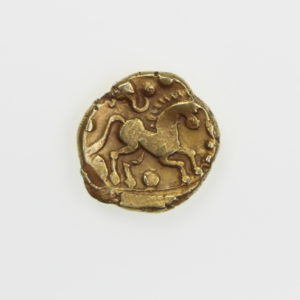
Celtic Gold Stater Trinovantes Whaddon Chase Series 45-40BC
£670.00Code: DC776
-
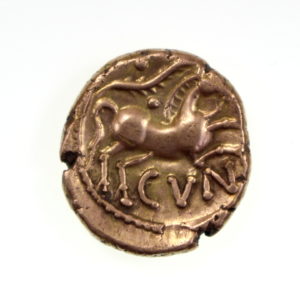
Catuvellauni & Trinovantes Cunobelin Linear Type Gold Stater 8-41AD
£1,100.00Code: DC929
-
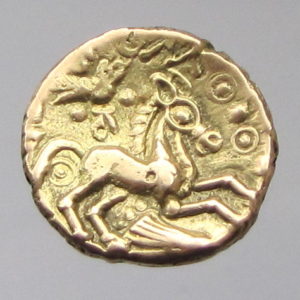
Celtic Gold Stater Trinovantes Addedomarus 33-30BC
£890.00Code: CT14
-
Catuvellauni & Trinovantes Cunobelin Gold Quarter Stater Classic Type 8-41AD
£395.00Code: AC295