Regini & Atrebates Verica c. AD 10 – 40 Verica Warrior Rex Gold Stater *Scarce*
£3,250.00
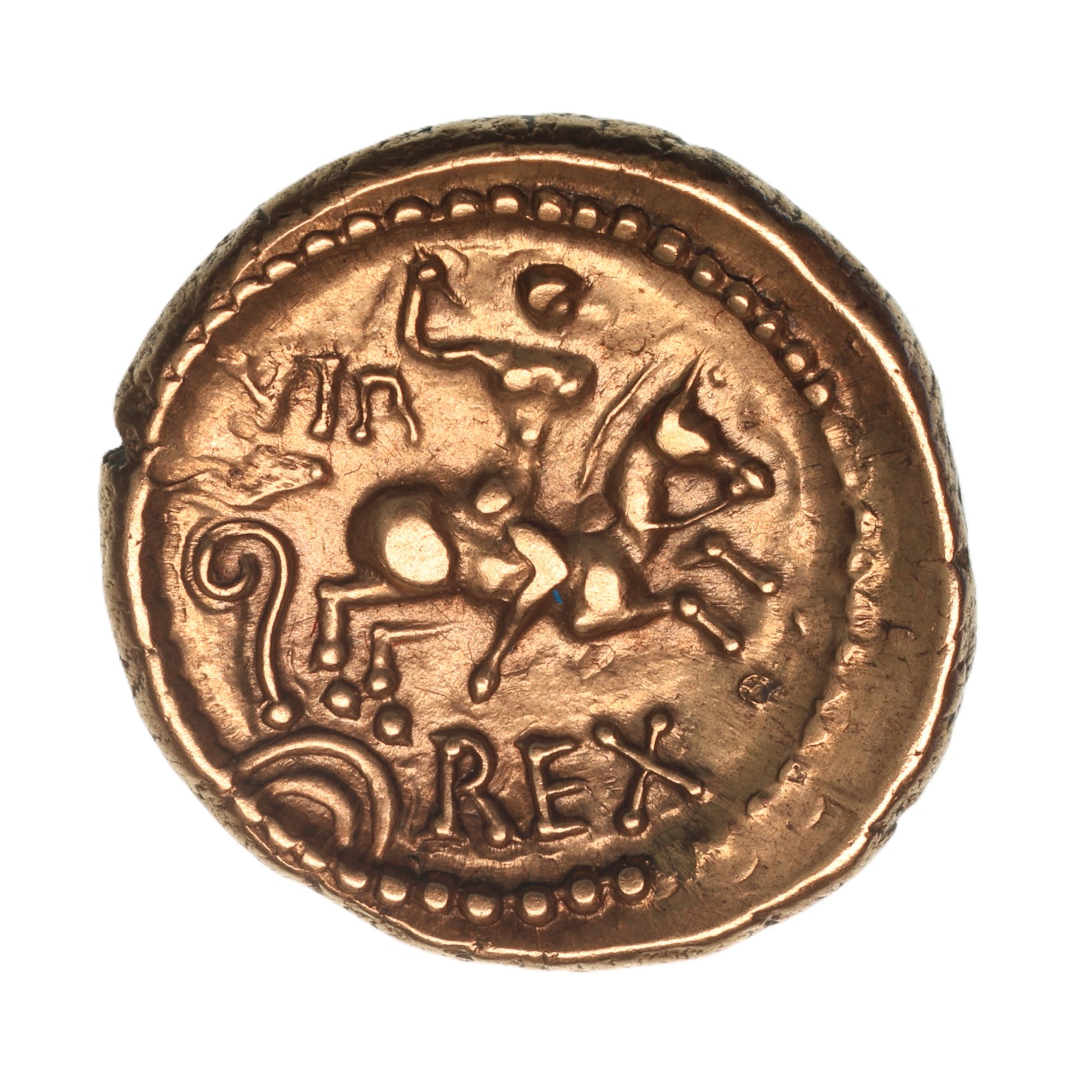
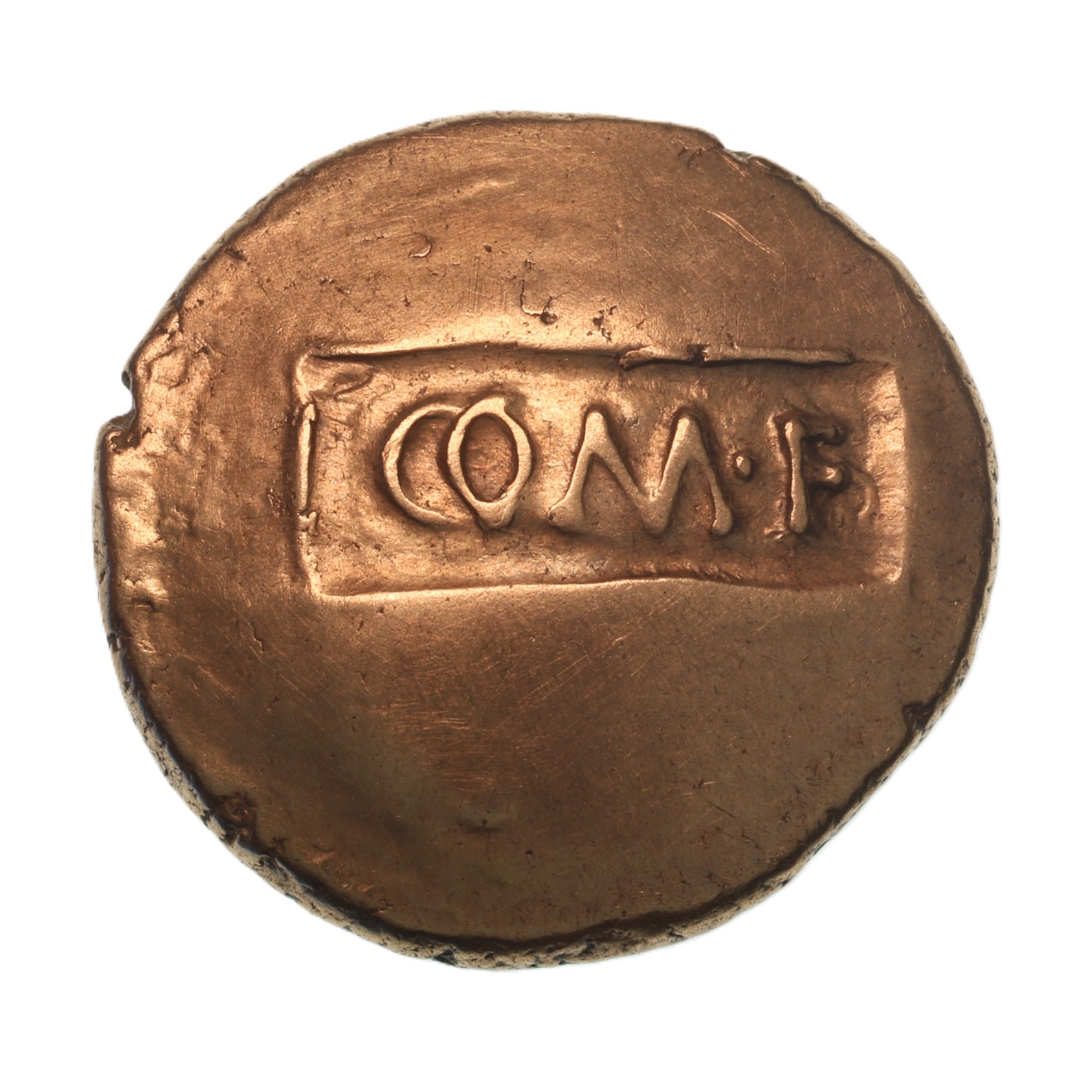
Regini & Atrebates Verica c. AD 10 – 40 Verica Warrior Rex Gold Stater
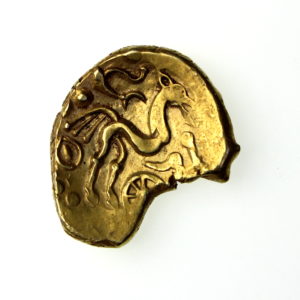
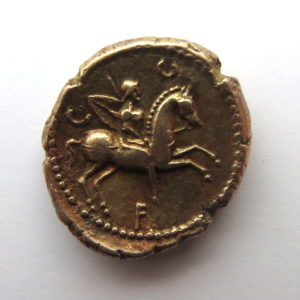
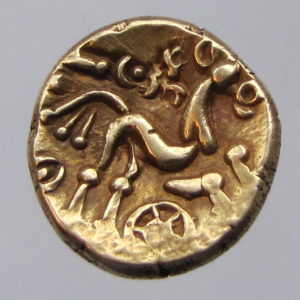
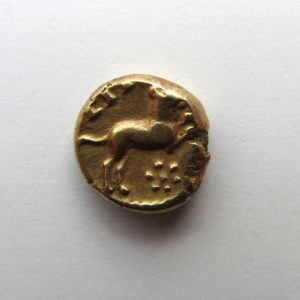
COM.F in tablet/Warrior holding spear on horse right, VIR behind, REX below
Scarce
ABC 1190; 17mm, 5.30g
Choice for issue, clear inscriptions both sides, well struck on a large flan, a premium coin.
Provenance
This coin is from The London Collection of Ancient British Coins. For more information click here: The London Collection – Silbury Coins : Silbury Coins
CNG FPL XIX, no 368, 1994. VA 500-1
This coin comes with a previous label.
Verica (AD 10–40)
Perhaps the best-known ‘son of Commios’, Verica appears to have been a contemporary of Cunobelin. His rule appears to have been relatively lengthy, although towards its late stages we begin to see evidence of instability – perhaps stimulated by the rise of Trinovantian-affiliated rulers such as Epatticus and Caractacus. Much like his predecessors Tincomarus and Epilllus, he struck only coins of gold and silver – with none of bronze currently known. From a stylistic point of view, some of his coins demonstrate continuity with earlier types, such as the ‘Verica Warrior Rex’ gold staters (ABC 1190/BMC 1146–58). These, depicting ‘COM F’ in a rectangular tablet on the obverse and a mounted warrior on the reverse, are virtually identical to the ‘Tincomarus Warrior’ types. Other issues of Verica represent the apogee of Classical influence upon Late Iron Age coinage. Motifs such as vine leaves, cornucopiae, ships prows, wine cups, shrines and sphinxes are all evidenced, with particularly diverse iconography to be found on his unusually extensive series of silver minims. Such images attest to the growing influence of Rome and the extent to which Classical art was beginning to permeate Iron Age Britain at multiple levels.
Like Tincomarus, we find Verica in Roman sources – the 3rd century historian Dio Cassius relating as follows in his Roman History:
‘Aulus Plautius…led a campaign against Britain, for a certain Bericus, who had been driven from the island as a result of an uprising, had persuaded Claudius to send a force there’ (Book LX, chapter 19).
On the basis of this, one could make the amusing observation that the Claudian invasion of Britain and institution of Britannia as a Roman province was at least partially stimulated by the efforts of a disgruntled Iron Age exile.
Out of stock