
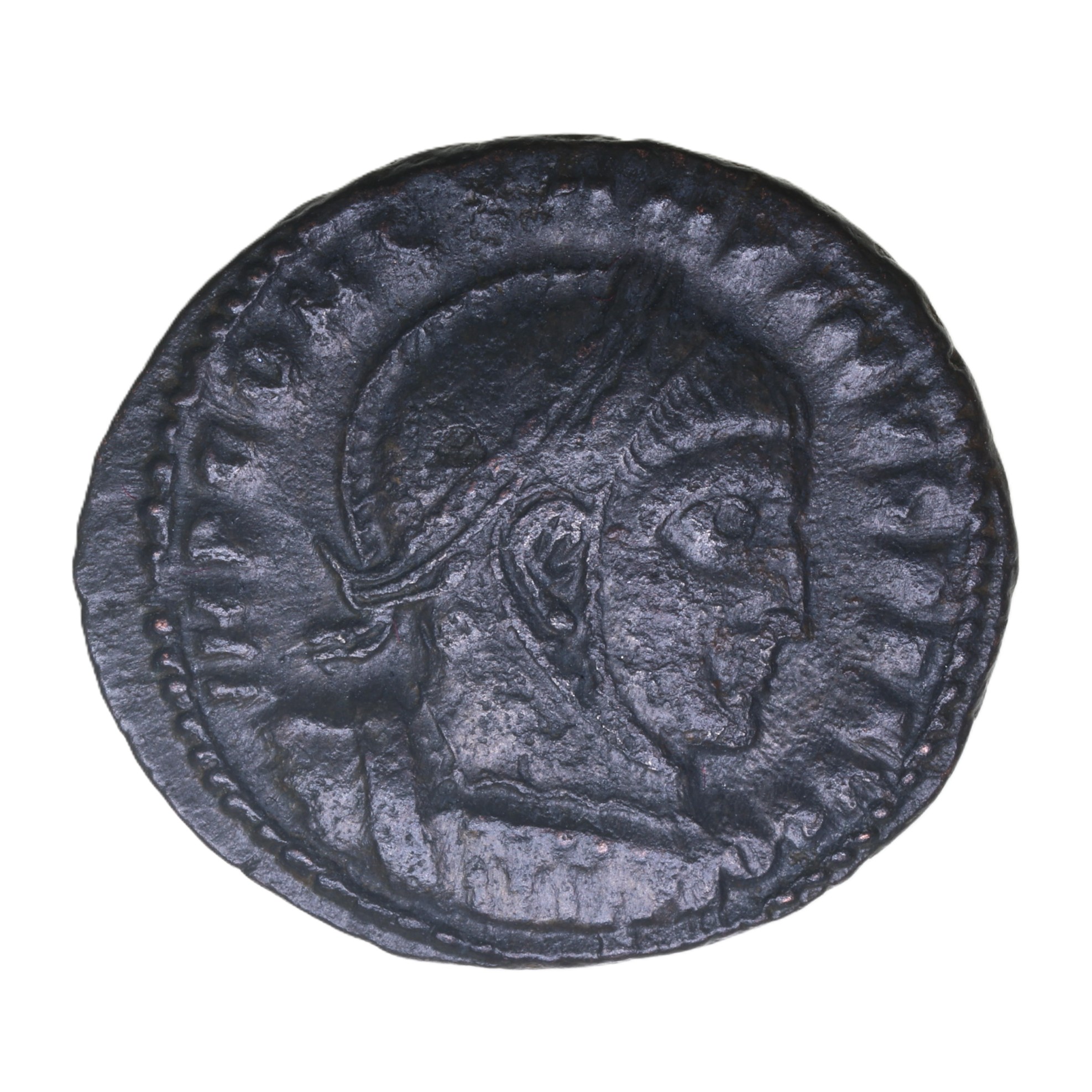
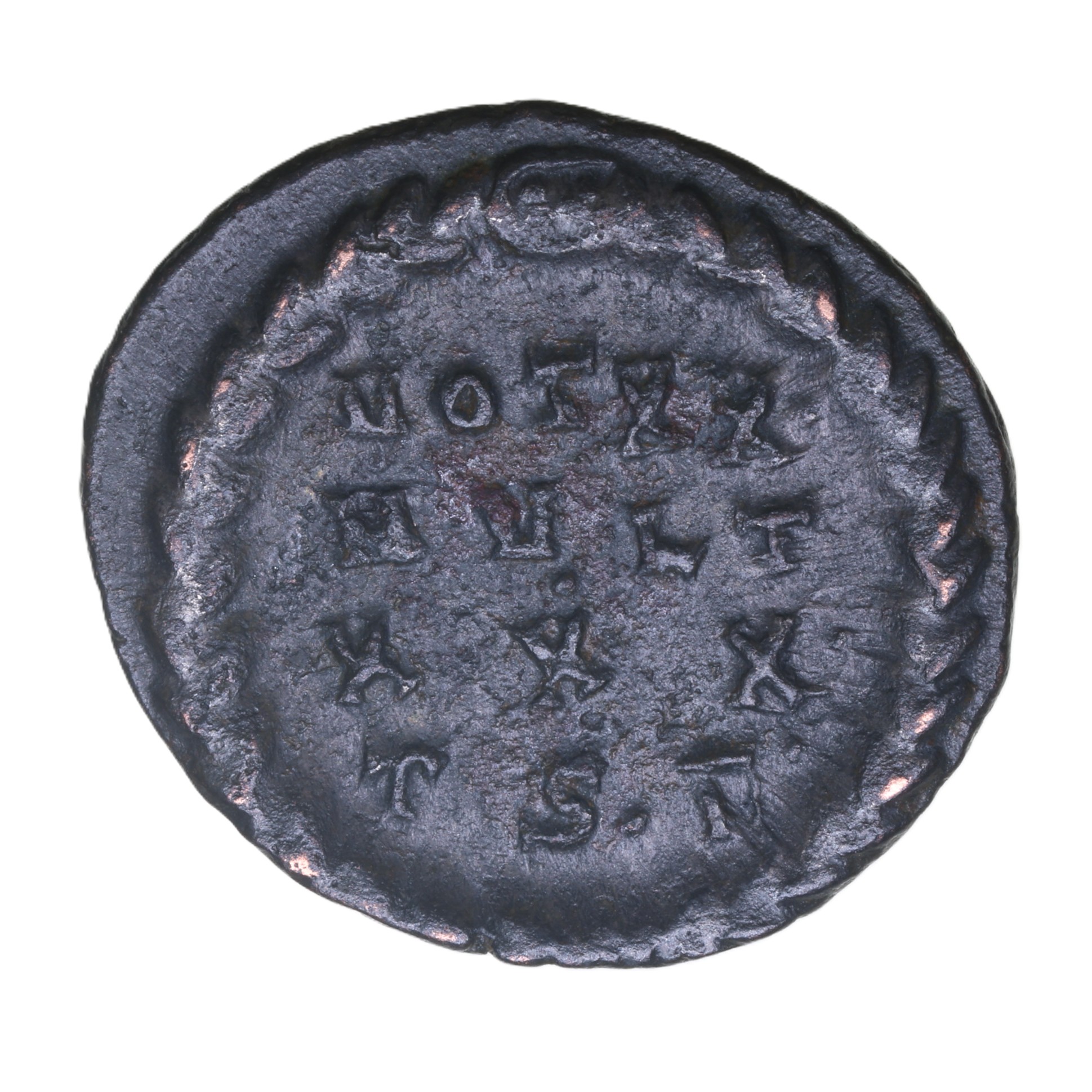
Constantine I AD 307-337 Bronze Follis Thessalonica
£89.00
Constantine I AD 307-337 Bronze Follis
Helmeted and cuirassed bust right/VOTXX / MVLT / XXX
Thessalonica mint
RCV16332 var. 20mm, 2.61g
The reign of Constantine marked one of the great turning points in Roman history. Born around AD 272 the son of Constantius Constantine claimed that he was descended from Claudius Gothicus (AD 268-270) although this is unlikely to be true.
Taking a military career Constantine was appointed a tribune to Diocletian following the elevation of his father to Augustus. Joining his father on a military expedition to Britain upon the sudden death of Constantius in York in AD 306 Constantine was proclaimed by his troops, as Caesar under Severus. Initially his position was he weak however after Severus fell he cemented his position with Maximian was strengthened through the marriage to Fausta who was the daughter of Maximian also sister to Maxentius.
Becoming Augustus, the high handed elevation of Licinius to Augustus by Galerius created a rift. Deciding it was time to eliminate his brother in law, Maxentius, he invaded Italy in AD 312 winning the Battle of Milivian Bridge where Maxentius was killed. It was on the evening before this battle that Constantine had his vision of the cross. Whether this is true Constantine’s religious policy was certainly revolutionized thereafter leading to a rapid demise of the old pagan gods and the rise of Christianity.
Although Constantine remained co emperor with Licinius for a further decade in AD 324 he invaded Thrace on the pretext of repelling Gothic invaders. Licinius moved to confront him but was defeated in 2 battles and forced to abdicate. Constantine then became the sole Augustus for the first time since Diocletian.
In AD 325 Constantine convened the Council of Nicaea where Christianity was formally declared to be the religion of the empire. Around this time Constantine decided to found a new imperial capital in the east where Constantinopolis was formally designated in AD 330. This city later became Constantinople and the capital of the Byzantine empire.
Constantine had four sons as well as two daughters. Crispus was probably the most able and although elevated to Caesar was found to be guilty of treason and was executed in AD 326. His three remaining sons were also elevated to Caesar and all later became Augustus in their own right. Constantine died suddenly and unexpectedly in AD 337.
The coinage of Constantine is complex with radical changes being made early in his reign when the gold aureus as replaced by the lighter gold solidus. Constantine also abandoned the silver argenteus replacing it with the siliqua. The bronze follis was also reduced in size with various fractions also being produced although these are mostly quite rare.
1 in stock
You may also be interested in these…
Related products
-
Theodosius I 379-395AD Silver Siliqua Trier mint *The Vale of Pewsey Hoard*
£395.00Code: VOP22
-
Constantius II 337-361AD Silver Siliqua Trier mint *The Vale of Pewsey Hoard*
£225.00Code: VOP2
-
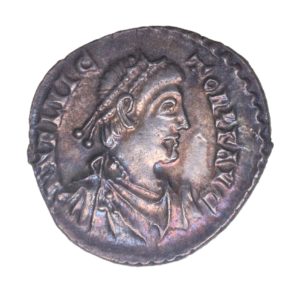
Flavius Victor 387-388AD Silver Siliqua Trier mint *The Vale of Pewsey Hoard*
£1,850.00Code: VOP34
-
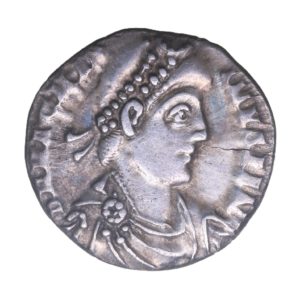
Magnus Maximus 383-388AD Silver Siliqua Trier mint *The Vale of Pewsey Hoard*
£325.00Code: VOP32